


![[Marketing] Questao Topo - deslogado](https://storage.estuda.com.br/banners/0_6b7ebee90b03af1c560c73bb8bcce34a_banner_deslogado_70_dias.png)
Questões de Inglês
19.971 Questões
Questão 22 600297
UNIC 2018/2TEXTO:
New research finds that earplugs make a dramatic
difference in preventing hearing loss, especially when
it comes to recreational exposure. The study involved
50 participants, recruited on social media, who attended
[5] a music festival in Amsterdam. Through random
assignments, the researchers gave half the group
earplugs. The researchers found temporary threshold
shift (a measure of hearing loss) in 8 % of participants
who wore earplugs during the show, versus 42 percent
[10] who did not wear them. They also found that tinnitus –
ringing in the ears – occurred in 40 % of volunteers
who didn’t wear earplugs and 12% who did.
Most people don’t realize that even short-term
exposure — a single night at a loud dance club — is
[15] enough to cause what’s known as acoustic trauma. In
a person with normal hearing, sound moves from the
pinna — the cartilage at the top of the ear — and makes
its way through the ear canal to the eardrum, which
causes it to vibrate. This vibration is sent to three small
[20] bones within the ear called the malleus, incus and
stapes. Then these vibrations are passed on to the
cochlea. When the vibrations hit the cochlea, they cause
tiny hair cells attached to nerves to bend, which sends
an electric signal to the brain that’s recognized as sound.
[25] Loud noise disrupts the process, causing
overstimulation of the tiny hairs and eventually leads to
cell death in the inner ear. Most people recoup their
hearing after temporary loss due to exposure to loud
music and other overwhelming noise (including
[30] gunshots and firecrackers). Still, the researchers say,
chronic exposure to such overwhelming sound can
eventually cause irreversible damage, which is
something every passionate music lover needs to hear.
FIRGER, Jessica. Disponível em: . Acesso em: 13 jun. 2018.
According to the text, acoustic trauma is caused when
Questão 21 600295
UNIC 2018/2TEXTO:
New research finds that earplugs make a dramatic
difference in preventing hearing loss, especially when
it comes to recreational exposure. The study involved
50 participants, recruited on social media, who attended
[5] a music festival in Amsterdam. Through random
assignments, the researchers gave half the group
earplugs. The researchers found temporary threshold
shift (a measure of hearing loss) in 8 % of participants
who wore earplugs during the show, versus 42 percent
[10] who did not wear them. They also found that tinnitus –
ringing in the ears – occurred in 40 % of volunteers
who didn’t wear earplugs and 12% who did.
Most people don’t realize that even short-term
exposure — a single night at a loud dance club — is
[15] enough to cause what’s known as acoustic trauma. In
a person with normal hearing, sound moves from the
pinna — the cartilage at the top of the ear — and makes
its way through the ear canal to the eardrum, which
causes it to vibrate. This vibration is sent to three small
[20] bones within the ear called the malleus, incus and
stapes. Then these vibrations are passed on to the
cochlea. When the vibrations hit the cochlea, they cause
tiny hair cells attached to nerves to bend, which sends
an electric signal to the brain that’s recognized as sound.
[25] Loud noise disrupts the process, causing
overstimulation of the tiny hairs and eventually leads to
cell death in the inner ear. Most people recoup their
hearing after temporary loss due to exposure to loud
music and other overwhelming noise (including
[30] gunshots and firecrackers). Still, the researchers say,
chronic exposure to such overwhelming sound can
eventually cause irreversible damage, which is
something every passionate music lover needs to hear.
FIRGER, Jessica. Disponível em: . Acesso em: 13 jun. 2018.
Fill in the parentheses with T (True) or F (False).
When the group wearing earplugs is compared with the unprotected group, it’s correct to say:
( ) All the participants were teenagers who were attending a music festival.
( ) Most of the participants had to use some kind of ear protection during the show.
( ) Temporary hearing loss occurred in most of the participants who didn’t wear earplugs.
( ) Ringing in the ears happened to less than fifteen percent of the people wearing earplugs.
The correct sequence, from top to bottom, is
Questão 20 600292
UNIC 2018/2TEXTO:
New research finds that earplugs make a dramatic
difference in preventing hearing loss, especially when
it comes to recreational exposure. The study involved
50 participants, recruited on social media, who attended
[5] a music festival in Amsterdam. Through random
assignments, the researchers gave half the group
earplugs. The researchers found temporary threshold
shift (a measure of hearing loss) in 8 % of participants
who wore earplugs during the show, versus 42 percent
[10] who did not wear them. They also found that tinnitus –
ringing in the ears – occurred in 40 % of volunteers
who didn’t wear earplugs and 12% who did.
Most people don’t realize that even short-term
exposure — a single night at a loud dance club — is
[15] enough to cause what’s known as acoustic trauma. In
a person with normal hearing, sound moves from the
pinna — the cartilage at the top of the ear — and makes
its way through the ear canal to the eardrum, which
causes it to vibrate. This vibration is sent to three small
[20] bones within the ear called the malleus, incus and
stapes. Then these vibrations are passed on to the
cochlea. When the vibrations hit the cochlea, they cause
tiny hair cells attached to nerves to bend, which sends
an electric signal to the brain that’s recognized as sound.
[25] Loud noise disrupts the process, causing
overstimulation of the tiny hairs and eventually leads to
cell death in the inner ear. Most people recoup their
hearing after temporary loss due to exposure to loud
music and other overwhelming noise (including
[30] gunshots and firecrackers). Still, the researchers say,
chronic exposure to such overwhelming sound can
eventually cause irreversible damage, which is
something every passionate music lover needs to hear.
FIRGER, Jessica. Disponível em: . Acesso em: 13 jun. 2018.
The central idea of this text is summarized in
Questão 19 600291
UNIC 2018/2TEXTO:
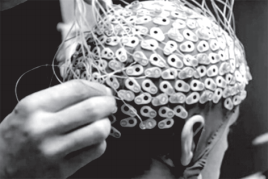
Upgrading our biology may sound like science
fiction, but attempts to improve humanity actually date
back thousands of years. Every day, we enhance
ourselves through seemingly mundane activities such
[5] as exercising, meditating, or consuming performanceenhancing
drugs, such as caffeine or adderall. However,
the tools with which we upgrade our biology are
improving at an accelerating rate and becoming
increasingly invasive.
[10] Not long ago, Elon Musk announced a new
company, Neuralink, with the goal of merging the human
mind with AI (Artificial Intelligence). The past few years
have seen remarkable developments in both the
hardware and software of brain-machine interfaces.
[15] Experts are designing more intricate electrodes while
programming better algorithms to interpret neural
signals. Scientists have already succeeded in
enabling paralyzed patients to type with their minds, and
are even allowing brains to communicate with one
[20] another purely through brainwaves.
A major ethical concern is equality. As with any
other emerging technology, there are valid concerns
that cognitive enhancement tech will benefit only the
wealthy, thus exacerbating current inequalities. It’s
[25] important to discuss these risks, not so that we begin
to fear and avoid such technologies, but so that we
continue to advance in a way that minimizes harm and
allows us to optimize the benefits.
BIDSHAHRI, Raya. Disponível em: https://geneticliteracyproject.org/ 2018/02/20/brain-machine-interfaces-biology-body-upgrades-waywill-handle/. Acesso em: 13 jun. 2018.
The word has not been correctly defined in
Questão 18 600290
UNIC 2018/2TEXTO:
Upgrading our biology may sound like science
fiction, but attempts to improve humanity actually date
back thousands of years. Every day, we enhance
ourselves through seemingly mundane activities such
[5] as exercising, meditating, or consuming performanceenhancing
drugs, such as caffeine or adderall. However,
the tools with which we upgrade our biology are
improving at an accelerating rate and becoming
increasingly invasive.
[10] Not long ago, Elon Musk announced a new
company, Neuralink, with the goal of merging the human
mind with AI (Artificial Intelligence). The past few years
have seen remarkable developments in both the
hardware and software of brain-machine interfaces.
[15] Experts are designing more intricate electrodes while
programming better algorithms to interpret neural
signals. Scientists have already succeeded in
enabling paralyzed patients to type with their minds, and
are even allowing brains to communicate with one
[20] another purely through brainwaves.
A major ethical concern is equality. As with any
other emerging technology, there are valid concerns
that cognitive enhancement tech will benefit only the
wealthy, thus exacerbating current inequalities. It’s
[25] important to discuss these risks, not so that we begin
to fear and avoid such technologies, but so that we
continue to advance in a way that minimizes harm and
allows us to optimize the benefits.
BIDSHAHRI, Raya. Disponível em: https://geneticliteracyproject.org/ 2018/02/20/brain-machine-interfaces-biology-body-upgrades-waywill-handle/. Acesso em: 13 jun. 2018.
Considering the cognitive enhancement technology, the author
Questão 17 600288
UNIC 2018/2TEXTO:
Upgrading our biology may sound like science
fiction, but attempts to improve humanity actually date
back thousands of years. Every day, we enhance
ourselves through seemingly mundane activities such
[5] as exercising, meditating, or consuming performanceenhancing
drugs, such as caffeine or adderall. However,
the tools with which we upgrade our biology are
improving at an accelerating rate and becoming
increasingly invasive.
[10] Not long ago, Elon Musk announced a new
company, Neuralink, with the goal of merging the human
mind with AI (Artificial Intelligence). The past few years
have seen remarkable developments in both the
hardware and software of brain-machine interfaces.
[15] Experts are designing more intricate electrodes while
programming better algorithms to interpret neural
signals. Scientists have already succeeded in
enabling paralyzed patients to type with their minds, and
are even allowing brains to communicate with one
[20] another purely through brainwaves.
A major ethical concern is equality. As with any
other emerging technology, there are valid concerns
that cognitive enhancement tech will benefit only the
wealthy, thus exacerbating current inequalities. It’s
[25] important to discuss these risks, not so that we begin
to fear and avoid such technologies, but so that we
continue to advance in a way that minimizes harm and
allows us to optimize the benefits.
BIDSHAHRI, Raya. Disponível em: https://geneticliteracyproject.org/ 2018/02/20/brain-machine-interfaces-biology-body-upgrades-waywill-handle/. Acesso em: 13 jun. 2018.
Fill in the parentheses with T (True) or F (False).
When talking about brain-machine interfaces, the author says that
( ) their electrodes have become very complex.
( ) paralyzed patients have failed to communicate using their minds.
( ) people have managed to exchange information by means of brainwaves.
( ) neural signals have become harder to be interpreted.
The correct sequence, from top to bottom, is
06