


![[Marketing] Questao Topo - deslogado](https://storage.estuda.com.br/banners/0_6b7ebee90b03af1c560c73bb8bcce34a_banner_deslogado_70_dias.png)
Questões de Inglês
19.971 Questões
Questão 11 2667187
UNIMONTES 3° Etapa 2018Psychopaths can’t tell if a person is genuinely sad or afraid, study suggests
People with psychopathic traits find it harder to tell the difference between genuine and fake emotions, a
study has suggested.
Researchers based in Australia arrived at this conclusion by asking people to look at photographs of faces
showing different emotions, such as fear or sadness.
[5] Study author Dr. Amy Dawel, of the Australian National University Research School of Psychology,
explained in a statement: “For most people, if we see someone who is genuinely upset, you feel bad for
them and it motivates you to help them. People who are very high on the psychopathy spectrum don’t show
this response.”
Psychopathy is a personality disorder characterized by amoral behavior, such as callousness, poor empathy
[10] skills and shallow affect: — the inability to experience deep emotions even when in scenarios where the
average person might be distressed. They might lack remorse or guilt in appropriate situations, and have a
disregard for social conventions and law. Balancing this is their superficial charm and ability to mimic
emotional behavior, which can help them function in society. Patrick Bateman, the murderous Wall Street
banker in American Psycho, is one of the most famous fictional depictions of psychopathy.
 [15] The team behind the study published in the journal Personality Disorders recruited 140 participants, and
tested them for psychopathic traits. They were also shown photos of facial expressions. In some images, the
emotions where genuine, while others were faked.
Those who scored low on the psychopathy report were better able to pick up genuine and fabricated
emotions. The higher a participant scored, the harder they found it to differentiate between genuine and fake
[20] feelings of sadness or fear. They could, however, detect genuine happiness, anger, and disgust.
“The results were very specific to expressions of distress,” said Dawel. “We found people with high levels
of psychopathic traits don’t feel any worse for someone who is genuinely upset than someone who is faking
it.”
“They also seem to have problems telling if the upset is real or fake. As a result, they are not nearly as
[25] willing to help someone who is expressing genuine distress as most people are.”
The researchers hope their paper will form the basis of further work into pinpointing and treat psychopathy,
particularly by identifying it in childhood.
“There seems to be a genetic contribution to these traits, we see the start of them quite early in childhood,”
said Dawel.
[30] “Understanding exactly what is going wrong with emotions in psychopathy will help us to identify these
problems early and hopefully intervene in ways that promote moral development.”
The research is the latest to delve into psychopathic traits. Last year, Harvard University researchers
published the results of a study into almost 50 prisoners. They found the brains of those with psychopathic
traits were wired to value immediate reward, while not considering long-term consequences.
[35] Commenting on the paper published in Neuron, study author Josh Buckholtz, associate professor of
psychology at Harvard University, said in a statement: “For years, we have been focused on the idea that
psychopaths are people who cannot generate emotion and that’s why they do all these terrible things.
“But what we care about with psychopaths is not the feelings they have or don’t have, it’s the choices they
make. Psychopaths commit an astonishing amount of crime, and this crime is both devastating to victims
[40] and astronomically costly to society as a whole.”
Fonte: GANDER, Kashmira. Psychopaths can’t tell if a person is genuinely sad or afraid, study sugests. Disponível em: http://www.newsweek.com/psychopaths-cant-tell-if-person-genuinely-sad-or-afraid-study suggests-1055599. Publicado em: 8 março 2018. Acesso em: 14 out. 2018.
De acordo com o texto, podemos afirmar que:
Questão 17 2654242
UNIMONTES 2° Etapa 2018INSTRUÇÃO: Leia o texto que segue para responder à questão.
How cinema stigmatises mental illness
That depictions of “madness” have been dominated by horror films is revealing of the film industry’s historic insensitivity about mental health, writes Arwa Haider.
You don’t have to be ‘mad’ to be in the movies – but the film industry has generally shown a shaky vision
of mental health. It’s not that cinema evades ‘taboo’ themes here; it’s more that it tends to swing wildly
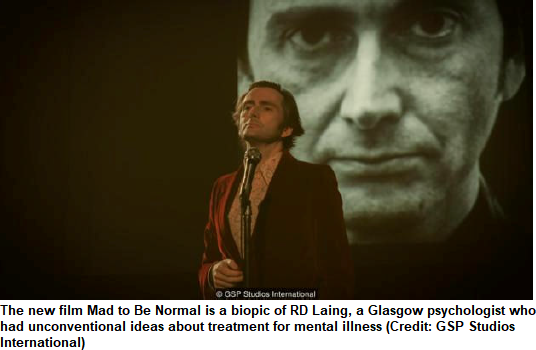
from sentimentality to sensationalism. Which means that the perspective of Mad to Be Normal, a 1960s-set
biopic of Scottish psychiatrist RD Laing, just out on video on demand (VoD), feels intriguingly new. David
[5] Tennant stars as Laing: a complex and charismatic figure, who earned fame for his radical, empathetic
treatment of mental illness.
 The real-life Laing was sharply quotable (he described insanity as “a perfectly rational adjustment to an
insane world”) and counter-cultural (he argued that traditional society was “driving our children mad”; he
recommended LSD for his adult patients). He also fought personal demons including alcoholism and
[10] depression. Tennant’s onscreen Laing is impressively joined by Elisabeth Moss, Gabriel Byrne and Michael
Gambon. Still, mainstream cinema struggles with a mental health ‘hero; Mad to Be Normal’s trailer booms:
“To some he’s certifiable… To others he’s a saint”.
Meanwhile on the small screen, there’s a feverish buzz around the imminent Netflix series Maniac (based
on the Norwegian psych ward-set drama of the same name). In the glossy and trippy US show, Emma Stone
[15] and Jonah Hill star as strangers undergoing a mysterious drug trial that claims to resolve mental health
issues; “It’s not therapy – it’s science,” Maniac’s eerie Dr. Mantleray (Justin Theroux) tells his patients.
Stone explained to Elle magazine:
“The thing I liked about Maniac was that it’s about people who have their own internal struggles and are
trying to fix them with a pill. But you see over the course of the show that human connection and love is
[20] really the only thing that gets us through life.”
So creative drama is drawn to the complexity and fragility of the mind – but mainstream entertainment still
demands a snappy fix. And the definition of ‘insanity’ is inherently problematic; it’s regarded as an
outmoded medical term. Dr. Ryan Howes writes in ‘Psychology Today’ that “it’s informed by medical
health professionals, but the term today is primarily legal, not psychological” and cites the Law.com
[25] definition: “mental illness of such a severe nature that a person cannot distinguish fantasy from reality,
cannot conduct her/his affairs due to psychosis, or is subject to uncontrollable impulsive behaviour.”
Yet our mainstream perceptions of ‘madness’ are still fixated with movie scenes – much more emphatically,
in fact, than the novels or memoirs on which they might be based. A classic film like One Flew Over the
Cuckoo’s Nest (1975) seals the impression of a soul-destroying psychiatric asylum, where livewire convict
[30] RP McMurphy (Jack Nicholson) feigns insanity to escape prison labour – yet is ultimately crushed by the
system. The dramatic depiction of patient treatment, particularly its brutal electroconvulsive therapy
sequences, had far-reaching impact. In 2011, The Telegraph went so far as to say that the film was
responsible for “irreparably tarnishing the image of ECT… It also catalysed the development of more
effective anti-psychotic drugs that allowed patients to… live , more normal lives.” [...]
Fonte: HAIDER, Arwa. How cinema stigmatises mental illness. Disponível em: http://www.bbc.com/culture/story/20180828-how-cinema-stigmatises-mental-illness. Acesso em: 17 set. 2018
No trecho “‘The thing I liked about Maniac was that it’s about people who have their own internal struggles and are trying to fix them with a pill.’” (linhas 18-19), o pronome “them” substitui
Questão 16 2654167
UNIMONTES 2° Etapa 2018INSTRUÇÃO: Leia o texto que segue para responder à questão.
How cinema stigmatises mental illness
That depictions of “madness” have been dominated by horror films is revealing of the film industry’s historic insensitivity about mental health, writes Arwa Haider.
You don’t have to be ‘mad’ to be in the movies – but the film industry has generally shown a shaky vision
of mental health. It’s not that cinema evades ‘taboo’ themes here; it’s more that it tends to swing wildly
from sentimentality to sensationalism. Which means that the perspective of Mad to Be Normal, a 1960s-set
biopic of Scottish psychiatrist RD Laing, just out on video on demand (VoD), feels intriguingly new. David
[5] Tennant stars as Laing: a complex and charismatic figure, who earned fame for his radical, empathetic
treatment of mental illness.
The real-life Laing was sharply quotable (he described insanity as “a perfectly rational adjustment to an
insane world”) and counter-cultural (he argued that traditional society was “driving our children mad”; he
recommended LSD for his adult patients). He also fought personal demons including alcoholism and
[10] depression. Tennant’s onscreen Laing is impressively joined by Elisabeth Moss, Gabriel Byrne and Michael
Gambon. Still, mainstream cinema struggles with a mental health ‘hero; Mad to Be Normal’s trailer booms:
“To some he’s certifiable… To others he’s a saint”.
Meanwhile on the small screen, there’s a feverish buzz around the imminent Netflix series Maniac (based
on the Norwegian psych ward-set drama of the same name). In the glossy and trippy US show, Emma Stone
[15] and Jonah Hill star as strangers undergoing a mysterious drug trial that claims to resolve mental health
issues; “It’s not therapy – it’s science,” Maniac’s eerie Dr. Mantleray (Justin Theroux) tells his patients.
Stone explained to Elle magazine:
“The thing I liked about Maniac was that it’s about people who have their own internal struggles and are
trying to fix them with a pill. But you see over the course of the show that human connection and love is
[20] really the only thing that gets us through life.”
So creative drama is drawn to the complexity and fragility of the mind – but mainstream entertainment still
demands a snappy fix. And the definition of ‘insanity’ is inherently problematic; it’s regarded as an
outmoded medical term. Dr. Ryan Howes writes in ‘Psychology Today’ that “it’s informed by medical
health professionals, but the term today is primarily legal, not psychological” and cites the Law.com
[25] definition: “mental illness of such a severe nature that a person cannot distinguish fantasy from reality,
cannot conduct her/his affairs due to psychosis, or is subject to uncontrollable impulsive behaviour.”
Yet our mainstream perceptions of ‘madness’ are still fixated with movie scenes – much more emphatically,
in fact, than the novels or memoirs on which they might be based. A classic film like One Flew Over the
Cuckoo’s Nest (1975) seals the impression of a soul-destroying psychiatric asylum, where livewire convict
[30] RP McMurphy (Jack Nicholson) feigns insanity to escape prison labour – yet is ultimately crushed by the
system. The dramatic depiction of patient treatment, particularly its brutal electroconvulsive therapy
sequences, had far-reaching impact. In 2011, The Telegraph went so far as to say that the film was
responsible for “irreparably tarnishing the image of ECT… It also catalysed the development of more
effective anti-psychotic drugs that allowed patients to… live , more normal lives.” [...]
Fonte: HAIDER, Arwa. How cinema stigmatises mental illness. Disponível em: http://www.bbc.com/culture/story/20180828-how-cinema-stigmatises-mental-illness. Acesso em: 17 set. 2018
De acordo com o texto, podemos afirmar que:
Questão 18 2646912
UNIMONTES 1° Etapa 2018The age you feel means more than your actual birthdate
Most people feel younger or older than they really are – and this ‘subjective age’ has a big effect on their physical and mental health.
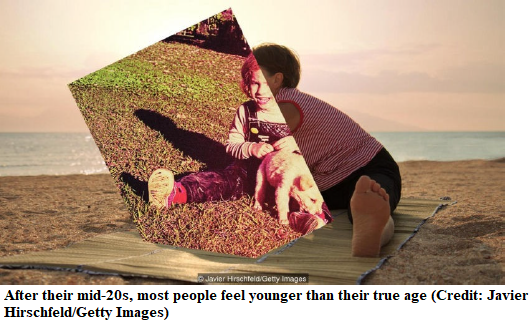
Imagine, for a moment, that you had no birth certificate and your age was simply based on the way you feel
inside. How old would you say you are?
Like your height or shoe size, the number of years that have passed since you first entered the world is an
unchangeable fact. But everyday experience suggests that we often don’t experience ageing the same way,
[5] with many people feeling older or younger than they really are.
Scientists are increasingly interested in this quality. They are finding that your ‘subjective age’ may be
essential for understanding the reasons that some people appear to flourish as they age – while others fade.
“The extent to which older adults feel much younger than they are may determine important daily or life
decisions for what they will do next,” says Brian Nosek at the University of Virginia.
[10] Its importance doesn’t end there. Various studies have even shown that your subjective age also can predict
various important health outcomes, including your risk of death. In some very real ways, you really are
‘only as old as you feel’.
Given these enticing results, many researchers are now trying to unpick the many biological, psychological,
and social factors that shape the individual experience of ageing – and how this knowledge might help us
[15] live longer, healthier lives.
 This new understanding of the ageing process has been decades in the making. Some of the earliest studies
charting the gap between felt and chronological age appeared in the 1970s and 1980s. That trickle of initial
interest has now turned into a flood. A torrent of new studies during the last 10 years have explored the
potential psychological and physiological consequences of this discrepancy.
One of the most intriguing strands of this research has explored the way subjective age interacts with our
[20] personality. It is now well accepted that people tend to mellow as they get older, becoming less extroverted
and less open to new experiences – personality changes which are less pronounced in people who are
younger at heart and accentuated in people with older subjective ages.
Interestingly, however, the people with younger subjective ages also became more conscientious and less
neurotic – positive changes that come with normal ageing. So they still seem to gain the wisdom that comes
[25] with greater life experience. But it doesn’t come at the cost of the energy and exuberance of youth. It’s not
as if having a lower subjective age leaves us frozen in a state of permanent immaturity.
Feeling younger than your years also seems to come with a lower risk of depression and greater mental
wellbeing as we age. It also means better physical health, including your risk of dementia, and less of a
chance that you will be hospitalised for illness.
[30] Yannick Stephan at the University of Montpellier examined the data from three longitudinal studies which
together tracked more than 17,000 middle-aged and elderly participants. […]
Fonte: ROBSON, David. The age you feel means more than your actual birthdate. Disponível em: http://www.bbc.com/future/story/20180712-the-age-you-feel-means-more-than-your-actual-birthdate. Publicado em: 19 jul. 2018. Acesso em: 21 jul. 2018.
According to the text, it is INCORRECT to state that:
Questão 16 2646881
UNIMONTES 1° Etapa 2018The age you feel means more than your actual birthdate
Most people feel younger or older than they really are – and this ‘subjective age’ has a big effect on their physical and mental health.
Imagine, for a moment, that you had no birth certificate and your age was simply based on the way you feel
inside. How old would you say you are?
Like your height or shoe size, the number of years that have passed since you first entered the world is an
unchangeable fact. But everyday experience suggests that we often don’t experience ageing the same way,
[5] with many people feeling older or younger than they really are.
Scientists are increasingly interested in this quality. They are finding that your ‘subjective age’ may be
essential for understanding the reasons that some people appear to flourish as they age – while others fade.
“The extent to which older adults feel much younger than they are may determine important daily or life
decisions for what they will do next,” says Brian Nosek at the University of Virginia.
[10] Its importance doesn’t end there. Various studies have even shown that your subjective age also can predict
various important health outcomes, including your risk of death. In some very real ways, you really are
‘only as old as you feel’.
Given these enticing results, many researchers are now trying to unpick the many biological, psychological,
and social factors that shape the individual experience of ageing – and how this knowledge might help us
[15] live longer, healthier lives.
This new understanding of the ageing process has been decades in the making. Some of the earliest studies
charting the gap between felt and chronological age appeared in the 1970s and 1980s. That trickle of initial
interest has now turned into a flood. A torrent of new studies during the last 10 years have explored the
potential psychological and physiological consequences of this discrepancy.
One of the most intriguing strands of this research has explored the way subjective age interacts with our
[20] personality. It is now well accepted that people tend to mellow as they get older, becoming less extroverted
and less open to new experiences – personality changes which are less pronounced in people who are
younger at heart and accentuated in people with older subjective ages.
Interestingly, however, the people with younger subjective ages also became more conscientious and less
neurotic – positive changes that come with normal ageing. So they still seem to gain the wisdom that comes
[25] with greater life experience. But it doesn’t come at the cost of the energy and exuberance of youth. It’s not
as if having a lower subjective age leaves us frozen in a state of permanent immaturity.
Feeling younger than your years also seems to come with a lower risk of depression and greater mental
wellbeing as we age. It also means better physical health, including your risk of dementia, and less of a
chance that you will be hospitalised for illness.
[30] Yannick Stephan at the University of Montpellier examined the data from three longitudinal studies which
together tracked more than 17,000 middle-aged and elderly participants. […]
Fonte: ROBSON, David. The age you feel means more than your actual birthdate. Disponível em: http://www.bbc.com/future/story/20180712-the-age-you-feel-means-more-than-your-actual-birthdate. Publicado em: 19 jul. 2018. Acesso em: 21 jul. 2018.
According to the text, studies have shown that:
Questão 16 2426808
FCMSCSP - Santa Casa Enfermagem e Fonoaudiologia 2018Leia o texto para responder à questão.
England’s Mental Health Experiment: No-Cost Talk Therapy
England is in the midst of a unique national experiment, the world’s most ambitious effort to treat depression, anxiety and other common mental illnesses. The rapidly growing initiative, which has gotten little publicity outside the country, offers virtually open-ended talk therapy free of charge at clinics throughout the country: in remote farming villages, industrial suburbs and isolated immigrant communities. The goal is to eventually create a system of primary care for mental health for all of Britain.
At a time when many nations are debating large-scale reforms to mental health care, researchers and policy makers are looking hard at England’s experience, observing both its popularity and its limitations. Mental health care systems vary widely across the Western world, but none have gone nearly so far to provide unlimited access to talk therapies backed by hard evidence. Experts say the English program is the first broad real-world test of treatments that have been studied mostly in carefully controlled lab conditions.
(Benedict Carey. www.nytimes.com, 24.07.2017. Adaptado.)
No trecho do segundo parágrafo “but none have gone nearly so far to provide unlimited access to talk therapies”, a palavra em destaque é utilizada para referir-se a
06