


![[Marketing] Questao Topo - deslogado](https://storage.estuda.com.br/banners/0_6b7ebee90b03af1c560c73bb8bcce34a_banner_deslogado_70_dias.png)
Questões de Inglês
19.971 Questões
Questão 12 7777202
FCMS/JF Medicina 2018/1The Best Fifa Women’s Player
Marta
There are not many superlatives left to describe the magnificent talents of Marta. The Brazilian legend is quite simply one of the greatest players to have graced the game and that stance atop football’s podium has been strengthened after being named The Best FIFA Women’s Player 2018.
This year’s nomination to be the top women’s player on the planet was – incredibly – the 14th time that she has been labelled among the elite and 2018 represented the 12th time that she had been named in the top three. This year’s crowning as The Best is the sixth time she has been elected the world’s top women’s player.
But her coronation is not simply for her longevity, it is for her outstanding achievements during 2017/18, where she captained Brazil to the Copa america title and helped her club side Orlando Pride to a long run in arguably the most challenging women’s league in world football: the USA’s National Women’s Soccer League. Still going strong at 32, there is no doubt that Marta can be among the elite for many more years to come.
Disponível em https://www.fifa.com/the-best-fifa-futeboll-awards/best-fifa-womens-player
How many times has Marta been elected the world’s top women’s player?
Questão 19 7442980
EAM 2018Use the verbs in parentheses to complete the following statements.
I- I usually (listen) to music in the evenings, but at the moment I watch) my favorite program on TV.
II- Janeth (love) films. Sometimes, she (prefer) to go to the theater with her friends.
III- Mr. Steven (live) in Rio de Janeiro, Brazil. During the week, his parents (work) as lawyers for a big company downtown.
Now mark the option which completes them respectively.
Questão 16 7442877
EAM 2018Read the dialogue and mark the right option to fill in the gaps respectively.
A: Good morning, Pedro!
B: Hi, Anne! How are you?
A: I'm great. And you?
B: I'm OK.
A: you at Tom's party last night?
B: Yes, I .
A: Who you go with?
B: I with my friends from work. And you?
Were you there?
A: No, I . I home.
Questão 39 7358516
CUSC Medicina 2° Semestre 2018Leia o texto para responder à questão.
The challenge of doctor-patient relations in the internet age
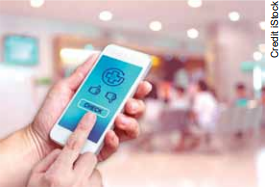
“Let me do some research and I’ll get back to you,” my patient said. My patient, a 19-year-old student, had already taken time off from school because of her anxiety. I was her psychiatrist, with over two decades of experience treating university students, and had just explained my diagnostic impressions based on a lengthy evaluation. I’d recommended that she try a medicine I expected would help. I’d also laid out the risks and benefits of other treatment options.
“Do you have additional questions I can answer?” I asked. I wanted to let her know that’s why I was there, to cull the research, to help make sense of it. “No, I like to go online and look for myself,” she said.
More and more, I see students turning away from the expertise that a live person can offer and instead turning to the vast and somehow more objective-seeming “expertise” of the digital world.
In an age when journalism we don’t like can be dismissed as “fake news,” suggesting that the information we do like is most credible, regardless of its source, it’s not hard to understand why young people do this. The medical profession itself, under managed care, has played a role as well, providing less time for doctor-patient interactions and undermining the chances that a personal relationship and trust can develop. Under the guise of efficiency, medical test results are now often released directly to patients, sometimes before or even without the benefit of any interpretation.
But there’s danger in trusting data over people, as there is in thinking the expertise of all people is equivalent. When it comes to health, digital natives may not be learning how to navigate effectively. And the consequences could be harmful.
The availability of health data on the internet has its benefits. Online, for example, we can find explanations and solutions for symptoms we might be too embarrassed, or afraid, to discuss with another person, in person. Or, for lifethreatening diseases, we can locate clinical trials our doctors may not be aware of.
However, there’s also a lot of misleading information, and information that’s simply untrue. The internet is full of people selling things – supplements, treatment regimens that have not been rigorously tested, even prescription medications – and making false promises that have not been scrutinized by regulatory agencies. Sometimes, as in the case of some websites that promote “an anorexic diet” for “aggressive” weight loss, the information can encourage life-threatening behavior.
Years ago, when we discussed paternalism versus patient autonomy in my medical school ethics class, I came down strongly in favor of autonomy. Who but the patient could best decide what was right for him or her? But years of clinical – and personal – experience have taught me that information in and of itself is insufficient. Judgment is also indispensable, especially in complex situations, and the capacity for good judgment rests within people, not data sets.
(Doris Iarovici is a psychiatrist at Harvard University’s Counseling and Mental Health Services and the author of Mental Health Issues and the University Student. www.nytimes.com, 01.03.2018. Adaptado.)
No trecho do sétimo parágrafo “However, there’s also a lot of misleading information, and information that’s simply untrue”, o termo sublinhado pode ser substituído, sem alteração de sentido, por
Questão 38 7358514
CUSC Medicina 2° Semestre 2018Leia o texto para responder à questão.
The challenge of doctor-patient relations in the internet age
“Let me do some research and I’ll get back to you,” my patient said. My patient, a 19-year-old student, had already taken time off from school because of her anxiety. I was her psychiatrist, with over two decades of experience treating university students, and had just explained my diagnostic impressions based on a lengthy evaluation. I’d recommended that she try a medicine I expected would help. I’d also laid out the risks and benefits of other treatment options.
“Do you have additional questions I can answer?” I asked. I wanted to let her know that’s why I was there, to cull the research, to help make sense of it. “No, I like to go online and look for myself,” she said.
More and more, I see students turning away from the expertise that a live person can offer and instead turning to the vast and somehow more objective-seeming “expertise” of the digital world.
In an age when journalism we don’t like can be dismissed as “fake news,” suggesting that the information we do like is most credible, regardless of its source, it’s not hard to understand why young people do this. The medical profession itself, under managed care, has played a role as well, providing less time for doctor-patient interactions and undermining the chances that a personal relationship and trust can develop. Under the guise of efficiency, medical test results are now often released directly to patients, sometimes before or even without the benefit of any interpretation.
But there’s danger in trusting data over people, as there is in thinking the expertise of all people is equivalent. When it comes to health, digital natives may not be learning how to navigate effectively. And the consequences could be harmful.
The availability of health data on the internet has its benefits. Online, for example, we can find explanations and solutions for symptoms we might be too embarrassed, or afraid, to discuss with another person, in person. Or, for lifethreatening diseases, we can locate clinical trials our doctors may not be aware of.
However, there’s also a lot of misleading information, and information that’s simply untrue. The internet is full of people selling things – supplements, treatment regimens that have not been rigorously tested, even prescription medications – and making false promises that have not been scrutinized by regulatory agencies. Sometimes, as in the case of some websites that promote “an anorexic diet” for “aggressive” weight loss, the information can encourage life-threatening behavior.
Years ago, when we discussed paternalism versus patient autonomy in my medical school ethics class, I came down strongly in favor of autonomy. Who but the patient could best decide what was right for him or her? But years of clinical – and personal – experience have taught me that information in and of itself is insufficient. Judgment is also indispensable, especially in complex situations, and the capacity for good judgment rests within people, not data sets.
(Doris Iarovici is a psychiatrist at Harvard University’s Counseling and Mental Health Services and the author of Mental Health Issues and the University Student. www.nytimes.com, 01.03.2018. Adaptado.)
De acordo com o quinto e o sexto parágrafos, um dos benefícios dos dados médicos disponíveis na internet é
Questão 37 7358511
CUSC Medicina 2° Semestre 2018Leia o texto para responder à questão.
The challenge of doctor-patient relations in the internet age
“Let me do some research and I’ll get back to you,” my patient said. My patient, a 19-year-old student, had already taken time off from school because of her anxiety. I was her psychiatrist, with over two decades of experience treating university students, and had just explained my diagnostic impressions based on a lengthy evaluation. I’d recommended that she try a medicine I expected would help. I’d also laid out the risks and benefits of other treatment options.
“Do you have additional questions I can answer?” I asked. I wanted to let her know that’s why I was there, to cull the research, to help make sense of it. “No, I like to go online and look for myself,” she said.
More and more, I see students turning away from the expertise that a live person can offer and instead turning to the vast and somehow more objective-seeming “expertise” of the digital world.
In an age when journalism we don’t like can be dismissed as “fake news,” suggesting that the information we do like is most credible, regardless of its source, it’s not hard to understand why young people do this. The medical profession itself, under managed care, has played a role as well, providing less time for doctor-patient interactions and undermining the chances that a personal relationship and trust can develop. Under the guise of efficiency, medical test results are now often released directly to patients, sometimes before or even without the benefit of any interpretation.
But there’s danger in trusting data over people, as there is in thinking the expertise of all people is equivalent. When it comes to health, digital natives may not be learning how to navigate effectively. And the consequences could be harmful.
The availability of health data on the internet has its benefits. Online, for example, we can find explanations and solutions for symptoms we might be too embarrassed, or afraid, to discuss with another person, in person. Or, for lifethreatening diseases, we can locate clinical trials our doctors may not be aware of.
However, there’s also a lot of misleading information, and information that’s simply untrue. The internet is full of people selling things – supplements, treatment regimens that have not been rigorously tested, even prescription medications – and making false promises that have not been scrutinized by regulatory agencies. Sometimes, as in the case of some websites that promote “an anorexic diet” for “aggressive” weight loss, the information can encourage life-threatening behavior.
Years ago, when we discussed paternalism versus patient autonomy in my medical school ethics class, I came down strongly in favor of autonomy. Who but the patient could best decide what was right for him or her? But years of clinical – and personal – experience have taught me that information in and of itself is insufficient. Judgment is also indispensable, especially in complex situations, and the capacity for good judgment rests within people, not data sets.
(Doris Iarovici is a psychiatrist at Harvard University’s Counseling and Mental Health Services and the author of Mental Health Issues and the University Student. www.nytimes.com, 01.03.2018. Adaptado.)
No trecho do quinto parágrafo “as there is in thinking the expertise of all people is equivalent”, o termo sublinhado equivale, em português, a
06