


![[Marketing] Questao Topo - deslogado](https://storage.estuda.com.br/banners/0_6b7ebee90b03af1c560c73bb8bcce34a_banner_deslogado_70_dias.png)
Questões de Inglês
19.971 Questões
Questão 2 1259069
FGV-SP Economia - 1ºFase - LEI/FIS/QUI/LPO - BLOCO 02 2019Read the text in order to answer question.
How to fix inequality
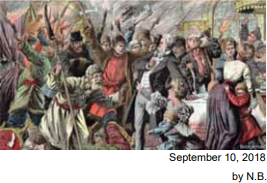
Introduction
In an age of widening inequality, the Stanford professor Walter Scheidel believes he has cracked the code on how to overcome it in his book “The Great Leveler”. The Economist’s Open Future initiative asked Mr Scheidel to reply to a number of questions.
1. The Economist: Is society incapable of tackling income inequality peacefully?
Walter Scheidel: No, but history shows that there are limits. There is a big difference between maintaining existing arrangements that successfully check inequality — Scandinavia is a good example — and significantly reducing it. The latter requires real change and that is always much harder to do: think of America or Britain, not to mention Brazil, China or India. The modern welfare state does a reasonably good job of compensating for inequality before taxes and transfers. However, for more substantial levelling to occur, the established order needs to be shaken up: the greater the shock to the system, the easier it becomes to reduce privilege at the top.
2. The Economist: Are we really living in an implacable period of wealth inequality — or was the relatively equal society that followed the Second World War the real aberration?
Walter Scheidel: When we view history over the long run, we can see that this experience was certainly a novelty. We now know that modernisation as such does not reliably reduce inequality. Many things had to come together to make this happen, such as very high income and estate taxes, strong labour unions, and intrusive regulations and controls. Since the 1980s, liberalisation and globalisation have allowed inequality to rise again. Even so, wealth concentration in Europe is nowhere near as high as it was a century ago. Like Europe, America, meanwhile, is getting there — which shows that it all depends on where you look.
3. The Economist: How do artificial intelligence and automation fit in to your thinking? Will they be a calamity for employment and thus for equality? Or might they unleash extraordinary productivity and improvements in living standards that actually narrow inequality?
Walter Scheidel: Ideally, we would like education to keep up with technological change to make sure workers have the skills they need to face this challenge. But in practice, there will always be losers, and even basic-income schemes can take us only so far. At the end of the day, someone owns the robots. As long as the capitalist world system is in place, it is hard to see how even huge productivity gains from greater automation would benefit society evenly instead of funnelling even more income and wealth to those who are in the best position to pocket these gains.
(The Economist. http://bit.do/eysic. Adaptado)
In the excerpt from the introduction “Walter Scheidel believes he has cracked the code on how to overcome it”, the expression in bold means that he has
Questão 1 1259053
FGV-SP Economia - 1ºFase - LEI/FIS/QUI/LPO - BLOCO 02 2019Read the text in order to answer question.
How to fix inequality
Introduction
In an age of widening inequality, the Stanford professor Walter Scheidel believes he has cracked the code on how to overcome it in his book “The Great Leveler”. The Economist’s Open Future initiative asked Mr Scheidel to reply to a number of questions.
1. The Economist: Is society incapable of tackling income inequality peacefully?
Walter Scheidel: No, but history shows that there are limits. There is a big difference between maintaining existing arrangements that successfully check inequality — Scandinavia is a good example — and significantly reducing it. The latter requires real change and that is always much harder to do: think of America or Britain, not to mention Brazil, China or India. The modern welfare state does a reasonably good job of compensating for inequality before taxes and transfers. However, for more substantial levelling to occur, the established order needs to be shaken up: the greater the shock to the system, the easier it becomes to reduce privilege at the top.
2. The Economist: Are we really living in an implacable period of wealth inequality — or was the relatively equal society that followed the Second World War the real aberration?
Walter Scheidel: When we view history over the long run, we can see that this experience was certainly a novelty. We now know that modernisation as such does not reliably reduce inequality. Many things had to come together to make this happen, such as very high income and estate taxes, strong labour unions, and intrusive regulations and controls. Since the 1980s, liberalisation and globalisation have allowed inequality to rise again. Even so, wealth concentration in Europe is nowhere near as high as it was a century ago. Like Europe, America, meanwhile, is getting there — which shows that it all depends on where you look.
3. The Economist: How do artificial intelligence and automation fit in to your thinking? Will they be a calamity for employment and thus for equality? Or might they unleash extraordinary productivity and improvements in living standards that actually narrow inequality?
Walter Scheidel: Ideally, we would like education to keep up with technological change to make sure workers have the skills they need to face this challenge. But in practice, there will always be losers, and even basic-income schemes can take us only so far. At the end of the day, someone owns the robots. As long as the capitalist world system is in place, it is hard to see how even huge productivity gains from greater automation would benefit society evenly instead of funnelling even more income and wealth to those who are in the best position to pocket these gains.
(The Economist. http://bit.do/eysic. Adaptado)
The text intends to
Questão 47 1239644
EPCAR 2019Directions: Answer question according to the text.
TEXT
WHAT IS MODERN SLAVERY?
Slavery did not end with abolition in the 19th
century. Slavery continues today and harms people in
every country in the world.
Women forced into prostitution. People forced to
[5] work in agriculture, domestic work and factories.
Children in sweatshops1 producing goods sold globally.
Entire families forced to work for nothing to pay off
generational debts. Girls forced to marry older men.
There are estimated 40.3 million people in modern
[10] slavery around the world, including:
• 10 million children
• 24.9 million people in forced labour
• 15.4 million people in forced marriage
• 4.8 million people in forced sexual exploitation
[15] Someone is in slavery if they are:
• forced to work – through coercion, or mental or
physical threat;
• owned or controlled by an ’employer’, through
mental or physical abuse or the threat of abuse;
[20] • dehumanised, treated as a commodity or bought
and sold as ‘property’;
• physically constrained or have restrictions placed
on their freedom of movement.
Slavery has been a disgraceful aspect of human
[25] society for most of human history. However, Anti-
Slavery International has refused to accept that this
bloody status quo should be allowed to persist (Aidan
McQuade, former director).
Forms of modern slavery
[30] Purposes of exploitation2 can range from forced
prostitution and forced labour to forced marriage and
forced organ removal. Here are the most common
forms of modern slavery.
• Forced labour – any work or services which people
[35] are forced to do against their will3 under the threat
of some form of punishment.
• Debt bondage or bonded labour – the world’s most
widespread form of slavery, when people borrow
money they cannot repay and are required to work
[40] to pay off the debt, then losing control over the
conditions of both their employment and the debt.
• Human trafficking– involves transporting, recruiting
or harbouring people for the purpose of exploitation,
using violence, threats or coercion.
[45] • Descent-based slavery – where people are born
into slavery because their ancestors were captured
and enslaved; they remain in slavery by descent.
• Child slavery – many people often confuse child
slavery with child labour, but it is much worse.
[50] Whilst4 child labour is harmful for children and
hinders5 their education and development, child
slavery occurs when a child is exploited for
someone else’s gain. It can include child trafficking,
child soldiers, child marriage and child domestic
[55] slavery.
• Forced and early marriage – when someone is
married against their will and cannot leave the
marriage. Most child marriages can be considered
slavery.
[60] Many forms of slavery have more than one element
listed above. For example, human trafficking often
involves advance payment for travel and a job abroad,
using money often borrowed from the traffickers. Then,
the debt contributes to control of the victims. Once they
[65] arrive, victims cannot leave until they pay off their debt.
Many people think that slavery happens only
overseas, in developing countries. In fact, no country is
free from modern slavery, even Britain. The
Government estimates that there are tens of thousands
[70] people in modern slavery in the UK.
Modern slavery can affect people of any age,
gender or race. However, contrary to a common
misconception6 that everyone can be a victim of
slavery, some groups of people are much more
[75] vulnerable to slavery than others.
People who live in poverty7 and have limited
opportunities for decent work are more vulnerable to
accepting deceptive job offers that can turn exploitative.
People who are discriminated against on the basis of
[80] race, caste, or gender are also more likely to be
enslaved. Slavery is also more likely to occur where the
rule of law is weaker and corruption is rife.
Anti-Slavery International believes that we have to
tackle8 the root causes of slavery in order to end
[85] slavery for good. That’s why we published our Anti-
Slavery Charter, listing comprehensive measures that
need to be taken to end slavery across the world.
(Adapted from https://www.antislavery.org/slavery-today/modern-slavery/)
Glossary:
1. sweatshop – a factory where workers are paid very little and work many hours in very bad conditions
2. exploitation – abuse, manipulation
3. will – wish, desire
4. whilst – while
5. to hinder – obstruct, stop
6. misconception – wrong idea/ impression
7. poverty – the condition of being extremely poor
8. to tackle – attack
The author concludes that Anti-Slavery International believes
Questão 45 1239637
EPCAR 2019Directions: Answer question according to the text.
TEXT
WHAT IS MODERN SLAVERY?
Slavery did not end with abolition in the 19th
century. Slavery continues today and harms people in
every country in the world.
Women forced into prostitution. People forced to
[5] work in agriculture, domestic work and factories.
Children in sweatshops1 producing goods sold globally.
Entire families forced to work for nothing to pay off
generational debts. Girls forced to marry older men.
There are estimated 40.3 million people in modern
[10] slavery around the world, including:
• 10 million children
• 24.9 million people in forced labour
• 15.4 million people in forced marriage
• 4.8 million people in forced sexual exploitation
[15] Someone is in slavery if they are:
• forced to work – through coercion, or mental or
physical threat;
• owned or controlled by an ’employer’, through
mental or physical abuse or the threat of abuse;
[20] • dehumanised, treated as a commodity or bought
and sold as ‘property’;
• physically constrained or have restrictions placed
on their freedom of movement.
Slavery has been a disgraceful aspect of human
[25] society for most of human history. However, Anti-
Slavery International has refused to accept that this
bloody status quo should be allowed to persist (Aidan
McQuade, former director).
Forms of modern slavery
[30] Purposes of exploitation2 can range from forced
prostitution and forced labour to forced marriage and
forced organ removal. Here are the most common
forms of modern slavery.
• Forced labour – any work or services which people
[35] are forced to do against their will3 under the threat
of some form of punishment.
• Debt bondage or bonded labour – the world’s most
widespread form of slavery, when people borrow
money they cannot repay and are required to work
[40] to pay off the debt, then losing control over the
conditions of both their employment and the debt.
• Human trafficking– involves transporting, recruiting
or harbouring people for the purpose of exploitation,
using violence, threats or coercion.
[45] • Descent-based slavery – where people are born
into slavery because their ancestors were captured
and enslaved; they remain in slavery by descent.
• Child slavery – many people often confuse child
slavery with child labour, but it is much worse.
[50] Whilst4 child labour is harmful for children and
hinders5 their education and development, child
slavery occurs when a child is exploited for
someone else’s gain. It can include child trafficking,
child soldiers, child marriage and child domestic
[55] slavery.
• Forced and early marriage – when someone is
married against their will and cannot leave the
marriage. Most child marriages can be considered
slavery.
[60] Many forms of slavery have more than one element
listed above. For example, human trafficking often
involves advance payment for travel and a job abroad,
using money often borrowed from the traffickers. Then,
the debt contributes to control of the victims. Once they
[65] arrive, victims cannot leave until they pay off their debt.
Many people think that slavery happens only
overseas, in developing countries. In fact, no country is
free from modern slavery, even Britain. The
Government estimates that there are tens of thousands
[70] people in modern slavery in the UK.
Modern slavery can affect people of any age,
gender or race. However, contrary to a common
misconception6 that everyone can be a victim of
slavery, some groups of people are much more
[75] vulnerable to slavery than others.
People who live in poverty7 and have limited
opportunities for decent work are more vulnerable to
accepting deceptive job offers that can turn exploitative.
People who are discriminated against on the basis of
[80] race, caste, or gender are also more likely to be
enslaved. Slavery is also more likely to occur where the
rule of law is weaker and corruption is rife.
Anti-Slavery International believes that we have to
tackle8 the root causes of slavery in order to end
[85] slavery for good. That’s why we published our Anti-
Slavery Charter, listing comprehensive measures that
need to be taken to end slavery across the world.
(Adapted from https://www.antislavery.org/slavery-today/modern-slavery/)
Glossary:
1. sweatshop – a factory where workers are paid very little and work many hours in very bad conditions
2. exploitation – abuse, manipulation
3. will – wish, desire
4. whilst – while
5. to hinder – obstruct, stop
6. misconception – wrong idea/ impression
7. poverty – the condition of being extremely poor
8. to tackle – attack
Mark the option with the suitable question to answer the fragment below.
“When someone is married against their will”. (lines 56 and 57)
Questão 44 1239632
EPCAR 2019Directions: Answer question according to the text.
TEXT
WHAT IS MODERN SLAVERY?
Slavery did not end with abolition in the 19th
century. Slavery continues today and harms people in
every country in the world.
Women forced into prostitution. People forced to
[5] work in agriculture, domestic work and factories.
Children in sweatshops1 producing goods sold globally.
Entire families forced to work for nothing to pay off
generational debts. Girls forced to marry older men.
There are estimated 40.3 million people in modern
[10] slavery around the world, including:
• 10 million children
• 24.9 million people in forced labour
• 15.4 million people in forced marriage
• 4.8 million people in forced sexual exploitation
[15] Someone is in slavery if they are:
• forced to work – through coercion, or mental or
physical threat;
• owned or controlled by an ’employer’, through
mental or physical abuse or the threat of abuse;
[20] • dehumanised, treated as a commodity or bought
and sold as ‘property’;
• physically constrained or have restrictions placed
on their freedom of movement.
Slavery has been a disgraceful aspect of human
[25] society for most of human history. However, Anti-
Slavery International has refused to accept that this
bloody status quo should be allowed to persist (Aidan
McQuade, former director).
Forms of modern slavery
[30] Purposes of exploitation2 can range from forced
prostitution and forced labour to forced marriage and
forced organ removal. Here are the most common
forms of modern slavery.
• Forced labour – any work or services which people
[35] are forced to do against their will3 under the threat
of some form of punishment.
• Debt bondage or bonded labour – the world’s most
widespread form of slavery, when people borrow
money they cannot repay and are required to work
[40] to pay off the debt, then losing control over the
conditions of both their employment and the debt.
• Human trafficking– involves transporting, recruiting
or harbouring people for the purpose of exploitation,
using violence, threats or coercion.
[45] • Descent-based slavery – where people are born
into slavery because their ancestors were captured
and enslaved; they remain in slavery by descent.
• Child slavery – many people often confuse child
slavery with child labour, but it is much worse.
[50] Whilst4 child labour is harmful for children and
hinders5 their education and development, child
slavery occurs when a child is exploited for
someone else’s gain. It can include child trafficking,
child soldiers, child marriage and child domestic
[55] slavery.
• Forced and early marriage – when someone is
married against their will and cannot leave the
marriage. Most child marriages can be considered
slavery.
[60] Many forms of slavery have more than one element
listed above. For example, human trafficking often
involves advance payment for travel and a job abroad,
using money often borrowed from the traffickers. Then,
the debt contributes to control of the victims. Once they
[65] arrive, victims cannot leave until they pay off their debt.
Many people think that slavery happens only
overseas, in developing countries. In fact, no country is
free from modern slavery, even Britain. The
Government estimates that there are tens of thousands
[70] people in modern slavery in the UK.
Modern slavery can affect people of any age,
gender or race. However, contrary to a common
misconception6 that everyone can be a victim of
slavery, some groups of people are much more
[75] vulnerable to slavery than others.
People who live in poverty7 and have limited
opportunities for decent work are more vulnerable to
accepting deceptive job offers that can turn exploitative.
People who are discriminated against on the basis of
[80] race, caste, or gender are also more likely to be
enslaved. Slavery is also more likely to occur where the
rule of law is weaker and corruption is rife.
Anti-Slavery International believes that we have to
tackle8 the root causes of slavery in order to end
[85] slavery for good. That’s why we published our Anti-
Slavery Charter, listing comprehensive measures that
need to be taken to end slavery across the world.
(Adapted from https://www.antislavery.org/slavery-today/modern-slavery/)
Glossary:
1. sweatshop – a factory where workers are paid very little and work many hours in very bad conditions
2. exploitation – abuse, manipulation
3. will – wish, desire
4. whilst – while
5. to hinder – obstruct, stop
6. misconception – wrong idea/ impression
7. poverty – the condition of being extremely poor
8. to tackle – attack
In the topic “Forced and early marriage” (line 56), the modal verb can be replaced by ____ without changing the meaning
Questão 43 1239619
EPCAR 2019Directions: Answer question according to the text.
TEXT
WHAT IS MODERN SLAVERY?
Slavery did not end with abolition in the 19th
century. Slavery continues today and harms people in
every country in the world.
Women forced into prostitution. People forced to
[5] work in agriculture, domestic work and factories.
Children in sweatshops1 producing goods sold globally.
Entire families forced to work for nothing to pay off
generational debts. Girls forced to marry older men.
There are estimated 40.3 million people in modern
[10] slavery around the world, including:
• 10 million children
• 24.9 million people in forced labour
• 15.4 million people in forced marriage
• 4.8 million people in forced sexual exploitation
[15] Someone is in slavery if they are:
• forced to work – through coercion, or mental or
physical threat;
• owned or controlled by an ’employer’, through
mental or physical abuse or the threat of abuse;
[20] • dehumanised, treated as a commodity or bought
and sold as ‘property’;
• physically constrained or have restrictions placed
on their freedom of movement.
Slavery has been a disgraceful aspect of human
[25] society for most of human history. However, Anti-
Slavery International has refused to accept that this
bloody status quo should be allowed to persist (Aidan
McQuade, former director).
Forms of modern slavery
[30] Purposes of exploitation2 can range from forced
prostitution and forced labour to forced marriage and
forced organ removal. Here are the most common
forms of modern slavery.
• Forced labour – any work or services which people
[35] are forced to do against their will3 under the threat
of some form of punishment.
• Debt bondage or bonded labour – the world’s most
widespread form of slavery, when people borrow
money they cannot repay and are required to work
[40] to pay off the debt, then losing control over the
conditions of both their employment and the debt.
• Human trafficking– involves transporting, recruiting
or harbouring people for the purpose of exploitation,
using violence, threats or coercion.
[45] • Descent-based slavery – where people are born
into slavery because their ancestors were captured
and enslaved; they remain in slavery by descent.
• Child slavery – many people often confuse child
slavery with child labour, but it is much worse.
[50] Whilst4 child labour is harmful for children and
hinders5 their education and development, child
slavery occurs when a child is exploited for
someone else’s gain. It can include child trafficking,
child soldiers, child marriage and child domestic
[55] slavery.
• Forced and early marriage – when someone is
married against their will and cannot leave the
marriage. Most child marriages can be considered
slavery.
[60] Many forms of slavery have more than one element
listed above. For example, human trafficking often
involves advance payment for travel and a job abroad,
using money often borrowed from the traffickers. Then,
the debt contributes to control of the victims. Once they
[65] arrive, victims cannot leave until they pay off their debt.
Many people think that slavery happens only
overseas, in developing countries. In fact, no country is
free from modern slavery, even Britain. The
Government estimates that there are tens of thousands
[70] people in modern slavery in the UK.
Modern slavery can affect people of any age,
gender or race. However, contrary to a common
misconception6 that everyone can be a victim of
slavery, some groups of people are much more
[75] vulnerable to slavery than others.
People who live in poverty7 and have limited
opportunities for decent work are more vulnerable to
accepting deceptive job offers that can turn exploitative.
People who are discriminated against on the basis of
[80] race, caste, or gender are also more likely to be
enslaved. Slavery is also more likely to occur where the
rule of law is weaker and corruption is rife.
Anti-Slavery International believes that we have to
tackle8 the root causes of slavery in order to end
[85] slavery for good. That’s why we published our Anti-
Slavery Charter, listing comprehensive measures that
need to be taken to end slavery across the world.
(Adapted from https://www.antislavery.org/slavery-today/modern-slavery/)
Glossary:
1. sweatshop – a factory where workers are paid very little and work many hours in very bad conditions
2. exploitation – abuse, manipulation
3. will – wish, desire
4. whilst – while
5. to hinder – obstruct, stop
6. misconception – wrong idea/ impression
7. poverty – the condition of being extremely poor
8. to tackle – attack
Mark the option that replaces the underlined words, respectively, keeping the same meaning.
“[...] many people often confuse child slavery with child labour [...]” (lines 48 and 49)
06