


![[Marketing] Questao Topo - deslogado](https://storage.estuda.com.br/banners/0_6b7ebee90b03af1c560c73bb8bcce34a_banner_deslogado_70_dias.png)
Questões de Inglês
19.971 Questões
Questão 42 15376935
ITA 1 Fase 2026Back To School But Not To Screens: States Ramp Up Cellphone Bans
Work has been easier for public high school teacher Brian Kerekes since last August, when he first experienced the impacts of a newly enacted Florida law to restrict students' cellphone use during class. The longtime statistics instructor, who started a new school year on Monday, now spends less time circling the classroom policing students and more time educating them on how to gather and interpret data.
Before Florida passed the ban in May 2023 - becoming the first of at least eight U.S. states to prohibit or restrict cellphone use in schools - phones proved a constant disruption in Kerekes' classroom at Tohopekaliga High School in the central Florida city of Kissimmee.
"Students were either using them to talk to someone in a different class or talk to someone on the other side of the room or just to zone out, get on TikTok or whatever," Kerekes, who's been a teacher for 17 years, said in an interview.
Fellow teachers nationwide face the same challenge, which explains why more states and districts are moving to limit or outright ban cellphones in the classroom, and even during the school day altogether. [...]
The rules will look different from state to state and district to district, but all stem from the same concerns.
Seventy-two percent of high school teachers cite cellphones as a major distraction in the classroom, according to a fall 2023 Pew Research Center study. Educators also worry that constant access to social media can adversely impact kids' mental health. [...]
U.S. Surgeon General Vivek Murthy went so far as to issue a health advisory last year, warning that enough evidence exists to show social media can be unsafe for children and teens. "We are in the middle of a national youth mental health crisis," he said, "and I am concerned that social media is an important driver of that crisis, one that we must urgently address,"
While social media can connect kids, make them feel less alone and offer an entertaining and creative outlet, it also exposes them to harmful content, Murthy pointed out in the advisory released by the U.S. Department of Health and Human Services. And, as educators such as Kerekes note, some students use their phones to bully fellow students online during the school day, and in the most extreme cases, to set up fights and film them. The hope is that cellphone bans will reduce such incidents, Kerekes said he's hearing they have.
Fonte: KATZ, Leslie, Back To School But Not To Screens: States Ramp Up Cellphone Bans, Forbes, 13 ago. 2024. Disponível em:https://www.forbes.com/sites/lesliekatz/2024/08/13/back-to-school-but-not-to-screens-more-students-face-cellphone-bans/
De acordo com as informações presentes no texto, depreende-se que
Questão 68 15339057
FUVEST (USP) Conhecimento Gerais 2026Texto para a questão.
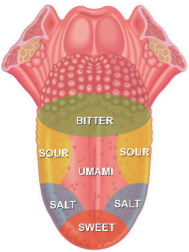
Think for a minute about the little bumps on your tongue. You probably saw a diagram of those taste bud arrangements once in a biology textbook — sweet sensors at the tip, salty on either side, sour behind them, bitter in the back.
But the idea that specific tastes are confined to certain areas of the tongue is a myth that “persists in the collective consciousness, despite decades of research debunking it”, according to a review published this month in The New England Journal of Medicine. Also wrong: the notion that taste is limited to the mouth.
The old diagram, which has been used in many textbooks over the years, originated in a study published by David Hanig, a German scientist, in 1901. But the scientist was not suggesting that various tastes are segregated on the tongue. He was actually measuring the sensitivity of different areas, said Paul Breslin, a researcher at Monell Chemical Senses Center in Philadelphia. “What he found was that you could detect things at a lower concentration in one part relative to another,” Dr. Breslin said. The tip of the tongue, for example, is dense with sweet sensors but contains the others as well.
The map’s mistakes are easy to confirm. If you place a lemon wedge at the tip of your tongue, it will taste sour, and if you put a bit of honey toward the side, it will be sweet.
The perception of taste is a remarkably complex process, starting from that first encounter with the tongue. Taste cells have a variety of sensors that signal the brain when they encounter nutrients or toxins. For some tastes, tiny pores in cell membranes let taste chemicals in.
Such taste receptors aren’t limited to the tongue; they are also found in the gastrointestinal tract, liver, pancreas, fat cells, brain, muscle cells, thyroid and lungs. We don’t generally think of these organs as tasting anything, but they use the receptors to pick up the presence of various molecules and metabolize them, said Diego Bohórquez, a self-described gut-brain neuroscientist at Duke University. For example, when the gut notices sugar in food, it tells the brain to alert other organs to get ready for digestion.
New York Times. May 29, 2024. Adaptado.
Sobre os receptores gustativos e sua distribuição corporal, o texto sugere que
Questão 66 15339036
FUVEST (USP) Conhecimento Gerais 2026Texto para a questão.
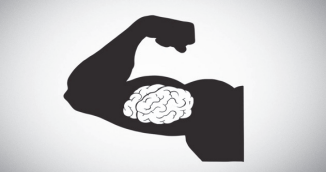
Researchers investigated the quantities of thousands of muscle proteins and found a possible new explanation for muscle memory. A study showed for the first time that muscles "remember" training at the protein level. It is often thought that the effects of exercise are short-lived, and a break from the gym can cause stress over muscle loss. However, the research has shown that this stress is partly unnecessary, as the effects of resistance training persist in muscles for up to two months and the gains are fast when training is started again. But what mechanisms and changes at the cellular and molecular levels explain muscle memory? In the study, ten weeks of resistance training was followed by a break of the same length and then followed by another ten weeks of resistance training. Using the proteomics method, it was possible to study the quantities of over 3,000 muscle proteins using advanced mass spectrometry equipment. The study found two types of change profiles in muscle proteins. Some proteins changed as a result of training, returned to their pre-training state during the break, and changed again during the new training period similarly to the first training period. These included proteins related to aerobic metabolism. Another group of proteins changed as a result of training and remained changed during the break and after the new training period. Among these proteins were several calcium-binding proteins, such as calpain-2, whose gene has recently been identified to retain a memory trace even after a training break. "At the level of the number of muscle nuclei and the memory traces of genes, that is, epigenetics, long-term responses that persist even after a break and possibly explain 'muscle memory' have previously been observed," says a researcher. "Now, for the first time, we have shown that muscles 'remember' previous resistance training at the protein level for at least two and a half months."
Disponível em https://jyu.fi/en/news/. 14 April 2025. Adaptado.
Segundo o texto, os experimentos demonstram que
Questão 30 15208242
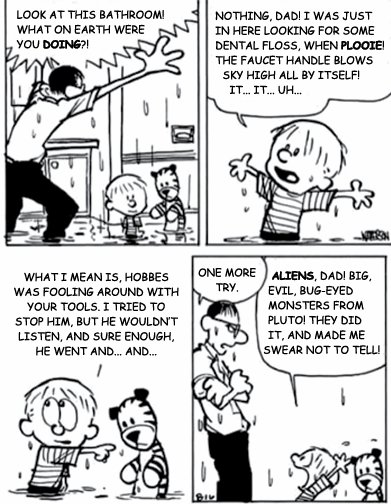
UNESP Conhecimentos Gerais 2026Examine a tira de Bill Watterson.
(www.facebook.com)
In the comic strip, Calvin, the boy,
Questão 26 15208092
UNESP Conhecimentos Gerais 2026Leia o texto para responder à questão.
Dr. Mariangela Hungria will receive the $500,000 award for her work to utilize biological processes to sustainably improve crop1 nutrition, yields2 and productivity. The scientist whose discoveries helped Brazil become a global agricultural powerhouse has been named the 2025 World Food Prize Laureate.
Dr. Mariangela Hungria, a microbiologist from São Paulo, has developed dozens of biological seed and soil treatments that help crops source nutrients through soil bacteria, significantly increasing yields of major crops while also reducing the need for synthetic fertilizer. Her products are estimated to have been used across more than 40 million hectares in Brazil, saving farmers up to US$40 billion a year in costs while avoiding more than 180 million metric tons of CO2 equivalent emissions per year.
Dr. Hungria’s work has helped improve yields of wheat, corn, rice, common beans, and other major crops, including soybean, which is now Brazil’s top agricultural export. Over her 40-year career with the Brazilian Agricultural Research Corporation (Embrapa), national soybean production increased from 15 million tons in 1979 to an anticipated 173 million tons in the next harvest3 in 2025.
Dr. Hungria, who overcame prejudices against women and young mothers in academia to be named one of the 100 most powerful women in agriculture in Brazil by Forbes magazine in 2021, said she was inspired by Dr. Norman Borlaug, the father of the Green Revolution and founder of the World Food Prize. “I like to say that he made the Green Revolution possible, and we had this great opportunity to start a ‘micro green revolution’ — a green revolution, but with microorganisms,” she added. “I can’t quite believe I am now receiving the World Food Prize. Many people questioned me and my abilities throughout my career but I believed in what I was doing and persevered. The role of women in agriculture, from farming to science, deserves more recognition. I hope my achievement inspires others to pursue their passions in science.”
(www.worldfoodprize.org, 13.05.2025. Adaptado.)
1crop: cultivated plant that is grown as food, especially grain, fruit or vegetable.
2yields: the full amounts of an agricultural product.
3harvest: the crops that are cut and collected.
According to the fourth paragraph, Dr. Hungria partly attributes her success toprejudice.
Questão 25 15208085
UNESP Conhecimentos Gerais 2026Leia o texto para responder à questão.
Dr. Mariangela Hungria will receive the $500,000 award for her work to utilize biological processes to sustainably improve crop1 nutrition, yields2 and productivity. The scientist whose discoveries helped Brazil become a global agricultural powerhouse has been named the 2025 World Food Prize Laureate.
Dr. Mariangela Hungria, a microbiologist from São Paulo, has developed dozens of biological seed and soil treatments that help crops source nutrients through soil bacteria, significantly increasing yields of major crops while also reducing the need for synthetic fertilizer. Her products are estimated to have been used across more than 40 million hectares in Brazil, saving farmers up to US$40 billion a year in costs while avoiding more than 180 million metric tons of CO2 equivalent emissions per year.
Dr. Hungria’s work has helped improve yields of wheat, corn, rice, common beans, and other major crops, including soybean, which is now Brazil’s top agricultural export. Over her 40-year career with the Brazilian Agricultural Research Corporation (Embrapa), national soybean production increased from 15 million tons in 1979 to an anticipated 173 million tons in the next harvest3 in 2025.
Dr. Hungria, who overcame prejudices against women and young mothers in academia to be named one of the 100 most powerful women in agriculture in Brazil by Forbes magazine in 2021, said she was inspired by Dr. Norman Borlaug, the father of the Green Revolution and founder of the World Food Prize. “I like to say that he made the Green Revolution possible, and we had this great opportunity to start a ‘micro green revolution’ — a green revolution, but with microorganisms,” she added. “I can’t quite believe I am now receiving the World Food Prize. Many people questioned me and my abilities throughout my career but I believed in what I was doing and persevered. The role of women in agriculture, from farming to science, deserves more recognition. I hope my achievement inspires others to pursue their passions in science.”
(www.worldfoodprize.org, 13.05.2025. Adaptado.)
1crop: cultivated plant that is grown as food, especially grain, fruit or vegetable.
2yields: the full amounts of an agricultural product.
3harvest: the crops that are cut and collected.
De acordo com o texto, a cultura agrícola que foi mais impactada pela pesquisa da Dra. Mariangela Hungria é a
06