


![[Marketing] Questao Topo - deslogado](https://storage.estuda.com.br/banners/0_6b7ebee90b03af1c560c73bb8bcce34a_banner_deslogado_70_dias.png)
Questões de Inglês
19.971 Questões
Questão 21 1709206
Escola Naval 1° Dia 2019Based on the text below, answer question that follow it. The paragraphs of the text are numbered.
If children lose contact with nature they wont't fight for it
[1] According to recent research, even if the present rate of global decarbonisation were to double, we would still be on course for 6°C of warming by the end of the century. Limiting the rise to 2°C, which is the target of current policies, requires a six-time reduction in carbon intensity.
[2] A new report shows that the UK has lost 20% of its breeding birds since 1966: once common species such as willow tits, lesser spotted woodpeckers and turtle doves have all but collapsed; even house sparrows have fallen by two thirds. Ash dieback is just one of many terrifying plant diseases, mostly spread by trade. They now threaten our oaks, pines and chestnuts.
[3] While the surveys show that the great majority of people would like to see the living planet protected, few are prepared to take action. This, I think, reflects a second environmental crisis: the removal of children from the natural world. The young people we might have expected to lead the defence of nature have less and less to do with it.
[4] We don't have to undervalue the indoor world, which has its own rich ecosystem, to lament children's disconnection from the outdoor world. But the experiences the two spheres offer are entirely different. There is no substitute for what takes place outdoors, mostly because the greatest joys of nature are unplanned. The thought that most of our children will never swim among phosphorescent plankton at night, will never be startled by a salmon leaping, or a dolphin breaching is almost as sad as the thought that their children might not have the opportunity.
[5] The remarkable collapse of children's engagement with nature - which is even faster than the collapse of the natural world - is recorded in Richard Louv's book Last Child in the Woods, and in a report published recently by the National Trust, Since the 1970s the area in which children may roam without supervision has decreased by almost 90%. In one generation the proportion of children regularly playing in wild places in the UK has fallen from more than half to fewer than one in 10. In the US, in just six years (1997-2008) children with particular outdoor hobbies fell by half. Eleven- to 15-year- olds in Britain now spend, on average, half their waking day in front of a screen.
[6] There are several reasons for this collapse: parents' irrational fear of strangers and rational fear of traffic, the destruction of the fortifying lands where previous generations played, the quality of indoor entertainment, the structuring of children's time, the criminalisation of natural play. The great indoors, as a result, has become a far more dangerous place than the diminished world beyond.
[7] The rise of obesity and asthma and the decline in cardio-respiratory fitness are well documented. Louv also links the indoor life to an increase in attention deficit hyperactivity disorder and other mental ill health. Research conducted at the University of Illinois suggests that playing among trees and grass is associated with a marked reduction in indications of ADHD, while playing indoors appears to increase them. The disorder, Louv suggests, “may be a set of symptoms aggravated by lack of exposure to nature”. Perhaps it's the environment, not the child, that has gone wrong.
[8] In her famous essay the Ecology of Imagination in Childhood, Edith Cobb proposed that contact with nature stimulates creativity. Reviewing the biographies of 300 “geniuses", she exposed a common theme: intense experiences of the natural world .in the middle age of childhood (between five and 12). Animals and plants, she argued, are among "the figures of speech in the rhetoric of play... which the genius, in particular of later life, seems to remember”.
[9] Studies in several nations show that children's games are more creative in green places than in concrete playgrounds. Natural spaces encourage fantasy and roleplay, reasoning and observation. The social standing of children there depends less on physical dominance, more on inventiveness and language skills.
[10] And here we meet the other great loss. Most of those I know who fight for nature are people who spent their childhoods immersed in it. Without a feel for the texture and function of the natural world, without an intensity of engagement almost impossible in the absence of early experience, people will not devote their lives to its protection.
[11] Forest Schools, Outward Bound, Woodcraft Folk, the John Muir-Award, the Campaign for Adventure, Natural Connections, family nature clubs and many others are trying to bring children and the natural world back together. But all of them are fighting forces which, if they cannot be changed, will deprive the living planet of the wonder and delight that for millennia have attracted Children to the wilds.
(Adapted from: https://www theguardian.com/commentisfree/2012/nov/19/children-lose- contact-with-nature)
According to the text, which option completes the sentence below correctly?
The current policies aim at a in the rise of temperatures by the end of the century.
Questão 45 1675637
Unit-SE Demais cursos 1° Dia 2019/1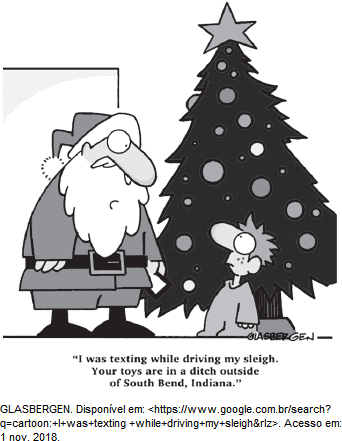 According to this cartoon, Santa Klaus
Questão 44 1675634
Unit-SE Demais cursos 1° Dia 2019/1TEXTO:

When Sudan, the last northern white rhino bull, died
in March 2018, that left alive only two females of
the subspecies once common in Central and East
Africa.Both are descendants of Sudan and live in Kenya,
[5] and were considered infertile. But now, new hope is
emerging that extinction of the species can still be
prevented. Researchers have successfully created living
embryos in the laboratory from frozen sperm of the
northern white rhinoceros and egg cells from the southern
[10] white rhinoceros. It’s the most closely related
subspecies, with more than 20,000 southern rhinos living
in the wild.
Although such hybrid embryos are not pure northern
white rhinoceros, the researchers are optimistic. They
[15] plan to take egg cells from the still living northern
rhinoceros females in autumn of this year, and to fertilize
them with stored sperm from the same species.They
then intend to implant the oocytes into fertile southern
rhinoceros females in early 2019. This method is also
[20] used in human reproductive medicine.
Even if healthy rhinoceros calves can be
produced, whether the northern white rhino can be saved
in the long term remains unclear. As the sperm comes
from a few rhinoceros bulls, limited genetic diversity could
[25] endanger the health of a newly bred northern white rhino
population. Due to the smaller gene pool, such inbreeding
typically leads to higher rates of recessive disorders,
translating into higher death rates and poorer overall
health.
[30] Still, the research unit is hoping that stem cell
technology can create more eggs and sperm from the
skin cells of 12 northern whites, increasing the supply
and genetic variety. If the scientists pull it off, they’ll
both rescue a seemingly doomed animal and provide a
[35] blueprint for protecting other animals teetering on the
edge of oblivion.
WHEN SUDAN...Disponível em: https://www.dw.com/en/researcherscreate-hybrid-northern-white-rhino-embryos/a-44527410. Acesso em: 1 nov. 2018. Adaptado.
The phrasal verb “pull it off” (l. 33) is synonymous with
Questão 43 1675602
Unit-SE Demais cursos 1° Dia 2019/1TEXTO:
When Sudan, the last northern white rhino bull, died
in March 2018, that left alive only two females of
the subspecies once common in Central and East
Africa.Both are descendants of Sudan and live in Kenya,
[5] and were considered infertile. But now, new hope is
emerging that extinction of the species can still be
prevented. Researchers have successfully created living
embryos in the laboratory from frozen sperm of the
northern white rhinoceros and egg cells from the southern
[10] white rhinoceros. It’s the most closely related
subspecies, with more than 20,000 southern rhinos living
in the wild.
Although such hybrid embryos are not pure northern
white rhinoceros, the researchers are optimistic. They
[15] plan to take egg cells from the still living northern
rhinoceros females in autumn of this year, and to fertilize
them with stored sperm from the same species.They
then intend to implant the oocytes into fertile southern
rhinoceros females in early 2019. This method is also
[20] used in human reproductive medicine.
Even if healthy rhinoceros calves can be
produced, whether the northern white rhino can be saved
in the long term remains unclear. As the sperm comes
from a few rhinoceros bulls, limited genetic diversity could
[25] endanger the health of a newly bred northern white rhino
population. Due to the smaller gene pool, such inbreeding
typically leads to higher rates of recessive disorders,
translating into higher death rates and poorer overall
health.
[30] Still, the research unit is hoping that stem cell
technology can create more eggs and sperm from the
skin cells of 12 northern whites, increasing the supply
and genetic variety. If the scientists pull it off, they’ll
both rescue a seemingly doomed animal and provide a
[35] blueprint for protecting other animals teetering on the
edge of oblivion.
WHEN SUDAN...Disponível em: https://www.dw.com/en/researcherscreate-hybrid-northern-white-rhino-embryos/a-44527410. Acesso em: 1 nov. 2018. Adaptado.
As far as the stem cell technology is concerned, the research unity __________ .
The only alternative that does not complete this blank correctly is
Questão 42 1675597
Unit-SE Demais cursos 1° Dia 2019/1TEXTO:
When Sudan, the last northern white rhino bull, died
in March 2018, that left alive only two females of
the subspecies once common in Central and East
Africa.Both are descendants of Sudan and live in Kenya,
[5] and were considered infertile. But now, new hope is
emerging that extinction of the species can still be
prevented. Researchers have successfully created living
embryos in the laboratory from frozen sperm of the
northern white rhinoceros and egg cells from the southern
[10] white rhinoceros. It’s the most closely related
subspecies, with more than 20,000 southern rhinos living
in the wild.
Although such hybrid embryos are not pure northern
white rhinoceros, the researchers are optimistic. They
[15] plan to take egg cells from the still living northern
rhinoceros females in autumn of this year, and to fertilize
them with stored sperm from the same species.They
then intend to implant the oocytes into fertile southern
rhinoceros females in early 2019. This method is also
[20] used in human reproductive medicine.
Even if healthy rhinoceros calves can be
produced, whether the northern white rhino can be saved
in the long term remains unclear. As the sperm comes
from a few rhinoceros bulls, limited genetic diversity could
[25] endanger the health of a newly bred northern white rhino
population. Due to the smaller gene pool, such inbreeding
typically leads to higher rates of recessive disorders,
translating into higher death rates and poorer overall
health.
[30] Still, the research unit is hoping that stem cell
technology can create more eggs and sperm from the
skin cells of 12 northern whites, increasing the supply
and genetic variety. If the scientists pull it off, they’ll
both rescue a seemingly doomed animal and provide a
[35] blueprint for protecting other animals teetering on the
edge of oblivion.
WHEN SUDAN...Disponível em: https://www.dw.com/en/researcherscreate-hybrid-northern-white-rhino-embryos/a-44527410. Acesso em: 1 nov. 2018. Adaptado.
As for the success of their fight to save the northern white rhinos, the researchers feel
Questão 40 1675557
Unit-SE Demais cursos 1° Dia 2019/1TEXTO:
When Sudan, the last northern white rhino bull, died
in March 2018, that left alive only two females of
the subspecies once common in Central and East
Africa.Both are descendants of Sudan and live in Kenya,
[5] and were considered infertile. But now, new hope is
emerging that extinction of the species can still be
prevented. Researchers have successfully created living
embryos in the laboratory from frozen sperm of the
northern white rhinoceros and egg cells from the southern
[10] white rhinoceros. It’s the most closely related
subspecies, with more than 20,000 southern rhinos living
in the wild.
Although such hybrid embryos are not pure northern
white rhinoceros, the researchers are optimistic. They
[15] plan to take egg cells from the still living northern
rhinoceros females in autumn of this year, and to fertilize
them with stored sperm from the same species.They
then intend to implant the oocytes into fertile southern
rhinoceros females in early 2019. This method is also
[20] used in human reproductive medicine.
Even if healthy rhinoceros calves can be
produced, whether the northern white rhino can be saved
in the long term remains unclear. As the sperm comes
from a few rhinoceros bulls, limited genetic diversity could
[25] endanger the health of a newly bred northern white rhino
population. Due to the smaller gene pool, such inbreeding
typically leads to higher rates of recessive disorders,
translating into higher death rates and poorer overall
health.
[30] Still, the research unit is hoping that stem cell
technology can create more eggs and sperm from the
skin cells of 12 northern whites, increasing the supply
and genetic variety. If the scientists pull it off, they’ll
both rescue a seemingly doomed animal and provide a
[35] blueprint for protecting other animals teetering on the
edge of oblivion.
WHEN SUDAN...Disponível em: https://www.dw.com/en/researcherscreate-hybrid-northern-white-rhino-embryos/a-44527410. Acesso em: 1 nov. 2018. Adaptado.
Fill in the parentheses with T (True) or F (False).
About the embryos mentioned in the text, it’s correct to say:
( ) The embryos have been produced from two different types of rhinoceros.
( ) According to some scientists, the embryos may contain the wrong DNA to continue the species.
( ) The new scientific technique with stem cells may spare the northern white rhinos from extinction.
( ) The method of artificial insemination they intend to use with the rhinos is quite different from the one used with humans.
The correct sequence, fro top to bottom, is
06