


![[Marketing] Questao Topo - deslogado](https://storage.estuda.com.br/banners/0_6b7ebee90b03af1c560c73bb8bcce34a_banner_deslogado_70_dias.png)
Questões de Inglês
19.971 Questões
Questão 57 3670766
FPP Medicina Inverno 2019Read the news about a study results and answer: which aspect still needs to be proved from further research?
This Robotic Prosthetic Could Help Long-term Amputees
US-based neuroscientists at the University of Chicago are developing prosthetics for amputee Rhesus monkeys. It is being used as a testbed to showcase how amputees could control prosthetics, even if born with missing limbs.
Nicho Hatsopoulos, Ph.D., professor of organismal biology and anatomy at the University of Chicago said that "That’s the novel aspect to this study, seeing that chronic, long-term amputees can learn to control a robotic limb,"
"But what was also interesting was the brain’s plasticity over long-term exposure and seeing what happened to the connectivity of the network as they learned to control the device."
This study used Rhesus monkeys instead of human patients. They were rescue monkeys who needed emergency amputation owing to serious injuries prior to their rescue.
Using electrode arrays implanted into their brains the monkeys were trained to reach for objects using the robotic appendages.
https://interestingengineering.com/13-prosthetic-arms-and-legs-and-more-that-appear-to-have-come-from-the-future Access: March,2019.
Questão 56 3670762
FPP Medicina Inverno 2019Choose the alternative which answers the question from the title.
WHY DID A SWEDISH FIRM INJECT ITS EMPLOYEES WITH MICROCHIPS?
Swedish firm Epicenter hit the headlines in April for offering RFID implants to its employees.
The Startup offers workers microchips the size of grains of rice that function as swipe cards, to open doors, operate printers, or buy smoothies with a wave of the hand.
The injections have become so popular that workers at Epicenter hold parties for those willing to get implanted.
But, experts say the ethical dilemmas will become bigger the more sophisticated the microchips become.
While biologically safe, the data generated by the chips can show how often an employee comes to work or what they buy.
Unlike company swipe cards or smartphones, which can generate the same data, a person cannot easily separate themselves from the chip.
https://www.dailymail.co.uk/sciencetech/article-6306569/Thousands-Swedes-getting-microchip-IDs-inserted-hands.html Access: March,2019.
Questão 60 3667909
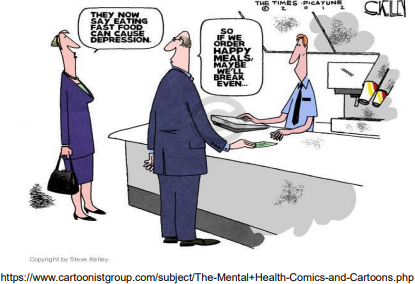
FPP Medicina Verão 2019The sentence “we’ll break even” may be understood, in this context, as
Questão 59 3667906
FPP Medicina Verão 2019Which of the alternatives present the most likely to be the next step of the research?
Smart sensors listen to healing wounds
Researchers at Heriot-Watt University are creating tiny electronic sensors that can hear what is going on below the bandages.
Wound care costs the UK's health services billions of pounds a year.
While some types of specialist wound dressings are available, the principal method of finding out how well a wound is healing has been to remove the bandages and take a look.
The team is led by Dr Michael Crichton, assistant professor in biomedical engineering at Heriot-Watt.
He says he wants to bring data into the process. "If we can put a sensor on the surface of the tissue, around a wound or across a wound, can we actually measure what's happening?
"If we can do that, that will tell us if a wound is likely to be going in one way or another.
"And if we can measure it over time, then we don't need to keep on opening up a wound and saying, 'is it getting better or is it getting worse?'."
But what does a healthy wound sound like? Before they can know that, the researchers must investigate how skin behaves when it is cut.
https://www.bbc.com/news/uk-scotland-49311598?intlink_from_url=https://www.bbc.co.uk/news/health&link_location=live-reporting-story
Questão 58 3667902
FPP Medicina Verão 2019Choose the alternative which presents appropriate synonyms to replace the underlined words.
Social Contagion, Not Mental Illness, Fuels Gun Violence
After the recent pair of mass shootings in El Paso, Texas and Dayton, Ohio, the collective attention of America’s ire has once again landed squarely on the topic of gun control.
In a predictable turn, gun-rights advocates have speculated that the real cause for these shootings is mental illness and violent video games and movies. Meanwhile, gun-control advocates are pushing for expansive background checks and bans on the sale of certain guns or accessories.
But as the discussion heats up, the American Psychological Association (APA) issued a declaration that mental illness should not be in the spotlight after incidents like these.
They say scapegoating mental health issues overlooks research and ignores decades of investigation that points to other causes.
https://www.healthline.com/health-news/social-contagion-not-mental-illness-fuel-violence
Questão 57 3667901
FPP Medicina Verão 2019What is this text about?
Lost in translation: Researchers discover translator gene may play a role in disease
When researchers and clinicians investigate the genome's relation to disease, they have traditionally focused on mutations in the code for proteins. But now researchers at Western University have shown that the genes encoding tRNAs can also have mutations that cause the code to be misread, and in greater numbers than previously thought.
Think of it like a translator app on your phone -- if it has errors in its software, the output is going to be all wrong, even if the original text is correct.
"This actually changes the way we think about the genetic code," said lead author Mathew Berg, a PhD Candidate at Western's Schulich School of Medicine & Dentistry. "We have shown that variation in tRNA has the potential to lead to a protein being made improperly, which can lead to misfolding and malfunction of the protein."
The research team, led by Schulich Medicine & Dentistry Professors Christopher Brandl, Robert Hegele and Patrick O'Donoghue, say this is significant because many human diseases like Alzheimer's disease and diseases of the heart muscle are linked to misfolded proteins.
https://www.sciencedaily.com/releases/2019/08/190813130422.htm
06