


![[Marketing] Questao Topo - deslogado](https://storage.estuda.com.br/banners/0_6b7ebee90b03af1c560c73bb8bcce34a_banner_deslogado_70_dias.png)
Questões de Inglês
19.971 Questões
Questão 4 4594222
UEG 2019/2Observe o infográfico a seguir para responder à questão
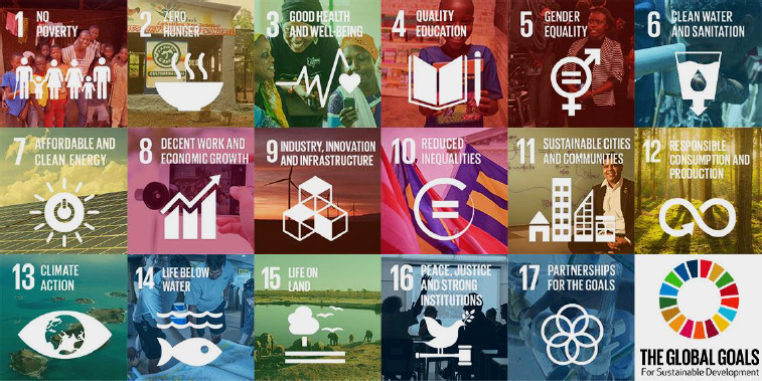
Disponível em https://www.oneyoungworid.com one-young-worid-ambassadors-leading-global-goals. Acesso em: 12 mar. 2019.
According to the information expressed in the image and the data, The Global Goals, we verify that the
Questão 3 4594200
UEG 2019/2Leia o texto e responda à questão.
This is how UN scientists are preparing for the end of capitalism
Capitalism as we know it is over. So suggests a new report commissioned by a group of scientists appointed by the UN secretary general. The main reason? We’re transitioning rapidly to a radically different global economy, due to our increasingly unsustainable exploitation of the planet’s environmental resources and the shift to less efficient energy sources.
Climate change and species extinctions are accelerating even as societies are experiencing rising inequality, unemployment, slow economic growth, rising debt levels, and impotent governments. Contrary to the way policymakers usually think about these problems these are not really separate crises at all.
These crises are part of the same fundamental transition. The new era is characterized by inefficient fossil fuel production and escalating costs of climate change. Conventional capitalist economic thinking can no longer explain, predict or solve the workings of the global economy in this new age.
Energy shift
Those are the implications of a new background paper prepared by a team of Finnish biophysicists who were asked to provide research that would feed into the drafting of the UN Global Sustainable Development Report (GSDR), which will be released in 2019.
For the “first time in human history”, the paper says, capitalist economies are “shifting to energy sources that are less energy efficient.” Producing usable energy (“exergy”) to keep powering “both basic and non-basic human activities” in industrial civilisation “will require more, not less, effort”.
At the same time, our hunger for energy is driving what the paper refers to as “sink costs.” The greater our energy and material use, the more waste we generate, and so the greater the environmental costs. Though they can be ignored for a while, eventually those environmental costs translate directly into economic costs as it becomes more and more difficult to ignore their impacts on our societies.
Overall, the amount of energy we can extract, compared to the energy we are using to extract it, is decreasing across the spectrum – unconventional oils, nuclear and renewables return less energy in generation than conventional oils, whose production has peaked – and societies need to abandon fossil fuels because of their impact on the climate.
Whether or not this system still comprises a form of capitalism is ultimately a semantic question. It depends on how you define capitalism.
Economic activity is driven by meaning – maintaining equal possibilities for the good life while lowering emissions dramatically – rather than profit, and the meaning is politically, collectively constructed. Well, this is the best conceivable case in terms of modern state and market institutions. It can’t happen without considerable reframing of economic-political thinking, in short words: rethinking capitalism as it is nowadays.
Disponível em: https://www.independent.co.uk/news/long_reads/capitalism-un-scientists-preparing-end-fossil-fuels-warning-demise-a8523856.html. Acesso em: 12 mar. 2019. (Adaptado).
Considerando os aspectos linguísticos e estruturais presentes no texto, constata-se que
Questão 4 4566872
UEG 2019/1Observe o infográfico a seguir para responder à questão.

According to the information expressed in the image and data, when kids are physically active, we verify that
Questão 3 4566866
UEG 2019/1Leia o texto a seguir para responder à questão.
Global warming is intensifying El Niño weather
As humans put more and more heat-trapping gases into the atmosphere, the Earth warms. And the warming is causing changes that might surprise us. Not only is the warming causing long-term trends in heat, sea level rise, ice loss, etc.; it’s also making our weather more variable. It’s making otherwise natural cycles of weather more powerful.
Perhaps the most important natural fluctuation in the Earth’s climate is the El Niño process. El Niño refers to a short-term period of warm ocean surface temperatures in the tropical Pacific, basically stretching from South America towards Australia. When an El Niño happens, that region is warmer than usual. If the counterpart La Niña occurs, the region is colder than usual. Often times, neither an El Niño or La Niña is present and the waters are a normal temperature. This would be called a “neutral” state.
The ocean waters switch back and forth between El Niño and La Niña every few years. Not regularly, like a pendulum, but there is a pattern of oscillation. And regardless of which part of the cycle we are in (El Niño or La Niña), there are consequences for weather around the world. For instance, during an El Niño, we typically see cooler and wetter weather in the southern United States while it is hotter and drier in South America and Australia.
It’s really important to be able to predict El Niño/La Niña cycles in advance. It’s also important to be able to understand how these cycles will change in a warming planet.
El Niño cycles have been known for a long time. Their influence around the world has also been known for almost 100 years. Having observed the effects of El Niño for a century, scientists had the perspective to understand something might be changing.
The relationship between regional climate and the El Niño/La Niña status in climate model simulations of the past and future. It was found an intensification of El Niño/La Niña impacts in a warmer climate, especially for land regions in North America and Australia. Changes between El Niño/La Niña in other areas, like South America, were less clear. The intensification of weather was more prevalent over land regions.
And this conclusion can be extended to many other situations around the planet. Human pollution is making our Earth’s natural weather switch more strongly from one extreme to another. It’s a weather whiplash that will continue to get worse as we add pollution to the atmosphere.
Fortunately, every other country on the planet (with the exception of the US leadership) understands that climate change is an important issue and those countries are taking action. It isn’t too late to change our trajectory toward a better future for all of us. But the time is running out. The Earth is giving us a little nudge by showing us, via today’s intense weather, what tomorrow will be like if we don’t take action quickly.
Disponível em: https://www.theguardian.com/environment/climate-consensus-97-per-cent/2018/aug/29/global-warming-is-intensifying-el-nino-weather. Acesso em: 19 set. 2018. (Adaptado).
De acordo com o texto, em termos de sentido, verifica-se que
Questão 2 4566857
UEG 2019/1Leia o texto a seguir para responder à questão.
Global warming is intensifying El Niño weather
As humans put more and more heat-trapping gases into the atmosphere, the Earth warms. And the warming is causing changes that might surprise us. Not only is the warming causing long-term trends in heat, sea level rise, ice loss, etc.; it’s also making our weather more variable. It’s making otherwise natural cycles of weather more powerful.
Perhaps the most important natural fluctuation in the Earth’s climate is the El Niño process. El Niño refers to a short-term period of warm ocean surface temperatures in the tropical Pacific, basically stretching from South America towards Australia. When an El Niño happens, that region is warmer than usual. If the counterpart La Niña occurs, the region is colder than usual. Often times, neither an El Niño or La Niña is present and the waters are a normal temperature. This would be called a “neutral” state.
The ocean waters switch back and forth between El Niño and La Niña every few years. Not regularly, like a pendulum, but there is a pattern of oscillation. And regardless of which part of the cycle we are in (El Niño or La Niña), there are consequences for weather around the world. For instance, during an El Niño, we typically see cooler and wetter weather in the southern United States while it is hotter and drier in South America and Australia.
It’s really important to be able to predict El Niño/La Niña cycles in advance. It’s also important to be able to understand how these cycles will change in a warming planet.
El Niño cycles have been known for a long time. Their influence around the world has also been known for almost 100 years. Having observed the effects of El Niño for a century, scientists had the perspective to understand something might be changing.
The relationship between regional climate and the El Niño/La Niña status in climate model simulations of the past and future. It was found an intensification of El Niño/La Niña impacts in a warmer climate, especially for land regions in North America and Australia. Changes between El Niño/La Niña in other areas, like South America, were less clear. The intensification of weather was more prevalent over land regions.
And this conclusion can be extended to many other situations around the planet. Human pollution is making our Earth’s natural weather switch more strongly from one extreme to another. It’s a weather whiplash that will continue to get worse as we add pollution to the atmosphere.
Fortunately, every other country on the planet (with the exception of the US leadership) understands that climate change is an important issue and those countries are taking action. It isn’t too late to change our trajectory toward a better future for all of us. But the time is running out. The Earth is giving us a little nudge by showing us, via today’s intense weather, what tomorrow will be like if we don’t take action quickly.
Disponível em: https://www.theguardian.com/environment/climate-consensus-97-per-cent/2018/aug/29/global-warming-is-intensifying-el-nino-weather. Acesso em: 19 set. 2018. (Adaptado).
Analisando-se aspectos linguísticos da língua inglesa, presentes no texto, constata-se que
Questão 1 4566834
UEG 2019/1Leia o texto a seguir para responder à questão.
Global warming is intensifying El Niño weather
As humans put more and more heat-trapping gases into the atmosphere, the Earth warms. And the warming is causing changes that might surprise us. Not only is the warming causing long-term trends in heat, sea level rise, ice loss, etc.; it’s also making our weather more variable. It’s making otherwise natural cycles of weather more powerful.
Perhaps the most important natural fluctuation in the Earth’s climate is the El Niño process. El Niño refers to a short-term period of warm ocean surface temperatures in the tropical Pacific, basically stretching from South America towards Australia. When an El Niño happens, that region is warmer than usual. If the counterpart La Niña occurs, the region is colder than usual. Often times, neither an El Niño or La Niña is present and the waters are a normal temperature. This would be called a “neutral” state.
The ocean waters switch back and forth between El Niño and La Niña every few years. Not regularly, like a pendulum, but there is a pattern of oscillation. And regardless of which part of the cycle we are in (El Niño or La Niña), there are consequences for weather around the world. For instance, during an El Niño, we typically see cooler and wetter weather in the southern United States while it is hotter and drier in South America and Australia.
It’s really important to be able to predict El Niño/La Niña cycles in advance. It’s also important to be able to understand how these cycles will change in a warming planet.
El Niño cycles have been known for a long time. Their influence around the world has also been known for almost 100 years. Having observed the effects of El Niño for a century, scientists had the perspective to understand something might be changing.
The relationship between regional climate and the El Niño/La Niña status in climate model simulations of the past and future. It was found an intensification of El Niño/La Niña impacts in a warmer climate, especially for land regions in North America and Australia. Changes between El Niño/La Niña in other areas, like South America, were less clear. The intensification of weather was more prevalent over land regions.
And this conclusion can be extended to many other situations around the planet. Human pollution is making our Earth’s natural weather switch more strongly from one extreme to another. It’s a weather whiplash that will continue to get worse as we add pollution to the atmosphere.
Fortunately, every other country on the planet (with the exception of the US leadership) understands that climate change is an important issue and those countries are taking action. It isn’t too late to change our trajectory toward a better future for all of us. But the time is running out. The Earth is giving us a little nudge by showing us, via today’s intense weather, what tomorrow will be like if we don’t take action quickly.
Disponível em: https://www.theguardian.com/environment/climate-consensus-97-per-cent/2018/aug/29/global-warming-is-intensifying-el-nino-weather. Acesso em: 19 set. 2018. (Adaptado).
According to the ideas expressed in the text, we verify that
06