


![[Marketing] Questao Topo - deslogado](https://storage.estuda.com.br/banners/0_6b7ebee90b03af1c560c73bb8bcce34a_banner_deslogado_70_dias.png)
Questões de Inglês
19.971 Questões
Questão 19 5509295
FACISA 2019/1Read the text below and answer the question that follow.
TEXT
The Rise of Fake news
By James Carson

"Fake news" was not a term many people used two years ago, but it is now seen as one of the greatest threats to democracy, free debate and the Western order. […]
Governments and powerful individuals have used information as a weapon for millennia, to boost their support and quash dissidence. […] However, before the internet, it was much more expensive to distribute information, building up trust took years, and there were much simpler definitions of what constituted news and media, making regulation easier.
But the rise of social media has broken down many of the boundaries that prevented fake news from spreading in democracies, as it has allowed anyone to create and disseminate information […].
Hoaxes and falsehoods have been associated with the internet since its early days, but it is only in the last two years that organised, systematic misinformation campaigns, often linked to governments, have emerged, and their effect on democracy and society scrutinised. The 2016 US election has been seen as providing a fertile breeding ground for fake news. Some credit Donald Trump's anti-establishment rhetoric and distrust of the mainstream media. Others blame widening partisanship, which meant readers were more prone to believe and share stories that fit their beliefs.
The rise of social media itself has also been seen as central. Sites like Facebook are accused of creating "filter bubbles", the phenomenon of showing people things that they like or tend to agree with, and hiding those that they don't.
Critics of Facebook and Twitter say the sites are purpose built for spreading misinformation, with the reach of a story dependent on its ability to go viral – something that often depends on sensationalism and emotional reactions more than truth itself. […]
An aggravating effect may have been that the sheer quantity of fake news stories may have reduced trust in mainstream media – if scepticism about what people read online increases, they may not know what to think. In these situations, people tend to stick to their prejudices.
(Source: Adapted from The Telegraph, UK - 30 October 2018)
The use of the present perfect tense in TEXT indicates that the spreading of fake news
Questão 17 5509280
FACISA 2019/1Read the text below and answer the question that follow.
TEXT
The Rise of Fake news
By James Carson
"Fake news" was not a term many people used two years ago, but it is now seen as one of the greatest threats to democracy, free debate and the Western order. […]
Governments and powerful individuals have used information as a weapon for millennia, to boost their support and quash dissidence. […] However, before the internet, it was much more expensive to distribute information, building up trust took years, and there were much simpler definitions of what constituted news and media, making regulation easier.
But the rise of social media has broken down many of the boundaries that prevented fake news from spreading in democracies, as it has allowed anyone to create and disseminate information […].
Hoaxes and falsehoods have been associated with the internet since its early days, but it is only in the last two years that organised, systematic misinformation campaigns, often linked to governments, have emerged, and their effect on democracy and society scrutinised. The 2016 US election has been seen as providing a fertile breeding ground for fake news. Some credit Donald Trump's anti-establishment rhetoric and distrust of the mainstream media. Others blame widening partisanship, which meant readers were more prone to believe and share stories that fit their beliefs.
The rise of social media itself has also been seen as central. Sites like Facebook are accused of creating "filter bubbles", the phenomenon of showing people things that they like or tend to agree with, and hiding those that they don't.
Critics of Facebook and Twitter say the sites are purpose built for spreading misinformation, with the reach of a story dependent on its ability to go viral – something that often depends on sensationalism and emotional reactions more than truth itself. […]
An aggravating effect may have been that the sheer quantity of fake news stories may have reduced trust in mainstream media – if scepticism about what people read online increases, they may not know what to think. In these situations, people tend to stick to their prejudices.
(Source: Adapted from The Telegraph, UK - 30 October 2018)
TEXT states that the growing amount of fake news
Questão 20 5494860
FACISA 2019/2Read the text below and answer the question.
WHY DO WE DREAM?
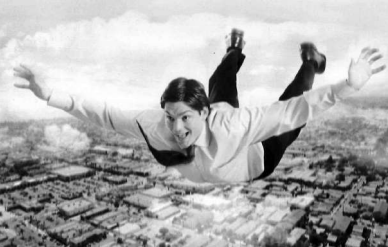
The classic exploration of dreams – the one that pop culture invokes time and time again – is Freud’s The Interpretation of Dreams, published in 1899.The founding psychotherapist believed that dreams are our mechanism for living out our most aggressive carnal desires – the urges that we’re not allowed to act on in real life – so that we don’t go insane from repressing them during the day. Though the field of psychoanalysis has largely moved on from Freud, our need to ascribe meaning to our dreams and to master our subconscious renders the Freudian approach compelling to this day
On the other hand, minimalist sleep researchers propose that dreams are devoid of any objective meaning. Harvard psychiatrists J. Allan Hobson and Robert McCarley […] argued that dreams are nothing but the side effects of spontaneous activity taking place in the synapses in the brain stem during sleep. In other words, our dreams (and the meanings that we ascribe to them) are nothing but our subjective attempt to reconcile those mental stimuli.
In between these two extremes are a slew of theories that frame dreams as functionally, if not necessarily psychologically, important. Experiments show that dreams help subjects solve problems and puzzles that researchers posed to them before dream sleep. This finding jibes with theories that dreaming is crucial to memory storage, information processing and cleaning out the synaptic garbage that the brain collects as a result of its normal operation. Other research indicates that dreams play an important role in stress relief, a theory supported by a decrease in stress hormones during dream sleep.
Psychologist Deirdre Barrett […] focuses on our least favorite subset of dreams: nightmares. She claims that even these unwelcome dreams once posed the important evolutionary function of focusing attention on the dangers our ancestors faced in everyday life. All these functionalist hypotheses suggest that dreams developed as a function of the mammalian brain in order to fulfill an evolutionary purpose. What that purpose is remains a puzzle. Perhaps we should sleep on it?
Popular Science: 100 Science Mysteries Explained, 2018
The word urges in Paragraph 1 of TEXT is
Questão 19 5494853
FACISA 2019/2Read the text below and answer the question.
WHY DO WE DREAM?
The classic exploration of dreams – the one that pop culture invokes time and time again – is Freud’s The Interpretation of Dreams, published in 1899.The founding psychotherapist believed that dreams are our mechanism for living out our most aggressive carnal desires – the urges that we’re not allowed to act on in real life – so that we don’t go insane from repressing them during the day. Though the field of psychoanalysis has largely moved on from Freud, our need to ascribe meaning to our dreams and to master our subconscious renders the Freudian approach compelling to this day
On the other hand, minimalist sleep researchers propose that dreams are devoid of any objective meaning. Harvard psychiatrists J. Allan Hobson and Robert McCarley […] argued that dreams are nothing but the side effects of spontaneous activity taking place in the synapses in the brain stem during sleep. In other words, our dreams (and the meanings that we ascribe to them) are nothing but our subjective attempt to reconcile those mental stimuli.
In between these two extremes are a slew of theories that frame dreams as functionally, if not necessarily psychologically, important. Experiments show that dreams help subjects solve problems and puzzles that researchers posed to them before dream sleep. This finding jibes with theories that dreaming is crucial to memory storage, information processing and cleaning out the synaptic garbage that the brain collects as a result of its normal operation. Other research indicates that dreams play an important role in stress relief, a theory supported by a decrease in stress hormones during dream sleep.
Psychologist Deirdre Barrett […] focuses on our least favorite subset of dreams: nightmares. She claims that even these unwelcome dreams once posed the important evolutionary function of focusing attention on the dangers our ancestors faced in everyday life. All these functionalist hypotheses suggest that dreams developed as a function of the mammalian brain in order to fulfill an evolutionary purpose. What that purpose is remains a puzzle. Perhaps we should sleep on it?
Popular Science: 100 Science Mysteries Explained, 2018
Deirdre Barrett, cited in TEXT
Questão 18 5494845
FACISA 2019/2Read the text below and answer the question.
WHY DO WE DREAM?
The classic exploration of dreams – the one that pop culture invokes time and time again – is Freud’s The Interpretation of Dreams, published in 1899.The founding psychotherapist believed that dreams are our mechanism for living out our most aggressive carnal desires – the urges that we’re not allowed to act on in real life – so that we don’t go insane from repressing them during the day. Though the field of psychoanalysis has largely moved on from Freud, our need to ascribe meaning to our dreams and to master our subconscious renders the Freudian approach compelling to this day
On the other hand, minimalist sleep researchers propose that dreams are devoid of any objective meaning. Harvard psychiatrists J. Allan Hobson and Robert McCarley […] argued that dreams are nothing but the side effects of spontaneous activity taking place in the synapses in the brain stem during sleep. In other words, our dreams (and the meanings that we ascribe to them) are nothing but our subjective attempt to reconcile those mental stimuli.
In between these two extremes are a slew of theories that frame dreams as functionally, if not necessarily psychologically, important. Experiments show that dreams help subjects solve problems and puzzles that researchers posed to them before dream sleep. This finding jibes with theories that dreaming is crucial to memory storage, information processing and cleaning out the synaptic garbage that the brain collects as a result of its normal operation. Other research indicates that dreams play an important role in stress relief, a theory supported by a decrease in stress hormones during dream sleep.
Psychologist Deirdre Barrett […] focuses on our least favorite subset of dreams: nightmares. She claims that even these unwelcome dreams once posed the important evolutionary function of focusing attention on the dangers our ancestors faced in everyday life. All these functionalist hypotheses suggest that dreams developed as a function of the mammalian brain in order to fulfill an evolutionary purpose. What that purpose is remains a puzzle. Perhaps we should sleep on it?
Popular Science: 100 Science Mysteries Explained, 2018
The Harvard psychiatrists referred to in TEXT
Questão 17 5494821
FACISA 2019/2Read the text below and answer the question.
WHY DO WE DREAM?
The classic exploration of dreams – the one that pop culture invokes time and time again – is Freud’s The Interpretation of Dreams, published in 1899.The founding psychotherapist believed that dreams are our mechanism for living out our most aggressive carnal desires – the urges that we’re not allowed to act on in real life – so that we don’t go insane from repressing them during the day. Though the field of psychoanalysis has largely moved on from Freud, our need to ascribe meaning to our dreams and to master our subconscious renders the Freudian approach compelling to this day
On the other hand, minimalist sleep researchers propose that dreams are devoid of any objective meaning. Harvard psychiatrists J. Allan Hobson and Robert McCarley […] argued that dreams are nothing but the side effects of spontaneous activity taking place in the synapses in the brain stem during sleep. In other words, our dreams (and the meanings that we ascribe to them) are nothing but our subjective attempt to reconcile those mental stimuli.
In between these two extremes are a slew of theories that frame dreams as functionally, if not necessarily psychologically, important. Experiments show that dreams help subjects solve problems and puzzles that researchers posed to them before dream sleep. This finding jibes with theories that dreaming is crucial to memory storage, information processing and cleaning out the synaptic garbage that the brain collects as a result of its normal operation. Other research indicates that dreams play an important role in stress relief, a theory supported by a decrease in stress hormones during dream sleep.
Psychologist Deirdre Barrett […] focuses on our least favorite subset of dreams: nightmares. She claims that even these unwelcome dreams once posed the important evolutionary function of focusing attention on the dangers our ancestors faced in everyday life. All these functionalist hypotheses suggest that dreams developed as a function of the mammalian brain in order to fulfill an evolutionary purpose. What that purpose is remains a puzzle. Perhaps we should sleep on it?
Popular Science: 100 Science Mysteries Explained, 2018
The TEXT informs us that Freud’s theory about dreams claims that they
06