


![[Marketing] Questao Topo - deslogado](https://storage.estuda.com.br/banners/0_6b7ebee90b03af1c560c73bb8bcce34a_banner_deslogado_70_dias.png)
Questões de Inglês
19.971 Questões
Questão 25 7074008
UNIC 2019/2TEXTO:
Staying Healthy
Food, of course, is a necessary ingredient for
good health. But is it more than that? Can eating the
right foods in the right combination actually prevent
disease? In the past few years, research on the
[5] subject has exploded. Scientists have started to identify
what may be hundreds — even thousands — of natural
chemicals in foods that seem to have preventive
powers. These aren’t just vitamins and minerals
but a whole new bouquet of strange-sounding
[10] compounds — starting with the latest nutritional
superstars, the phytochemicals.
[...] That clove of garlic in your refrigerator? That
jar of nuts in your pantry? Used correctly, they
may have the power to prevent all kinds of serious
[15] ailments, including heart disease, diabetes and even
cancer. [...]
A word of warning: you can find many of these
compounds in dietary supplements, but they might
not do any good. “Food is very complex,” says JoAnn
[20] Manson, chief of preventive medicine at Harvard’s
Brigham and Women’s Hospital. “It may be the
combination of antioxidants, phytochemicals and fiber
that work together to confer health benefits.”
Fortunately, nature has given us a handy rule
[25] of thumb. Many of the very chemicals that make
foods good for us are the ones that give them
color, turning blueberries blue, spinach green and
carrots deep orange. For optimum health, scientists
say, eat a rainbow of colors. [...]
HOROWITZ, M. Janice. In: Time. Latin American Edition. New York. v. 159, n. 3. p. 39. s.d.
“pantry” (l. 13) − a very small room in a house where food
is kept.
“ailments” (l. 15) − illnesses that are not very serious.
“rule of thumb” (l. 24-25) − a rough method of calculation, based on
practical experience.
The structure which expresses a piece of advice corresponds to
Questão 23 7073921
UNIC 2019/2TEXTO:
Staying Healthy
Food, of course, is a necessary ingredient for
good health. But is it more than that? Can eating the
right foods in the right combination actually prevent
disease? In the past few years, research on the
[5] subject has exploded. Scientists have started to identify
what may be hundreds — even thousands — of natural
chemicals in foods that seem to have preventive
powers. These aren’t just vitamins and minerals
but a whole new bouquet of strange-sounding
[10] compounds — starting with the latest nutritional
superstars, the phytochemicals.
[...] That clove of garlic in your refrigerator? That
jar of nuts in your pantry? Used correctly, they
may have the power to prevent all kinds of serious
[15] ailments, including heart disease, diabetes and even
cancer. [...]
A word of warning: you can find many of these
compounds in dietary supplements, but they might
not do any good. “Food is very complex,” says JoAnn
[20] Manson, chief of preventive medicine at Harvard’s
Brigham and Women’s Hospital. “It may be the
combination of antioxidants, phytochemicals and fiber
that work together to confer health benefits.”
Fortunately, nature has given us a handy rule
[25] of thumb. Many of the very chemicals that make
foods good for us are the ones that give them
color, turning blueberries blue, spinach green and
carrots deep orange. For optimum health, scientists
say, eat a rainbow of colors. [...]
HOROWITZ, M. Janice. In: Time. Latin American Edition. New York. v. 159, n. 3. p. 39. s.d.
“pantry” (l. 13) − a very small room in a house where food
is kept.
“ailments” (l. 15) − illnesses that are not very serious.
“rule of thumb” (l. 24-25) − a rough method of calculation, based on
practical experience.
It is inserted in the text the following statement:
Questão 22 7073912
UNIC 2019/2TEXTO:
Music may someday help repair the brain
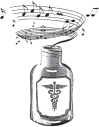
The music that makes the foot tap, the fingers
snap, and the pulse quicken stirs the brain at its most
fundamental levels, suggesting that scientists one day
may be able to retune damaged minds by exploiting
[5] rhythm, harmony, and melody, according to new
research. “Undeniably, there is a biology of music,”
said Harvard University Medical School neurobiologist
Mark Tramo. “Music is biologically part of human life,
just as music is esthetically part of human life.”
[10] Researchers found that the brain:
• Responds directly to harmony. Neuroscientists
discovered that different parts of the brain involved in
emotion are activated depending on whether the music
is pleasant or unpleasant.
[15] • Interprets written music in an area on the brain’s
right side. That region corresponds to an area on the
opposite side of the brain known to handle written
words and letters. So, researchers uncovered an
anatomical link between music and language.
[20] • Grows in response to musical training. In a
study of classically trained musicians, researchers
discovered that male musicians have significantly
larger brains than men who have not had extensive
musical training.
[25] Overall, music seems to involve the brain at
almost every level, and researchers are already
looking for ways to harness the power of music
to change the brain. Preliminary research also
suggests that music may play some role in enhancing
[30] intelligence. Indeed, so seductive is the possibility that
music can boost a child’s IQ that some politicians are
lobbying for schoolchildren to be exposed regularly to
Mozart sonatas, although such research has yet to be
confirmed.
[35] The scientists said the new research could help
the clinical practice of neurology, including cognitive
rehabilitation. As a therapeutic tool, for example, some
doctors already use music to help rehabilitate stroke
patients. Surprisingly, some stroke patients who have
[40] lost their ability to speak retain their ability to sing,
and that opens an avenue for therapists to retrain the
brain’s speech centers.
RICHARDS, J.; SANDY, C. Passages: an upper-level multi-skills course. [New York], C.U.P. , s.d. p. 36.
In the text,
Questão 19 7073850
UNIC 2019/2TEXTO:
Music may someday help repair the brain
The music that makes the foot tap, the fingers
snap, and the pulse quicken stirs the brain at its most
fundamental levels, suggesting that scientists one day
may be able to retune damaged minds by exploiting
[5] rhythm, harmony, and melody, according to new
research. “Undeniably, there is a biology of music,”
said Harvard University Medical School neurobiologist
Mark Tramo. “Music is biologically part of human life,
just as music is esthetically part of human life.”
[10] Researchers found that the brain:
• Responds directly to harmony. Neuroscientists
discovered that different parts of the brain involved in
emotion are activated depending on whether the music
is pleasant or unpleasant.
[15] • Interprets written music in an area on the brain’s
right side. That region corresponds to an area on the
opposite side of the brain known to handle written
words and letters. So, researchers uncovered an
anatomical link between music and language.
[20] • Grows in response to musical training. In a
study of classically trained musicians, researchers
discovered that male musicians have significantly
larger brains than men who have not had extensive
musical training.
[25] Overall, music seems to involve the brain at
almost every level, and researchers are already
looking for ways to harness the power of music
to change the brain. Preliminary research also
suggests that music may play some role in enhancing
[30] intelligence. Indeed, so seductive is the possibility that
music can boost a child’s IQ that some politicians are
lobbying for schoolchildren to be exposed regularly to
Mozart sonatas, although such research has yet to be
confirmed.
[35] The scientists said the new research could help
the clinical practice of neurology, including cognitive
rehabilitation. As a therapeutic tool, for example, some
doctors already use music to help rehabilitate stroke
patients. Surprisingly, some stroke patients who have
[40] lost their ability to speak retain their ability to sing,
and that opens an avenue for therapists to retrain the
brain’s speech centers.
RICHARDS, J.; SANDY, C. Passages: an upper-level multi-skills course. [New York], C.U.P. , s.d. p. 36.
Fill in the parentheses with T (True) or F (False). Researchers have also found that
( ) the more you practice music, the larger your brain is likely to become.
( ) classically trained female musicians usually have larger brains than male musicians.
( ) some stroke victims who cannot speak are able to sing.
( ) some politicians don’t agree on a law making the performance of classical music compulsory at school.
( ) children who regularly listen to music can develop higher intelligence than children who are not exposed to music.
According to the text, the correct sequence, from top to bottom, is
Questão 24 7051534
UPF Inverno 2019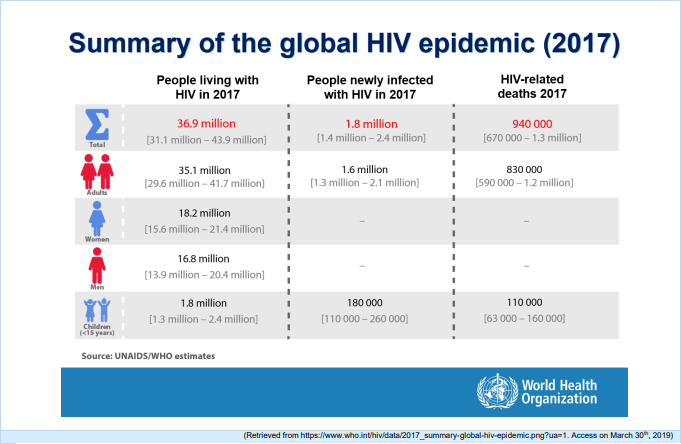
The only question that cannot be answered with the information from the image is:
Questão 23 7051527
UPF Inverno 2019
The chart provides an overview of
06