


![[Marketing] Questao Topo - deslogado](https://storage.estuda.com.br/banners/0_6b7ebee90b03af1c560c73bb8bcce34a_banner_deslogado_70_dias.png)
Questões de Inglês
19.971 Questões
Questão 41 7328293
UNICEUB Medicina 2019/2Leia o texto e responda a questão.
GUT BACTERIA WILL REVOLUTIONISE MEDICINE

Understanding our intestinal bacteria is one cf the fastest
growing fieis in medical research today.
(Photo: Rocky Mountain Laboratories. NIAID. NIH)
Research in gut bacteria and its importance for our health has made huge advances in recent years. More and more research indicates that gut bacteria and their composition have an enormous influence on our health and could possibly affect the risk of developing everything from obesity and diabetes to autism and schizophrenia. A recently published scientific paper by two of the leading scientists in the field, Professor Oluf Borbye Pedersen and Professor Susan, outlines the future medical perspectives in understanding and exploiting the potential of intestinal bacteria.
Soon, they write, gut bacteria could be used to develop cures for chronic gut infections such as Crohn’s disease and inflammatory bowel disorder. They could even help the body to fight cancer.“Not too many years ago, the research field was just starting out, but today, gut bacteria have become mainstream and we are now on the threshold of being able to exploit the past ten years of basic research to break through to the next stage: pilot studies on people suffering from various chronic diseases,” says Pedersen.
Henrik Bjørn Nielsen has been studying gut bacteria for many years. Nielsen has read Pedersen’s article and he believes that gut bacteria and all other bacteria that live in and on our bodies (the microbiome) have big potential in developing medical treatments.
The role of intestinal bacteria on human health has come to the fore in recent years. In 2016, scientists discovered that the composition of intestinal bacteria can impact asthma. Two years earlier, scientists showed that intestinal bacteria could eliminate autism in mice. Other studies have demonstrated that intestinal bacteria play an important role in the development of obesity. Certain beneficial bacteria can also keep our immune system healthy. Destroying the balance of intestinal bacteria in the gut with antibiotics can therefore leave space for populations of harmful bacteria to expand, which can, for example, lead to strep throat, pneumonia, and otitis media (an inflammation of the middle ear).
In the new article, Pedersen and Lynch cast light on how scientists could use the last ten years of research to develop new treatments in the near future. One of the areas, where gut bacteria could play an interesting role, is in the treatment of some cancers, says Pedersen. “Studies of mice have recently shown that certain species of lactic acid bacteria and bifidobacteria can enhance the effects of immunotherapy in numerous cancers”, he says.
Today, patients with cancer such as melanoma can be treated by immunotherapy, which can work better for some patients than others.The research can potentially explain why the treatment only works for 20 percent of the people treated by immunotherapy. “Scientists have shown that a rich presence of these bacterial species enhance the effects of immunotherapy. It’s really exciting because it suggests that the bacteria secrete molecules that enhance the immunotherapy effects, says Pedersen.
Nielsen agrees that gut bacteria research will lead to a breakthrough in cancer research in the future. “The microbiome contains millions of genes. In comparison, we humans contain only 25,000. There’s a lot of biochemical potential here that we’ve only just begun to be aware of,” says Nielsen.
Acesso em: 27.10.2018. Adaptado
De acordo com o texto, pesquisas recentes demonstram que as bactérias intestinais
Questão 40 7266209
CUSC Medicina 2° Semestre 2019Leia a tirinha e o quadrinho para responder a questão.
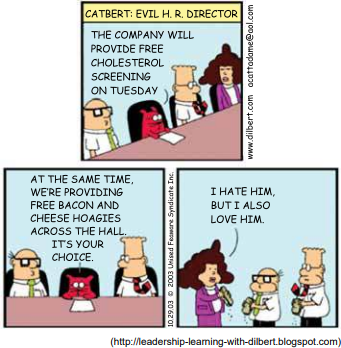

Na última fala da tira “I hate him, but I also love him”, os termos sublinhados referem-se
Questão 39 7266203
CUSC Medicina 2° Semestre 2019Leia a tirinha e o quadrinho para responder a questão.
Uma interpretação tanto da tira quanto do quadrinho pode ser expressa pelo seguinte ditado popular:
Questão 36 7266190
CUSC Medicina 2° Semestre 2019Leia o texto para responder a questão.
Worshiping the false idols of wellness

Before we go further, I’d like to clear something up: wellness is not the same as medicine. Medicine is the science of reducing death and disease, and increasing long and healthy lives. Wellness used to mean a blend of health and happiness. Something that made you feel good or brought joy and was not medically harmful — perhaps a massage or a walk along the beach. But it has become a false antidote to the fear of modern life and death.
The wellness industry takes medical terminology, such as “inflammation” or “free radicals,” and polishes it to the point of incomprehension. The resulting product is a “Do It Yourself” medicine for longevity that comes with a confidence that science can only aspire to achieve.
Let’s take the trend of adding a pinch of activated charcoal to your food or drink. While the black color is strikingly unexpected and alluring, it’s sold as a supposed “detox.” Guess what? It has the same efficacy as a spell from the local witch. Maybe it’s a matter of aesthetics. Wellness potions in beautiful jars with untested ingredients of unknown purity are practically packaged for Instagram.
Medicine and religion have long been deeply intertwined, and it’s only relatively recently that they have separated. The wellness-industrial complex seeks to resurrect that connection. It’s like a medical throwback, as if the idyllic days of health were 5,000 years ago. Ancient cleansing rituals with a modern twist — supplements, useless products and scientifically unsupported tests.
The dietary supplements that are the backbone of wellness make up a $30 billion a year business despite studies showing they have no value for longevity (only a few vitamins have proven medical benefits, like folic acid before and during pregnancy and vitamin D for older people at risk of falling). Modern medicine wants you to get your micronutrients from your diet, which is inarguably the most natural source.
Yet the wellness-industrial complex has managed to pervert that narrative and make supplements a necessary tool for nonsensical practices, such as boosting the immune system or fighting the war on inflammation. The resulting fluorescent yellow urine from multivitamins may provide a false sense of efficacy, but it’s a fool’s gold (and the consequence of excessive B2 that couldn’t possibly be absorbed). So what’s the harm of spending money on charcoal for non-existent toxins or vitamins for expensive urine? Here’s what: the placebo effect or “trying something natural” can lead people with serious illnesses to postpone effective medical care. However, I admit that doctors can learn something from wellness. It’s clear that some people are looking for healers, so we must find ways to serve that need that are medically ethical.
(Jen Gunter. www.nytimes.com, 01.08.2018. Adaptado.)
No trecho do quinto parágrafo “despite studies showing they have no value for longevity”, o termo sublinhado indica
Questão 35 7266187
CUSC Medicina 2° Semestre 2019Leia o texto para responder a questão.
Worshiping the false idols of wellness
Before we go further, I’d like to clear something up: wellness is not the same as medicine. Medicine is the science of reducing death and disease, and increasing long and healthy lives. Wellness used to mean a blend of health and happiness. Something that made you feel good or brought joy and was not medically harmful — perhaps a massage or a walk along the beach. But it has become a false antidote to the fear of modern life and death.
The wellness industry takes medical terminology, such as “inflammation” or “free radicals,” and polishes it to the point of incomprehension. The resulting product is a “Do It Yourself” medicine for longevity that comes with a confidence that science can only aspire to achieve.
Let’s take the trend of adding a pinch of activated charcoal to your food or drink. While the black color is strikingly unexpected and alluring, it’s sold as a supposed “detox.” Guess what? It has the same efficacy as a spell from the local witch. Maybe it’s a matter of aesthetics. Wellness potions in beautiful jars with untested ingredients of unknown purity are practically packaged for Instagram.
Medicine and religion have long been deeply intertwined, and it’s only relatively recently that they have separated. The wellness-industrial complex seeks to resurrect that connection. It’s like a medical throwback, as if the idyllic days of health were 5,000 years ago. Ancient cleansing rituals with a modern twist — supplements, useless products and scientifically unsupported tests.
The dietary supplements that are the backbone of wellness make up a $30 billion a year business despite studies showing they have no value for longevity (only a few vitamins have proven medical benefits, like folic acid before and during pregnancy and vitamin D for older people at risk of falling). Modern medicine wants you to get your micronutrients from your diet, which is inarguably the most natural source.
Yet the wellness-industrial complex has managed to pervert that narrative and make supplements a necessary tool for nonsensical practices, such as boosting the immune system or fighting the war on inflammation. The resulting fluorescent yellow urine from multivitamins may provide a false sense of efficacy, but it’s a fool’s gold (and the consequence of excessive B2 that couldn’t possibly be absorbed). So what’s the harm of spending money on charcoal for non-existent toxins or vitamins for expensive urine? Here’s what: the placebo effect or “trying something natural” can lead people with serious illnesses to postpone effective medical care. However, I admit that doctors can learn something from wellness. It’s clear that some people are looking for healers, so we must find ways to serve that need that are medically ethical.
(Jen Gunter. www.nytimes.com, 01.08.2018. Adaptado.)
De acordo com o quarto parágrafo, “wellness”, ou seja, a indústria do bem-estar,
Questão 33 7266171
CUSC Medicina 2° Semestre 2019Leia o texto para responder a questão.
Worshiping the false idols of wellness
Before we go further, I’d like to clear something up: wellness is not the same as medicine. Medicine is the science of reducing death and disease, and increasing long and healthy lives. Wellness used to mean a blend of health and happiness. Something that made you feel good or brought joy and was not medically harmful — perhaps a massage or a walk along the beach. But it has become a false antidote to the fear of modern life and death.
The wellness industry takes medical terminology, such as “inflammation” or “free radicals,” and polishes it to the point of incomprehension. The resulting product is a “Do It Yourself” medicine for longevity that comes with a confidence that science can only aspire to achieve.
Let’s take the trend of adding a pinch of activated charcoal to your food or drink. While the black color is strikingly unexpected and alluring, it’s sold as a supposed “detox.” Guess what? It has the same efficacy as a spell from the local witch. Maybe it’s a matter of aesthetics. Wellness potions in beautiful jars with untested ingredients of unknown purity are practically packaged for Instagram.
Medicine and religion have long been deeply intertwined, and it’s only relatively recently that they have separated. The wellness-industrial complex seeks to resurrect that connection. It’s like a medical throwback, as if the idyllic days of health were 5,000 years ago. Ancient cleansing rituals with a modern twist — supplements, useless products and scientifically unsupported tests.
The dietary supplements that are the backbone of wellness make up a $30 billion a year business despite studies showing they have no value for longevity (only a few vitamins have proven medical benefits, like folic acid before and during pregnancy and vitamin D for older people at risk of falling). Modern medicine wants you to get your micronutrients from your diet, which is inarguably the most natural source.
Yet the wellness-industrial complex has managed to pervert that narrative and make supplements a necessary tool for nonsensical practices, such as boosting the immune system or fighting the war on inflammation. The resulting fluorescent yellow urine from multivitamins may provide a false sense of efficacy, but it’s a fool’s gold (and the consequence of excessive B2 that couldn’t possibly be absorbed). So what’s the harm of spending money on charcoal for non-existent toxins or vitamins for expensive urine? Here’s what: the placebo effect or “trying something natural” can lead people with serious illnesses to postpone effective medical care. However, I admit that doctors can learn something from wellness. It’s clear that some people are looking for healers, so we must find ways to serve that need that are medically ethical.
(Jen Gunter. www.nytimes.com, 01.08.2018. Adaptado.)
In the excerpt from the second paragraph “and polishes it to the point of incomprehension”, the underlined word refers to
06