


![[Marketing] Questao Topo - deslogado](https://storage.estuda.com.br/banners/0_6b7ebee90b03af1c560c73bb8bcce34a_banner_deslogado_70_dias.png)
Questões de Inglês
19.971 Questões
Questão 21 7330765
UCS Inverno 2019Hearts and Hands
by O. Henry
At Denver there was an influx of passengers into the coaches on the eastbound B. & M. Express.
In one coach there sat a very pretty young woman dressed in elegant taste and surrounded by all the
luxurious comforts of an experienced traveler. Among the newcomers were two men, one of handsome
presence with a bold, frank countenance and manner; the other a ruffled, glum-faced person, heavily built
and roughly dressed. The two were handcuffed together.
As they passed down the aisle of the coach the only vacant seat was a reversed one facing the
attractive young woman. Here the linked couple seated themselves. The young woman’s glance fell upon
them with a distant, swift disinterest; then with a lovely smile brightening her countenance and a tender
pink tingeing her round cheeks, she held out a little gray-gloved hand. When she spoke her voice, full,
sweet, and deliberate, proclaimed that its owner was accustomed to speak and be heard.
“Well, Mr. Easton, if you will make me speak first, I suppose I must. Don’t you ever recognize old
friends when you meet them in the West?”
The younger man roused himself sharply at the sound of her voice, seemed to struggle with a slight
embarrassment which he threw off instantly, and then clasped her fingers with his left hand.
“It’s Miss Fairchild,” he said, with a smile. “I’ll ask you to excuse the other hand; it’s otherwise engaged
just at present.”
He slightly raised his right hand, bound at the wrist by the shining “bracelet” to the left one of his
companion. The glad look in the girl’s eyes slowly changed to a bewildered horror. The glow faded from
her cheeks. Her lips parted in a vague, relaxing distress. Easton, with a little laugh, as if amused, was
about to speak again when the other forestalled him. The glum-faced man had been watching the girl’s
countenance with veiled glances from his keen, shrewd eyes.
“You’ll excuse me for speaking, miss, but, I see you’re acquainted with the marshal here. If you’ll ask
him to speak a word for me when we get to the pen he’ll do it, and it’ll make things easier for me there.
He’s taking me to Leavenworth prison. It’s seven years for counterfeiting.”
“Oh!” said the girl, with a deep breath and returning color. “So that is what you are doing out here? A
marshal!”
“My dear Miss Fairchild,” said Easton, calmly, “I had to do something. Money has a way of taking wings
unto itself, and you know it takes money to keep step with our crowd in Washington. I saw this opening in
the West, and – well, a marshalship isn’t quite as high a position as that of ambassador, but...”
“The ambassador,” said the girl, warmly, “doesn’t call any more. He needn’t ever have done so. You
ought to know that. And so now you are one of these dashing Western heroes, and you ride and shoot and
go into all kinds of dangers. That’s different from the Washington life. You have been missed from the old
crowd.”
The girl’s eyes, fascinated, went back, widening a little, to rest upon the glittering handcuffs.
“Don’t you worry about them, miss”, said the other man. “All marshals handcuff themselves to their
prisoners to keep them from getting ________. Mr. Easton knows his business.”
“Will we see you again soon in Washington?” asked the girl.
“Not soon, I think,” said Easton. “My butterfly days are over, I fear.”
“I love the West,” said the girl irrelevantly. Her eyes were shining softly. She looked away out the car
window. She began to speak truly and simply without the gloss of style and manner: “Mamma and I spent
the summer in Denver. She went home a week ago because father was slightly ill. I could live and be
happy in the West. I think the air agrees with me. Money isn’t everything. But people always misunderstand
things and remain stupid”.
“Say, Mr. Marshal”, growled the glum-faced man.”This isn’t quite fair. I’m needing a drink, and haven’t
had a smoke all day. Haven’t you talked long enough? Take me in the smoker now, won’t you? I’m half
dead for a pipe.”
The bound travelers rose to their feet. Easton with the same slow smile on his face.
“I can’t deny a petition for tobacco,” he said, lightly, “It’s the one friend of the unfortunate. Good-bye,
Miss Fairchild. Duty calls, you know.” He held out his hand for a farewell.
“It’s too bad you are not going East,” she said, reclothing herself with manner and style. “But you must
go to Leavenworth, I suppose?”
Yes,” said Easton, “I must go on to Leavenworth”.
The two men sidled down the aisle into the smoker.
The two passengers in a seat nearby had heard most of the conversation. Said one of them:
“That marshal’s a good sort of chap. Some of these Western fellows are all right.”
“Pretty young to hold an office like that, isn’t he?” asked the other.
“Young!” exclaimed the first speaker, “why – Oh! didn’t you catch on? Say – did you ever know an
officer to handcuff a prisoner to his right hand?”
Disponível em: https://americanliterature.com/author/o-henry/short-story/hearts-and-hands. Acesso em: 12 abr. 2019. (Parcial e adaptado.)
Assinale a alternativa que completa correta e adequadamente a lacuna na linha 36 do texto.
Questão 60 7330635
UNIPAM 2019Analyze the infographics below.
INFOGRAPHIC I
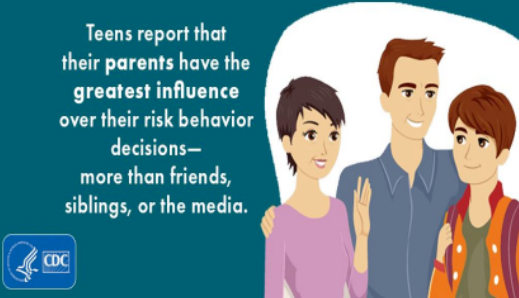
(https://www.cdc.gov/healthyyouth/multimedia/infographics posters/infographics.htm)
INFOGRAPHIC II

(https://www.cde.gov/healthyyouth/multimedia/infographics posters/infographics htm)
Analyzing the sentences used on the Infographics, it‘s CORRECT to say that
Questão 58 7330633
UNIPAM 2019Adolescents: health risks and solutions
Around 1.2 billion people, or 1 in 6 of the world‘s population, are adolescents aged 10 to 19. Most are healthy, but there is still substantial premature death, illness, and injury among adolescents. Illnesses can hinder their ability to grow and develop to their full potential. Alcohol or tobacco use, lack of physical activity, unprotected sex and/or exposure to violence can jeopardize not only their current health, but also their health as adults, and even the health of their future children.
Promoting healthy behaviors during adolescence, and taking steps to better protect young people from health risks are critical for the prevention of health problems in adulthood, and for countries‘ future health and ability to develop and thrive.
Key facts
• Estimated 1.2 million adolescents died in 2015, over 3000 every day, mostly from preventable or treatable causes.
• Road traffic injuries were the leading cause of death in 2015. Other major causes of adolescent deaths include lower
Taking into consideration the Key facts presented on the text, judge the items below.
I - Mental health disorders in adulthood can be related to mental health disorders in adolescence.
II - Pregnancy during adolescence is a fact that can cause health problems among girls.
III - 1.2 million adolescents died in 2015 because of road traffic injuries.
IV - The death causes during adolescence can‘t be prevented.
It‘s CORRECT only what is mentioned in
Questão 54 7330628
UNIPAM 2019New attention to adolescent health
Adolescent health has come of age. Finally, there is a sense of urgency that action is needed now to make a real difference to the health of adolescents.
There is much to build on. Over the past two decades, there has been a spate of reports and advocacy documents, declarations and milestone publications in academic journals devoted to the health and development of adolescents. There are global goals and targets directed to young people and adolescents and youth are key to on-going and emerging public health agendas to the plans for the International Conference on Population and Development (ICPD) Beyond 2014 and, increasingly, to discussions about the post-2105 Millennium
Development Goals (MDGs). There has been attention to adolescents in global public health conferences and young people have been the focus of several recent United Nations initiatives and resolutions. Progress has been made in generating interest and commitment for adolescent health at global, regional, and, increasingly, national level.
As this report highlights, however, the increased concern has frequently not been transformed into action.
(Adapted from: http://apps.who.int/adolescent/seconddecade/section1/page1/new-attention-to-adolescenthealth.html).
Analyzing the report, we can infer that
Questão 14 7328864
IfSuldesteMinas 2019/1Texto para a questão.
These Are The Laziest Countries In The World, According To The United Nations By Bernadette Deron
Published September 6, 2018
The World Health Organization had hoped to reduce inactivity 10 percent by 2025, but these numbers don't bode well for that goal.
The World Health Organization (WHO) — the agency of the United Nations concerned with international public health — published a report in The Lancet Global Health on Sept. 5 that outlines which nations get the most (and the least) amount of exercise.
Details Of The Study
The survey of 168 nations ranked the countries by most to least active by measuring the exercise habits of a given percentage of each country’s population and then comparing that percentage with those samples of the other countries involved in the study. The WHO defines enough exercise as at least 75 minutes of vigorous activity or 150 minutes of moderately intense activity per week — or any combination of the two. The WHO analyzed statistics and trends across different economic backgrounds, and between genders.
The Laziest Countries
Overall, there were only four counties in the world where more than 50 percent of the population did not get enough exercise: Kuwait, Iraq, American Samoa, and Saudi Arabia. So these four countries are effectively the “laziest” in the world. Ultimately the nation with the least amount of physical activity was Kuwait, with 67 percent of its adults not exercising enough.
Other nations towards the bottom of this list were the United States, which ranked 143rd out of 168 countries. A whopping 40 percent of the U.S.’s population doesn’t get enough exercise — meaning approximately 130 million Americans can’t manage to get 2.5 hours of moderate activity per week. The U.K. also ranked fairly inactive, with only 35.9 percent of their population getting the proper amount. Other more inactive countries included Brazil, with 47 percent, the Philippines with 39.7 percent, Singapore with 36.5 percent, and India with 34 percent of the population not getting enough exercise. The Most Active Nations
In Uganda, only about five percent of their sample population did not exercise enough. China also displayed high rates of activity, with just 14.1 percent of their sample population not getting sufficient exercise. Other fairly active countries included Mozambique, with just over five percent, as well as Myanmar, with around 10 percent of their population insufficiently active.
Surprising Trends
According to their survey results, women tended to get less exercise than men, with an overall eight percent difference between the two. The report states:
“In 159 of 168 countries, prevalence of insufficient physical activity was lower in men than in women, with a difference of at least 10 percentage points in 65 countries, and a difference of more than 20 percentage points in nine countries: Barbados, Bahamas, Saint Lucia, Palau, Iraq, Bangladesh, Trinidad and Tobago, Iran, and Saudi Arabia.”
The organization also noted some interesting trends across different economic backgrounds. Generally, people in poorer countries tended to be more than twice as active as richer ones. The report explains that this trend could be related to the fact that those with higher incomes tend to have “more sedentary occupations” and that greater access to automobile transportation results in lesser physical activity
After pooling all of the data together, the WHO found that one in four adults the world over does not get enough exercise — which is a pretty jarring statistic. “This puts more than 1.4 billion adults at risk of developing or exacerbating diseases linked to inactivity, and needs to be urgently addressed,” the report states.
The WHO had previously outlined a goal of lowering global inactivity by 10 percent by the year 2025, but considering the fact that these statistics have not differed much since 2001, the WHO estimates that their goal will likely not be met.
Disponível em: <https://allthatsinteresting.com/worlds-laziest-countries> Acesso em 10 set. 2018
Verifique se as alternativas abaixo são verdadeiras ou falsas de acordo com o texto:
( ) A fim de identificar os países mais preguiçosos do mundo, The World Health Organization (WHO) analisou estatísticas e tendências de diferentes gêneros e classes socioeconômicas.
( ) Nos países onde a população menos se exercita, mais de 50% das pessoas não fazem atividades suficientes.
( ) O estudo mostrou que, geralmente, as pessoas dos países mais pobres economicamente são três vezes mais ativas do que as pessoas mais ricas.
( ) De acordo com a pesquisa, um em cada quatro adultos não faz atividades físicas, porém não correm o risco de desenvolverem doenças relacionadas à inatividade.
( ) Possivelmente, a meta de diminuir a inatividade global em 10% até 2025 não será atingida.
Assinale a sequência correta:
Questão 13 7328863
IfSuldesteMinas 2019/1
A construção “... most of our problems are caused by a lack of communication” está na voz passiva. Assinale a opção que a transforma em voz ativa.
06