


![[Marketing] Questao Topo - deslogado](https://storage.estuda.com.br/banners/0_6b7ebee90b03af1c560c73bb8bcce34a_banner_deslogado_70_dias.png)
Questões de Inglês
19.971 Questões
Questão 32 7340428
UNITAU Medicina - Verão 2019Trial runs for fascism are in full flow
Fintan O'Toole Last Updated: Tuesday, June 26, 2018, 05:00
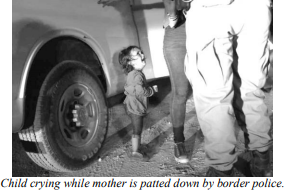
To grasp what is going on in the world right now, we need to reflect on two things. One is that we are in a phase of trial runs. The other is that what is being trialled is fascism – a word that should be used carefully but not shirked when it is so clearly on the horizon. Forget “postfascist” – what we are living with is pre-fascism.
It is easy to dismiss Donald Trump as an ignoramus, not least because he is. But he has an acute understanding of one thing: test marketing. He created himself in the gossip pages of the New York tabloids, where celebrity is manufactured by planting outrageous stories that you can later confirm or deny depending on how they go down. And he recreated himself in reality TV where the storylines can be adjusted according to the ratings. Put something out there, pull it back, adjust, GO again.
Fascism doesn’t arise suddenly in an existing democracy. It is not easy to get people to give up their ideas of freedom and civility. You have to do trial runs that, if they are done well, serve two purposes. They get people used to something they may initially recoil from; and they allow you to refine and calibrate. This is what is happening now and we would be fools not to see it.
One of the basic tools of fascism is the rigging of elections – we’ve seen that trialled in the election of Trump, in the Brexit referendum and (less successfully) in the French presidential elections. Another is the generation of tribal identities, the division of society into mutually exclusive polarities. Fascism does not need a majority – it typically comes to power with about 40 per cent support and then uses control and intimidation to consolidate that power. So it doesn’t matter if most people hate you, as long as your 40 per cent is fanatically committed. That’s been tested out too. And fascism of course needs a propaganda machine so effective that it creates for its followers a universe of “alternative facts” impervious to unwanted realities. Again, the testing for this is very far advanced.
But when you’ve done all this, there is a crucial next step, usually the trickiest of all. You have to undermine moral boundaries, inure people to the acceptance of acts of extreme cruelty. Like hounds, people have to be blooded. They have to be given the taste for savagery. Fascism does this by building up the sense of threat from a despised out-group. This allows the members of that group to be dehumanized. Once that has been achieved, you can gradually up the ante, working through the stages from breaking windows to extermination.
It is this next step that is being test-marketed now. It is being done in Italy by the far-right leader and minister for the interior Matteo Salvini. How would it go down if we turn away boatloads of refugees? Let’s do a screening of the rough-cut of registering all the Roma and see what buttons the audience will press. And it has been trialled by Trump: let’s see how my fans feel about crying babies in cages.
To see, as most commentary has done, the deliberate traumatisation of migrant children as a “mistake” by Trump is culpable naivety. It is a trial run – and the trial has been a huge success. Trump’s claim last week that immigrants “infest” the US is a test-marketing of whether his fans are ready for the next step-up in language, which is of course “vermin”. And the generation of images of toddlers being dragged from their parents is a test of whether those words can be turned into sounds and pictures. It was always an experiment – it ended (but only in part) because the results were in. And the results are quite satisfactory. There is good news on two fronts. First, Rupert Murdoch is happy with it – his Fox News mouthpieces outdid themselves in barbaric crassness: making animal noises at the mention of a Down syndrome child, describing crying children as actors.
This is greatly encouraging for the pre-fascist agenda. The blooding process has begun within the democratic world. The muscles that the propaganda machines need for defending the indefensible are being toned up. Millions and millions of Europeans and Americans are learning to think the unthinkable. So what if those black people drown in the sea? So what if those brown toddlers are scarred for life? They have already, in their minds, crossed the boundaries of morality. But the tests will be refined, the results analysed, the methods perfected, the messages sharpened. And then the deeds can follow.
Adaptado de: https://www.irishtimes.com/opinion/fintan-o-toole-trialruns-for-fascism-are-in-full-flow-1.3543375. Acesso em: 11/10/2018
The word HOUNDS (underlined in the text), used in the construction of a metaphor, can be replaced by
Questão 40 7340195
UNITAU Medicina - Inverno 2019The Rise of Authoritarian Capitalism
By Kevin Rudd (former prime minister of Australia and president of the Asia Society Policy Institute in New York.) Sept. 16, 2018

Occupy Wall Street demonstrators in 2011 in New York. Crushing student debt was among the causes taken up by the movement, which blamed the 2008 financial crisis on corporate greed and a system favoring the “one percent.”CreditStan Honda/Agence France-Presse — Getty Images
Liberal democracy and capitalism have been the two commanding political and economic ideas of Western history since the 19th century. Now, however, the fate of these once-galvanizing global principles is increasingly uncertain.
Democratic capitalism is showing signs of deep, systemic sickness in the United States, Europe and Australasia, even as varieties of state or authoritarian capitalism are slowly becoming entrenched around the world, particularly in China and Russia.
In the developing world, democratic capitalism has always had a mixed reputation. While the West preached its freedoms at home, it happily engaged in political and economic exploitation abroad. The hypocrisy of colonialism is still lost on many in the West, who ask why so many people in the developing world have found the truths of Western political and economic freedom to be less than self-evident in their own national experiences. Nevertheless, there is something elementally powerful about the underlying idea of individual dignity and freedom. Despite the baggage of colonialism, democratic capitalism succeeded remarkably in Asia, Africa and Latin America after World War II, and after the Cold War in particular. The democracy watchdog group Freedom House reports that as of 2017, 88 of 195 states were classified as “free,” compared with 65 of 165 in 1990. After the end of the Cold War, however, four structural challenges emerged to endanger the future of democratic capitalism: financial instability, technological disruption, widening social and economic inequality and structural weaknesses in democratic politics. If the West cannot overcome these challenges, they will, over time, spread to the rest of the world and undermine open polities, economies and societies.
The 2008 financial crisis, one sign of a systemic sickness, occurred because of poorly regulated financial elites. The costs to governments and peoples were bailouts, lost jobs and more public debt. Governments had to scramble to save capitalism from itself as financial markets failed to self-correct. As a result, the markets privatized their profits and socialized their losses. Only one top bank executive went to jail. The taxpayer, by and large, paid the bill. And democratically elected governments were routinely tossed out because they had either failed to prevent the crisis, or were unable to manage the resulting public debt — or both. Another crisis could push the system to its breaking point.
Revolutions in technology threaten democracies’ ability to cope with the complexity, speed and trajectory of change. Democracies, like corporations, can now be hacked. Social media distorts the free flow of facts that has been the lifeblood of democratic capitalism. In the past, disruptions to employment brought about by rapid technological change resulted in a movement of lower-skilled jobs to newer industries. But now we may no longer be capable of providing enough new jobs in areas where they are needed. The financial and technological challenges are compounded by a rising economic inequality. The extreme concentration of wealth in the United States in recent decades is well documented. The new barons of capital and technology thrive while the American middle class stagnates and the American dream fades. The bottom line is simple: Citizens will continue to support their democratic capitalist systems so long as there is reasonable equality of opportunity and a humane social safety net. Take these away and the citizenry no longer has a material stake in mainstream democratic politics. Nationalism and xenophobia take over.
Lastly, there are the inherent structural failings in modern democratic politics. In the United States, unrestricted campaign financing continues to undermine democracy. The spectacular corruption of the electoral redistricting system — gerrymandering — only compounds the problem. On top of this, the polarization of traditional news media by Fox News and others is poisoning the capacity of the democratic system to build a sustainable consensus around what is left of the political center, as shown by the debacle of the American gun-control debate. As Western democracies look increasingly sick, other systems of governance are now on offer. Russian nationalism represents a departure from Western political, economic and diplomatic norms. China has become increasingly confident in its own model, described as authoritarian or state capitalism. And its “Beijing consensus” is held up to the non-Western world as an example of a more effective form of national, and even international, governance.
Both democracy and capitalism are relatively recent developments in the long history of the West. They represent even more recent developments in the considerably longer history of the East. Both represent the enduring idea of freedom. Yet both rest on increasingly fragile political and economic institutions. History cautions us against any belief that democratic capitalism will somehow inevitably prevail. Unless, of course, we make it so by tending the garden while there is still time.
The word yet underlined in the last paragraph of the text is
Questão 39 7340194
UNITAU Medicina - Inverno 2019The Rise of Authoritarian Capitalism
By Kevin Rudd (former prime minister of Australia and president of the Asia Society Policy Institute in New York.) Sept. 16, 2018
Occupy Wall Street demonstrators in 2011 in New York. Crushing student debt was among the causes taken up by the movement, which blamed the 2008 financial crisis on corporate greed and a system favoring the “one percent.”CreditStan Honda/Agence France-Presse — Getty Images
Liberal democracy and capitalism have been the two commanding political and economic ideas of Western history since the 19th century. Now, however, the fate of these once-galvanizing global principles is increasingly uncertain.
Democratic capitalism is showing signs of deep, systemic sickness in the United States, Europe and Australasia, even as varieties of state or authoritarian capitalism are slowly becoming entrenched around the world, particularly in China and Russia.
In the developing world, democratic capitalism has always had a mixed reputation. While the West preached its freedoms at home, it happily engaged in political and economic exploitation abroad. The hypocrisy of colonialism is still lost on many in the West, who ask why so many people in the developing world have found the truths of Western political and economic freedom to be less than self-evident in their own national experiences. Nevertheless, there is something elementally powerful about the underlying idea of individual dignity and freedom. Despite the baggage of colonialism, democratic capitalism succeeded remarkably in Asia, Africa and Latin America after World War II, and after the Cold War in particular. The democracy watchdog group Freedom House reports that as of 2017, 88 of 195 states were classified as “free,” compared with 65 of 165 in 1990. After the end of the Cold War, however, four structural challenges emerged to endanger the future of democratic capitalism: financial instability, technological disruption, widening social and economic inequality and structural weaknesses in democratic politics. If the West cannot overcome these challenges, they will, over time, spread to the rest of the world and undermine open polities, economies and societies.
The 2008 financial crisis, one sign of a systemic sickness, occurred because of poorly regulated financial elites. The costs to governments and peoples were bailouts, lost jobs and more public debt. Governments had to scramble to save capitalism from itself as financial markets failed to self-correct. As a result, the markets privatized their profits and socialized their losses. Only one top bank executive went to jail. The taxpayer, by and large, paid the bill. And democratically elected governments were routinely tossed out because they had either failed to prevent the crisis, or were unable to manage the resulting public debt — or both. Another crisis could push the system to its breaking point.
Revolutions in technology threaten democracies’ ability to cope with the complexity, speed and trajectory of change. Democracies, like corporations, can now be hacked. Social media distorts the free flow of facts that has been the lifeblood of democratic capitalism. In the past, disruptions to employment brought about by rapid technological change resulted in a movement of lower-skilled jobs to newer industries. But now we may no longer be capable of providing enough new jobs in areas where they are needed. The financial and technological challenges are compounded by a rising economic inequality. The extreme concentration of wealth in the United States in recent decades is well documented. The new barons of capital and technology thrive while the American middle class stagnates and the American dream fades. The bottom line is simple: Citizens will continue to support their democratic capitalist systems so long as there is reasonable equality of opportunity and a humane social safety net. Take these away and the citizenry no longer has a material stake in mainstream democratic politics. Nationalism and xenophobia take over.
Lastly, there are the inherent structural failings in modern democratic politics. In the United States, unrestricted campaign financing continues to undermine democracy. The spectacular corruption of the electoral redistricting system — gerrymandering — only compounds the problem. On top of this, the polarization of traditional news media by Fox News and others is poisoning the capacity of the democratic system to build a sustainable consensus around what is left of the political center, as shown by the debacle of the American gun-control debate. As Western democracies look increasingly sick, other systems of governance are now on offer. Russian nationalism represents a departure from Western political, economic and diplomatic norms. China has become increasingly confident in its own model, described as authoritarian or state capitalism. And its “Beijing consensus” is held up to the non-Western world as an example of a more effective form of national, and even international, governance.
Both democracy and capitalism are relatively recent developments in the long history of the West. They represent even more recent developments in the considerably longer history of the East. Both represent the enduring idea of freedom. Yet both rest on increasingly fragile political and economic institutions. History cautions us against any belief that democratic capitalism will somehow inevitably prevail. Unless, of course, we make it so by tending the garden while there is still time.
The word their underlined in the third paragraph refers to the word
Questão 38 7340193
UNITAU Medicina - Inverno 2019The Rise of Authoritarian Capitalism
By Kevin Rudd (former prime minister of Australia and president of the Asia Society Policy Institute in New York.) Sept. 16, 2018
Occupy Wall Street demonstrators in 2011 in New York. Crushing student debt was among the causes taken up by the movement, which blamed the 2008 financial crisis on corporate greed and a system favoring the “one percent.”CreditStan Honda/Agence France-Presse — Getty Images
Liberal democracy and capitalism have been the two commanding political and economic ideas of Western history since the 19th century. Now, however, the fate of these once-galvanizing global principles is increasingly uncertain.
Democratic capitalism is showing signs of deep, systemic sickness in the United States, Europe and Australasia, even as varieties of state or authoritarian capitalism are slowly becoming entrenched around the world, particularly in China and Russia.
In the developing world, democratic capitalism has always had a mixed reputation. While the West preached its freedoms at home, it happily engaged in political and economic exploitation abroad. The hypocrisy of colonialism is still lost on many in the West, who ask why so many people in the developing world have found the truths of Western political and economic freedom to be less than self-evident in their own national experiences. Nevertheless, there is something elementally powerful about the underlying idea of individual dignity and freedom. Despite the baggage of colonialism, democratic capitalism succeeded remarkably in Asia, Africa and Latin America after World War II, and after the Cold War in particular. The democracy watchdog group Freedom House reports that as of 2017, 88 of 195 states were classified as “free,” compared with 65 of 165 in 1990. After the end of the Cold War, however, four structural challenges emerged to endanger the future of democratic capitalism: financial instability, technological disruption, widening social and economic inequality and structural weaknesses in democratic politics. If the West cannot overcome these challenges, they will, over time, spread to the rest of the world and undermine open polities, economies and societies.
The 2008 financial crisis, one sign of a systemic sickness, occurred because of poorly regulated financial elites. The costs to governments and peoples were bailouts, lost jobs and more public debt. Governments had to scramble to save capitalism from itself as financial markets failed to self-correct. As a result, the markets privatized their profits and socialized their losses. Only one top bank executive went to jail. The taxpayer, by and large, paid the bill. And democratically elected governments were routinely tossed out because they had either failed to prevent the crisis, or were unable to manage the resulting public debt — or both. Another crisis could push the system to its breaking point.
Revolutions in technology threaten democracies’ ability to cope with the complexity, speed and trajectory of change. Democracies, like corporations, can now be hacked. Social media distorts the free flow of facts that has been the lifeblood of democratic capitalism. In the past, disruptions to employment brought about by rapid technological change resulted in a movement of lower-skilled jobs to newer industries. But now we may no longer be capable of providing enough new jobs in areas where they are needed. The financial and technological challenges are compounded by a rising economic inequality. The extreme concentration of wealth in the United States in recent decades is well documented. The new barons of capital and technology thrive while the American middle class stagnates and the American dream fades. The bottom line is simple: Citizens will continue to support their democratic capitalist systems so long as there is reasonable equality of opportunity and a humane social safety net. Take these away and the citizenry no longer has a material stake in mainstream democratic politics. Nationalism and xenophobia take over.
Lastly, there are the inherent structural failings in modern democratic politics. In the United States, unrestricted campaign financing continues to undermine democracy. The spectacular corruption of the electoral redistricting system — gerrymandering — only compounds the problem. On top of this, the polarization of traditional news media by Fox News and others is poisoning the capacity of the democratic system to build a sustainable consensus around what is left of the political center, as shown by the debacle of the American gun-control debate. As Western democracies look increasingly sick, other systems of governance are now on offer. Russian nationalism represents a departure from Western political, economic and diplomatic norms. China has become increasingly confident in its own model, described as authoritarian or state capitalism. And its “Beijing consensus” is held up to the non-Western world as an example of a more effective form of national, and even international, governance.
Both democracy and capitalism are relatively recent developments in the long history of the West. They represent even more recent developments in the considerably longer history of the East. Both represent the enduring idea of freedom. Yet both rest on increasingly fragile political and economic institutions. History cautions us against any belief that democratic capitalism will somehow inevitably prevail. Unless, of course, we make it so by tending the garden while there is still time.
The meaning of the expression “on offer” in the sentence “As Western democracies look increasingly sick, other systems of governance are now on offer” i
Questão 36 7340190
UNITAU Medicina - Inverno 2019The Rise of Authoritarian Capitalism
By Kevin Rudd (former prime minister of Australia and president of the Asia Society Policy Institute in New York.) Sept. 16, 2018
Occupy Wall Street demonstrators in 2011 in New York. Crushing student debt was among the causes taken up by the movement, which blamed the 2008 financial crisis on corporate greed and a system favoring the “one percent.”CreditStan Honda/Agence France-Presse — Getty Images
Liberal democracy and capitalism have been the two commanding political and economic ideas of Western history since the 19th century. Now, however, the fate of these once-galvanizing global principles is increasingly uncertain.
Democratic capitalism is showing signs of deep, systemic sickness in the United States, Europe and Australasia, even as varieties of state or authoritarian capitalism are slowly becoming entrenched around the world, particularly in China and Russia.
In the developing world, democratic capitalism has always had a mixed reputation. While the West preached its freedoms at home, it happily engaged in political and economic exploitation abroad. The hypocrisy of colonialism is still lost on many in the West, who ask why so many people in the developing world have found the truths of Western political and economic freedom to be less than self-evident in their own national experiences. Nevertheless, there is something elementally powerful about the underlying idea of individual dignity and freedom. Despite the baggage of colonialism, democratic capitalism succeeded remarkably in Asia, Africa and Latin America after World War II, and after the Cold War in particular. The democracy watchdog group Freedom House reports that as of 2017, 88 of 195 states were classified as “free,” compared with 65 of 165 in 1990. After the end of the Cold War, however, four structural challenges emerged to endanger the future of democratic capitalism: financial instability, technological disruption, widening social and economic inequality and structural weaknesses in democratic politics. If the West cannot overcome these challenges, they will, over time, spread to the rest of the world and undermine open polities, economies and societies.
The 2008 financial crisis, one sign of a systemic sickness, occurred because of poorly regulated financial elites. The costs to governments and peoples were bailouts, lost jobs and more public debt. Governments had to scramble to save capitalism from itself as financial markets failed to self-correct. As a result, the markets privatized their profits and socialized their losses. Only one top bank executive went to jail. The taxpayer, by and large, paid the bill. And democratically elected governments were routinely tossed out because they had either failed to prevent the crisis, or were unable to manage the resulting public debt — or both. Another crisis could push the system to its breaking point.
Revolutions in technology threaten democracies’ ability to cope with the complexity, speed and trajectory of change. Democracies, like corporations, can now be hacked. Social media distorts the free flow of facts that has been the lifeblood of democratic capitalism. In the past, disruptions to employment brought about by rapid technological change resulted in a movement of lower-skilled jobs to newer industries. But now we may no longer be capable of providing enough new jobs in areas where they are needed. The financial and technological challenges are compounded by a rising economic inequality. The extreme concentration of wealth in the United States in recent decades is well documented. The new barons of capital and technology thrive while the American middle class stagnates and the American dream fades. The bottom line is simple: Citizens will continue to support their democratic capitalist systems so long as there is reasonable equality of opportunity and a humane social safety net. Take these away and the citizenry no longer has a material stake in mainstream democratic politics. Nationalism and xenophobia take over.
Lastly, there are the inherent structural failings in modern democratic politics. In the United States, unrestricted campaign financing continues to undermine democracy. The spectacular corruption of the electoral redistricting system — gerrymandering — only compounds the problem. On top of this, the polarization of traditional news media by Fox News and others is poisoning the capacity of the democratic system to build a sustainable consensus around what is left of the political center, as shown by the debacle of the American gun-control debate. As Western democracies look increasingly sick, other systems of governance are now on offer. Russian nationalism represents a departure from Western political, economic and diplomatic norms. China has become increasingly confident in its own model, described as authoritarian or state capitalism. And its “Beijing consensus” is held up to the non-Western world as an example of a more effective form of national, and even international, governance.
Both democracy and capitalism are relatively recent developments in the long history of the West. They represent even more recent developments in the considerably longer history of the East. Both represent the enduring idea of freedom. Yet both rest on increasingly fragile political and economic institutions. History cautions us against any belief that democratic capitalism will somehow inevitably prevail. Unless, of course, we make it so by tending the garden while there is still time.
The “debacle of the American gun-control debate” is used as an example for
Questão 15 7339142
Santo Agostinho 2019/2Dementia risk: Five-minute scan 'can predict cognitive decline'
A five-minute scan could be used to spot people at risk of dementia before symptoms appear, researchers claim.
Scientists used ultrasound scanners to look at blood vessels in the necks of more than 3,000 people and monitored
them over the next 15 years.
They found those with the most intense pulses went on to experience greater cognitive decline over the next decade
than the other study participants.
[05] Researchers hope it may offer a new way to predict cognitive decline.
An international team of experts, led by University College London (UCL), measured the intensity of the pulse
travelling towards the brain in 3,191 people in 2002.
A more intense pulse can cause damage to the small vessels of the brain, structural changes in the brain's blood
vessel network and minor bleeds known as mini-strokes.
[10] Over the next 15 years, researchers monitored participants’ memory and problem-solving ability.
Those with the highest intensity pulse (the top quarter of participants) at the beginning of the study were about 50%
more likely to show accelerated cognitive decline over the next decade compared with the rest of the participants, the
study found.
Researchers said this was the equivalent of about an extra one to one-and-half years of decline.
[15] Cognitive decline is often one of the first signs of dementia, but not everyone who experiences it will go on to develop
the condition.

Having a healthy diet, doing regular exercise and not smoking
can alii help to stave off dementia, evidence suggests.
Researchers said the test could provide a new way to identify people who are at risk of developing dementia, leading
to earlier treatments and lifestyle interventions.
Controlling blood pressure and cholesterol, having a healthy diet, doing regular exercise and not smoking can all help
[20] to stave off dementia, evidence suggests.
Dr Scott Chiesa, from UCL, said: "Dementia is the end result of decades of damage, so by the time people get
dementia it's too late to do anything.
"What we're trying to say is you need to get in as early as possible, identify a way to see who's actually progressing
towards possibly getting dementia and target them."
[25] However, the study, co-funded by the British Heart Foundation, does not contain data on which study participants
went on to develop dementia.
Researchers next plan to use MRI scans to check if people in the study also display structural and functional changes
within the brain that may explain their cognitive decline.
They also want to test whether the scan improves predictive risk scores for dementia which already exist.
[30] Dr Carol Routledge, director of research at Alzheimer’s Research UK, said it was not yet clear if the scan could
improve the diagnosis of dementia.
She added: “What we do know is that the blood supply in the brain is incredibly important, and that maintaining a
healthy heart and blood pressure is associated with a lower risk of developing dementia.”
THERRIEN, Alex. Health. BBC News. 12 nov. 2018. Available in: . Accessed in: november, 18, 2018.
We may affirm concerning MRI scan:
06