


![[Marketing] Questao Topo - deslogado](https://storage.estuda.com.br/banners/0_6b7ebee90b03af1c560c73bb8bcce34a_banner_deslogado_70_dias.png)
Questões de Inglês
19.971 Questões
Questão 58 7835212
IMEPAC 2019INSTRUCTIONS: Read the text and answer question.
What Is Anxiety?
Anxiety is really just a form of stress. It can be experienced in many different ways — physically, emotionally, and in the way people view the world around them. Anxiety mainly relates to worry about what might happen — worrying about things going wrong or feeling like you’re in some kind of danger.
Anxiety is a natural human reaction, and it serves as an important biological function: It’s an alarm system that’s activated whenever we perceive danger or a threat. When the body and mind react, we can feel physical sensations, like dizziness, a rapid heartbeat, difficulty breathing, and sweaty or shaky hands and feet. These sensations — called the fight–flight response — are caused by a rush of adrenaline and other stress hormones that prepare the body to make a quick getaway or “flight” from danger.
The fight–flight response happens instantly. But it usually takes a few seconds longer for the thinking part of the brain (the cortex) to process the situation and evaluate whether the threat is real, and if so, how to handle it. When the cortex sends the all-clear signal, the fight–flight response is deactivated and the nervous system starts to calm down.
Available at: Accessed on: August 30th, 2018.
The text states that dizziness is an example of physical sensation one can feel due to anxiety.
The meaning of dizziness is:
Questão 14 7833772
UNIFAN Medicina 2019/1Read the text below.
Tattoo ink particles can spread into lymph nodes
The news come from a study that found evidence particles from tattoo ink can spread into lymph nodes – but it hasn't been proven that tattoo ink causes cancer. Researchers used samples of skin and adjacent lymph nodes taken from six donors after autopsy.
Four of the donors had tattoos and were more likely to have substances like titanium in the lymph nodes. Lymph nodes are part of the lymphatic system, which in turn is part of the immune system.
The problem is the researchers didn't include important information about whether any of the donors had cancer, or what caused their deaths. This means it's not possible to claim that the tattoo ink particles found in lymph nodes cause cancer.
(Source: www.nhs.uk)
It is possible to infer based on the text:
Questão 13 7833764
UNIFAN Medicina 2019/1Read the text below for question
Would you trust a smartphone app as a contraceptive?
The Natural Cycles fertility app combines the use of a thermometer to measure body temperature with calendar calculating methods – often referred to as the rhythm method – to work out the days when a woman would be at high or low risk of pregnancy.
More than 4,000 women were included in this Swedish study looking at how effective the app is at preventing pregnancy. A total of 143 unplanned pregnancies occurred during the study period, 10 of which were the result of the app falsely indicating a safe day. Data collected by the app was used to work out that, if used exactly as advised, 5 women out of every 1,000 will accidentally become pregnant, and 7 out of every 100 women will become pregnant for "typical use" (not using the app correctly), each year.
This app may be attractive for women who are unwilling to use other forms of contraception, possibly for religious or cultural reasons, or because they have concerns about the side effects of hormonal contraception.
This app may also help indicate the best days to try to conceive. But an obvious disadvantage of this contraceptive method is that the app does not protect against sexually transmitted infections in the same way as a condom.
Further research weighing an app like this against established contraceptive methods would be required to confirm whether its effectiveness is comparable.
(Source: www.nhs.uk)
The text suggests that
Questão 11 7833739
UNIFAN Medicina 2019/1Read the text below.
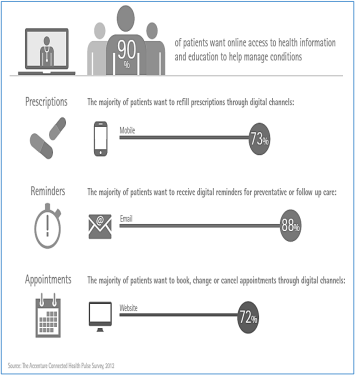
The text indicates that
Questão 19 7710463
FCMS/JF Medicina 2019/1Digital addiction: how technology keeps us hooked
June 12, 2018 7.47am EDT
The World Health Organisation is to include “gaming disorder”, the inability to stop gaming, into the International Classification of Diseases. By doing so, the WHO is recognising the serious and growing problem of digital addiction. The problem has also been acknowledged by Google, which recently announced that it will begin focusing on “Digital Well-being”.
Although there is a growing recognition of the problem, users are still not aware of exactly how digital technology is designed to facilitate addiction. We’re part of a research team that focuses on digital addiction and here are some of the techniques and mechanisms that digital media use to keep you hooked.
Compulsive checking
Digital technologies, such as social networks, online shopping, and games, use a set of persuasive and motivational techniques to keep users returning. These include “scarcity” (a snap or status is only temporarily available, encouraging you to get online quickly); “social proof” (20,000 users retweeted an article so you should go online and read it); “personalisation” (your news feed is designed to filter and display news based on your interest); and “reciprocity” (invite more friends to get extra points, and once your friends are part of the network it becomes much more difficult for you or them to leave).
Some digital platforms use features normally associated with slot machines. Antoine Taveneaux/ Wikimedia, CC BY
Technology is designed to utilise the basic human need to feel a sense of belonging and connection with others. So, a fear of missing out, commonly known as FoMO, is at the heart of many features of social media design.
'Groups and forums in social media promote active participation. Notifications and “presence features” keep people notified of each others’ availability and activities in real-time so that some start to become compulsive checkers. This includes “two ticks” on instant messaging tools, such as Whatsapp. Users can see whether their message has been delivered and read. This creates pressure on each person to respond quickly to the other.
Addiction and awareness
People using digital media do exhibit symptoms of behavioural addiction. These include salience, conflict, and mood modification when they check their online profiles regularly. Often people feel the need to engage with digital devices even if it is inappropriate or dangerous for them to do so. If disconnected or unable to interact as desired, they become preoccupied with missing opportunities to engage with their online social
networks.theconversation.com
Em 1933, a primeira desfibrilação, executada em animais, foi relatada pro Kouwenoven. em 1954, Paul M. Zoll relatou o uso de corrente alternada através do tórax de um ser humano. Em 1962, Bernard Lown provou, utilizando marcapassos, qu eo uso do corrente contúinua era superior nas desfribilações.
Marque a opção correta sobre as propriedades da corrente elétrica.
Questão 18 7710457
FCMS/JF Medicina 2019/1Digital addiction: how technology keeps us hooked
June 12, 2018 7.47am EDT
The World Health Organisation is to include “gaming disorder”, the inability to stop gaming, into the International Classification of Diseases. By doing so, the WHO is recognising the serious and growing problem of digital addiction. The problem has also been acknowledged by Google, which recently announced that it will begin focusing on “Digital Well-being”.
Although there is a growing recognition of the problem, users are still not aware of exactly how digital technology is designed to facilitate addiction. We’re part of a research team that focuses on digital addiction and here are some of the techniques and mechanisms that digital media use to keep you hooked.
Compulsive checking
Digital technologies, such as social networks, online shopping, and games, use a set of persuasive and motivational techniques to keep users returning. These include “scarcity” (a snap or status is only temporarily available, encouraging you to get online quickly); “social proof” (20,000 users retweeted an article so you should go online and read it); “personalisation” (your news feed is designed to filter and display news based on your interest); and “reciprocity” (invite more friends to get extra points, and once your friends are part of the network it becomes much more difficult for you or them to leave).
Some digital platforms use features normally associated with slot machines. Antoine Taveneaux/ Wikimedia, CC BY
Technology is designed to utilise the basic human need to feel a sense of belonging and connection with others. So, a fear of missing out, commonly known as FoMO, is at the heart of many features of social media design.
'Groups and forums in social media promote active participation. Notifications and “presence features” keep people notified of each others’ availability and activities in real-time so that some start to become compulsive checkers. This includes “two ticks” on instant messaging tools, such as Whatsapp. Users can see whether their message has been delivered and read. This creates pressure on each person to respond quickly to the other.
Addiction and awareness
People using digital media do exhibit symptoms of behavioural addiction. These include salience, conflict, and mood modification when they check their online profiles regularly. Often people feel the need to engage with digital devices even if it is inappropriate or dangerous for them to do so. If disconnected or unable to interact as desired, they become preoccupied with missing opportunities to engage with their online social
networks.theconversation.com
“Notifications and presence features keep people notified of each other’s availability and activities in real time so that some start to become compulsive checkers” The underlined expression means here:
06