


![[Marketing] Questao Topo - deslogado](https://storage.estuda.com.br/banners/0_6b7ebee90b03af1c560c73bb8bcce34a_banner_deslogado_70_dias.png)
Questões de Inglês
19.971 Questões
Questão 17 11552726
UNIG Nova Iguaçu 2019/2TEXTO:

Bigger yet Better
On ‘magic island,’ a virtuous cycle began with a ban on heavy industry
One of the sad truths of the developing
world is that an urban population boom has
so often been bad news. From Jakarta to Rio
de Janeiro, more people have typically meant
[5] more ghettoes, more crime, and less economic
life. That’s one reason urbanites in big cities are
moving to places like Florianópolis, an island city 700
kilometers south of São Paulo, where bigger doesn’t
always mean worse.
[10] Between 1970 and 2004, Florianópolis’s
population tripled. So did the number of slums. But
the local economy grew fivefold, and incomes grew
in step. Opportunity seekers, urban and rural, white
collar and blue, arrived in large groups. With a hundred or so
[15] beaches lining the “magic island,” tourism is thriving.
And while many Brazilian cities are struggling to
graduate from smokestacks to services, Florianópolis
is succeeding. Thanks in part to a federal rule that for
decades barred heavy industry on the island, town
[20] officials promoted cleaner public works, and now it
has a network of public and private universities that
make this one of the most scholarly cities in Brazil.
To tend to the demanding academic crowd, the city
invested heavily in everything from roads to schools,
[25] and now Florianópolis ranks high on every development
measure, from literacy (97%) to electrification (near
100%). By the late 1990s, private companies were
flocking to the island, or emerging from a technology
“incubator” at the federal university. (Among its
[30] innovations: the computerized voting machines that
have made Brazilian elections fraud-free and efficient.)
Local officials now say their goal is to be the Silicon
Valley of Brazil, with beaches. Don’t count them out.
MARGOLIS, Mac. Newsweek, New York, p. 56July 3/10 s.d Adaptado.
Fill in the parentheses with True or False. About Florianópolis, it’s correct to say:
( ) Its local economy has grown considerably.
( ) Lots of people have gone there looking for a job opportunity.
( ) Its tourism industry has failed to keep up with the city’s success.
The true statements, from top to bottom, are in alternative
Questão 16 11552686
UNIG Nova Iguaçu 2019/2TEXTO:
Bigger yet Better
On ‘magic island,’ a virtuous cycle began with a ban on heavy industry
One of the sad truths of the developing
world is that an urban population boom has
so often been bad news. From Jakarta to Rio
de Janeiro, more people have typically meant
[5] more ghettoes, more crime, and less economic
life. That’s one reason urbanites in big cities are
moving to places like Florianópolis, an island city 700
kilometers south of São Paulo, where bigger doesn’t
always mean worse.
[10] Between 1970 and 2004, Florianópolis’s
population tripled. So did the number of slums. But
the local economy grew fivefold, and incomes grew
in step. Opportunity seekers, urban and rural, white
collar and blue, arrived in large groups. With a hundred or so
[15] beaches lining the “magic island,” tourism is thriving.
And while many Brazilian cities are struggling to
graduate from smokestacks to services, Florianópolis
is succeeding. Thanks in part to a federal rule that for
decades barred heavy industry on the island, town
[20] officials promoted cleaner public works, and now it
has a network of public and private universities that
make this one of the most scholarly cities in Brazil.
To tend to the demanding academic crowd, the city
invested heavily in everything from roads to schools,
[25] and now Florianópolis ranks high on every development
measure, from literacy (97%) to electrification (near
100%). By the late 1990s, private companies were
flocking to the island, or emerging from a technology
“incubator” at the federal university. (Among its
[30] innovations: the computerized voting machines that
have made Brazilian elections fraud-free and efficient.)
Local officials now say their goal is to be the Silicon
Valley of Brazil, with beaches. Don’t count them out.
MARGOLIS, Mac. Newsweek, New York, p. 56July 3/10 s.d Adaptado.
According to the author, a sudden increase in urban population usually
Questão 52 11520738
APMBB 2019Leia o texto para responder à questão
What is Interpol?
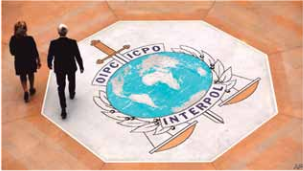
Founded in 1923, Interpol is an international police organisation made up of 194 member countries. It is not a police force in the traditional sense – its agents are not able to arrest criminals. Instead, it is more of an informationsharing network, providing a way for national police forces to co-operate effectively and tackle international crime ranging from human trafficking and terrorism to money laundering and illegal art dealing.
The organisation, based in France, operates centralised criminal databases that contain fingerprint records, DNA samples and stolen documents: a treasure trove so valuable that police consulted it 146 times every second in 2017. Interpol’s other main function is to issue notices: alerts to member states for missing or wanted persons. The bestknown of these is the “Red Notice”, a notification that a member state would like someone arrested. States are not obliged to follow these notices, but will often treat them as a warrant for someone’s arrest and extradition. “Diffusions”, which can be issued with less bureaucracy, are another popular way of seeking arrests through Interpol.
Notices and diffusions lie at the heart of the organisation’s recent turmoil. Though Interpol’s constitution explicitly forbids any activities of a political character, activists accuse it of failing to enforce this rule.
(www.economist.com/the-economist-explains/2018/11/22/ what-is-interpol. Adaptado)
According to the second paragraph,
Questão 50 11520734
APMBB 2019Leia o texto para responder à questão
What is Interpol?
Founded in 1923, Interpol is an international police organisation made up of 194 member countries. It is not a police force in the traditional sense – its agents are not able to arrest criminals. Instead, it is more of an informationsharing network, providing a way for national police forces to co-operate effectively and tackle international crime ranging from human trafficking and terrorism to money laundering and illegal art dealing.
The organisation, based in France, operates centralised criminal databases that contain fingerprint records, DNA samples and stolen documents: a treasure trove so valuable that police consulted it 146 times every second in 2017. Interpol’s other main function is to issue notices: alerts to member states for missing or wanted persons. The bestknown of these is the “Red Notice”, a notification that a member state would like someone arrested. States are not obliged to follow these notices, but will often treat them as a warrant for someone’s arrest and extradition. “Diffusions”, which can be issued with less bureaucracy, are another popular way of seeking arrests through Interpol.
Notices and diffusions lie at the heart of the organisation’s recent turmoil. Though Interpol’s constitution explicitly forbids any activities of a political character, activists accuse it of failing to enforce this rule.
(www.economist.com/the-economist-explains/2018/11/22/ what-is-interpol. Adaptado)
No trecho do primeiro parágrafo “It is not a police force in the traditional sense – its agents are not able to arrest criminals”, o travessão pode ser substituído, sem alteração de sentido, por
Questão 49 11520716
APMBB 2019Leia o texto para responder à questão
What is Interpol?
Founded in 1923, Interpol is an international police organisation made up of 194 member countries. It is not a police force in the traditional sense – its agents are not able to arrest criminals. Instead, it is more of an informationsharing network, providing a way for national police forces to co-operate effectively and tackle international crime ranging from human trafficking and terrorism to money laundering and illegal art dealing.
The organisation, based in France, operates centralised criminal databases that contain fingerprint records, DNA samples and stolen documents: a treasure trove so valuable that police consulted it 146 times every second in 2017. Interpol’s other main function is to issue notices: alerts to member states for missing or wanted persons. The bestknown of these is the “Red Notice”, a notification that a member state would like someone arrested. States are not obliged to follow these notices, but will often treat them as a warrant for someone’s arrest and extradition. “Diffusions”, which can be issued with less bureaucracy, are another popular way of seeking arrests through Interpol.
Notices and diffusions lie at the heart of the organisation’s recent turmoil. Though Interpol’s constitution explicitly forbids any activities of a political character, activists accuse it of failing to enforce this rule.
(www.economist.com/the-economist-explains/2018/11/22/ what-is-interpol. Adaptado)
According to the text, Interpol
Questão 15 11305179
IFSudesteMinas 2019/1Read TEXTS II and III to answer question.
TEXT II
1 Corinthians 13a
Paul the Apostle
If I speak in the tonguesb of men or of angels, but do not have love, I am only a resounding gong or a
clanging cymbal. If I have the gift of prophecy and can fathom all mysteries and all knowledge, and if
I have a faith that can move mountains, but do not have love, I am nothing. If I give all I possess to the
poor and give over my body to hardship that I may boast but do not have love, I gain nothing.
[] Love is patient, love is kind. It does not envy, it does not boast, it is not proud. It does not dishonor
others, it is not self-seeking, it is not easily angered, it keeps no record of wrongs. Love does not delight
in evil but rejoices with the truth. It always protects, always trusts, always hopes, always perseveres.
Love never fails. But where there are prophecies, they will cease; where there are tongues, they will be
stilled; where there is knowledge, it will pass away. For we know in part and we prophesy in part, but
[] when completeness comes, what is in part disappears. When I was a child, I talked like a child, I thought
like a child, I reasoned like a child. When I became a man, I put the ways of childhood behind me. For
now, we see only a reflection as in a mirror; then we shall see face to face. Now I know in part; then I
shall know fully, even as I am fully known.
And now these three remain: faith, hope and love. But the greatest of these is love.
PALMER, Edwin H, et al., The Holy Bible, New International Version: Containing the Old Testament and the New Testament. Grand Rapids: Zondervan, 1978. Revised in 1984 and in 2011. Available at: https://www.bible.com/enGB/bible/111/1CO.13.niv. Access on: 19 Aug. 2018.
TEXT III
Love Is All We Have Left
U2
Love Is All We Have Left
Nothing to stop this being the best day ever
Nothing to keep us from where we should be
I wanted the world but you knew better
[5] And that all we have is immortality
Don't close your eyes
Love and love is all we have left
A baby cries on a doorstep
Love is all we have left
[10] Love and love is all we have left
You argue because you can't accept
Love is all we have left
Now you're at the other end of the telescope
Seven billion stars in her eyes
[15] So many stars
So many ways of seeing
Hey this is no time not to be alive
Love and love is all we have left
A baby cries on a doorstep
[20] Love is all we have left
Love and love is all we have left
The only thing that can be kept
Love is all we have left
Available at: https://www.letras.mus.br/u2/love-is-all-we-have-left. Access on: 19 Aug. 2018.
Consider the propositions below as T (true) or F (false) about TEXT III.
I. ( ) In the sentence: “Nothing to keep us from where we should be (line 3)”, the modal verb in bold implies the idea of obligation.
II. ( ) In the sentence: “So many ways of seeing (line 16), the verb in bold is in the form of gerund.
III. ( ) In the sentence: “You argue because you can't accept” (line 11), the modal verb in bold implies the idea of inability.
IV. ( ) In the sentence: “I wanted the world but you knew better” (line 4), the verbs in bold are in the past simple.
V. ( ) In the sentences: “The only thing that can be kept / Love is all we have left” (lines 22-23), the verbs in bold are in the past simple.
Mark the CORRECT alternative.
06