


![[Marketing] Questao Topo - deslogado](https://storage.estuda.com.br/banners/0_6b7ebee90b03af1c560c73bb8bcce34a_banner_deslogado_70_dias.png)
Questões de Inglês
19.971 Questões
Questão 18 11561863
UNIG ITAPERUNA 2019TEXTO
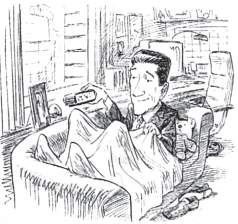
Power napping is good for the I.Q.
Health professionals increasingly recognize the
importance of eight hours’ sleep a night. Scientists
now believe that sleep is the single most important
factor for general health, more important than diet or
[5] exercise. Sleep is the only treatment that can claim to
restore, rejuvenate, and energize both the body and
the brain. The third of our lives that we spend asleep
has a profound effect on the two-thirds that we spend
awake – affecting our mood, memory, alertness, and
[10] performance.
Studies show that people in the developed
world increasingly spend less time asleep and more
time at work or traveling to and from work. Dr. Karine
Spiegel, at the University of Chicago, has found that
[15] the average length of sleep in developed nations has
declined from nine hours in 1910 to seven-and-a-half
hours today. However, we are biologically ill-equipped
to function on little sleep; and losing just one or two
hours’ sleep a night over a long period of time can
[20] have a serious effect on someone’s health.
According to Canadian scientist Dr. Stanley
Coren, every hour of sleep lost in a night also causes
us to drop one I.Q. point the next day. In a week of
five- or six-hour nights, the average person’s I.Q. could
[25] drop 15 points; thus, a normally intelligent person
starts to have a hard time functioning at all.
Most sleep experts agree that humans are
designed to sleep for at least eight hours, but this
should be in two stages: a long sleep at night and a
[30] shorter nap in the afternoon. American companies are
paying attention to this and are reporting increased
levels of alertness in employees who “power nap” at
some point during the afternoon, if only for 20 minutes.
The argument is that those who are not sleep-deprived
[35] are much more efficient at work.
The test used to determine sleep deprivation is
called the Multiple Sleep Latency Test, or MSLT. In
an MSLT, an individual remains in a darkened, quiet
room during the day. According to the theory, the
[40] more sleep-deprived the individual is, the less time it
takes that person to fall asleep. If it takes ten minutes
or longer to fall into a light sleep, the participant is
probably getting enough sleep; anything less shows
moderate sleep deprivation. However, the time of year
[45] seems to affect how much sleep an individual requires.
People tend to sleep as long as 14 hours in the winter
and as little as six hours in summer, without ill effects.
RICHARDS, Jack; ECKSTUT-DIDIER, Samuela. Strategic reading 1: building effective reading skills. Cambridge, 2003. p 122.
In the expression “Power napping” (title), “Power” can be associated with
Questão 16 11561759
UNIG ITAPERUNA 2019TEXTO
Power napping is good for the I.Q.
Health professionals increasingly recognize the
importance of eight hours’ sleep a night. Scientists
now believe that sleep is the single most important
factor for general health, more important than diet or
[5] exercise. Sleep is the only treatment that can claim to
restore, rejuvenate, and energize both the body and
the brain. The third of our lives that we spend asleep
has a profound effect on the two-thirds that we spend
awake – affecting our mood, memory, alertness, and
[10] performance.
Studies show that people in the developed
world increasingly spend less time asleep and more
time at work or traveling to and from work. Dr. Karine
Spiegel, at the University of Chicago, has found that
[15] the average length of sleep in developed nations has
declined from nine hours in 1910 to seven-and-a-half
hours today. However, we are biologically ill-equipped
to function on little sleep; and losing just one or two
hours’ sleep a night over a long period of time can
[20] have a serious effect on someone’s health.
According to Canadian scientist Dr. Stanley
Coren, every hour of sleep lost in a night also causes
us to drop one I.Q. point the next day. In a week of
five- or six-hour nights, the average person’s I.Q. could
[25] drop 15 points; thus, a normally intelligent person
starts to have a hard time functioning at all.
Most sleep experts agree that humans are
designed to sleep for at least eight hours, but this
should be in two stages: a long sleep at night and a
[30] shorter nap in the afternoon. American companies are
paying attention to this and are reporting increased
levels of alertness in employees who “power nap” at
some point during the afternoon, if only for 20 minutes.
The argument is that those who are not sleep-deprived
[35] are much more efficient at work.
The test used to determine sleep deprivation is
called the Multiple Sleep Latency Test, or MSLT. In
an MSLT, an individual remains in a darkened, quiet
room during the day. According to the theory, the
[40] more sleep-deprived the individual is, the less time it
takes that person to fall asleep. If it takes ten minutes
or longer to fall into a light sleep, the participant is
probably getting enough sleep; anything less shows
moderate sleep deprivation. However, the time of year
[45] seems to affect how much sleep an individual requires.
People tend to sleep as long as 14 hours in the winter
and as little as six hours in summer, without ill effects.
RICHARDS, Jack; ECKSTUT-DIDIER, Samuela. Strategic reading 1: building effective reading skills. Cambridge, 2003. p 122.
According to the text,
Questão 25 11552767
UNIG Nova Iguaçu 2019/2TEXTO:

Bigger yet Better
On ‘magic island,’ a virtuous cycle began with a ban on heavy industry
One of the sad truths of the developing
world is that an urban population boom has
so often been bad news. From Jakarta to Rio
de Janeiro, more people have typically meant
[5] more ghettoes, more crime, and less economic
life. That’s one reason urbanites in big cities are
moving to places like Florianópolis, an island city 700
kilometers south of São Paulo, where bigger doesn’t
always mean worse.
[10] Between 1970 and 2004, Florianópolis’s
population tripled. So did the number of slums. But
the local economy grew fivefold, and incomes grew
in step. Opportunity seekers, urban and rural, white
collar and blue, arrived in large groups. With a hundred or so
[15] beaches lining the “magic island,” tourism is thriving.
And while many Brazilian cities are struggling to
graduate from smokestacks to services, Florianópolis
is succeeding. Thanks in part to a federal rule that for
decades barred heavy industry on the island, town
[20] officials promoted cleaner public works, and now it
has a network of public and private universities that
make this one of the most scholarly cities in Brazil.
To tend to the demanding academic crowd, the city
invested heavily in everything from roads to schools,
[25] and now Florianópolis ranks high on every development
measure, from literacy (97%) to electrification (near
100%). By the late 1990s, private companies were
flocking to the island, or emerging from a technology
“incubator” at the federal university. (Among its
[30] innovations: the computerized voting machines that
have made Brazilian elections fraud-free and efficient.)
Local officials now say their goal is to be the Silicon
Valley of Brazil, with beaches. Don’t count them out.
MARGOLIS, Mac. Newsweek, New York, p. 56July 3/10 s.d Adaptado.
The ’s in “That’s” (l. 6) is
Questão 23 11552762
UNIG Nova Iguaçu 2019/2TEXTO:
Bigger yet Better
On ‘magic island,’ a virtuous cycle began with a ban on heavy industry
One of the sad truths of the developing
world is that an urban population boom has
so often been bad news. From Jakarta to Rio
de Janeiro, more people have typically meant
[5] more ghettoes, more crime, and less economic
life. That’s one reason urbanites in big cities are
moving to places like Florianópolis, an island city 700
kilometers south of São Paulo, where bigger doesn’t
always mean worse.
[10] Between 1970 and 2004, Florianópolis’s
population tripled. So did the number of slums. But
the local economy grew fivefold, and incomes grew
in step. Opportunity seekers, urban and rural, white
collar and blue, arrived in large groups. With a hundred or so
[15] beaches lining the “magic island,” tourism is thriving.
And while many Brazilian cities are struggling to
graduate from smokestacks to services, Florianópolis
is succeeding. Thanks in part to a federal rule that for
decades barred heavy industry on the island, town
[20] officials promoted cleaner public works, and now it
has a network of public and private universities that
make this one of the most scholarly cities in Brazil.
To tend to the demanding academic crowd, the city
invested heavily in everything from roads to schools,
[25] and now Florianópolis ranks high on every development
measure, from literacy (97%) to electrification (near
100%). By the late 1990s, private companies were
flocking to the island, or emerging from a technology
“incubator” at the federal university. (Among its
[30] innovations: the computerized voting machines that
have made Brazilian elections fraud-free and efficient.)
Local officials now say their goal is to be the Silicon
Valley of Brazil, with beaches. Don’t count them out.
MARGOLIS, Mac. Newsweek, New York, p. 56July 3/10 s.d Adaptado.
The only alternative in which there is a pair of opposites is
Questão 21 11552754
UNIG Nova Iguaçu 2019/2TEXTO:
Bigger yet Better
On ‘magic island,’ a virtuous cycle began with a ban on heavy industry
One of the sad truths of the developing
world is that an urban population boom has
so often been bad news. From Jakarta to Rio
de Janeiro, more people have typically meant
[5] more ghettoes, more crime, and less economic
life. That’s one reason urbanites in big cities are
moving to places like Florianópolis, an island city 700
kilometers south of São Paulo, where bigger doesn’t
always mean worse.
[10] Between 1970 and 2004, Florianópolis’s
population tripled. So did the number of slums. But
the local economy grew fivefold, and incomes grew
in step. Opportunity seekers, urban and rural, white
collar and blue, arrived in large groups. With a hundred or so
[15] beaches lining the “magic island,” tourism is thriving.
And while many Brazilian cities are struggling to
graduate from smokestacks to services, Florianópolis
is succeeding. Thanks in part to a federal rule that for
decades barred heavy industry on the island, town
[20] officials promoted cleaner public works, and now it
has a network of public and private universities that
make this one of the most scholarly cities in Brazil.
To tend to the demanding academic crowd, the city
invested heavily in everything from roads to schools,
[25] and now Florianópolis ranks high on every development
measure, from literacy (97%) to electrification (near
100%). By the late 1990s, private companies were
flocking to the island, or emerging from a technology
“incubator” at the federal university. (Among its
[30] innovations: the computerized voting machines that
have made Brazilian elections fraud-free and efficient.)
Local officials now say their goal is to be the Silicon
Valley of Brazil, with beaches. Don’t count them out.
MARGOLIS, Mac. Newsweek, New York, p. 56July 3/10 s.d Adaptado.
The word “struggling” (l. 16) is closest in meaning to
Questão 18 11552731
UNIG Nova Iguaçu 2019/2TEXTO:
Bigger yet Better
On ‘magic island,’ a virtuous cycle began with a ban on heavy industry
One of the sad truths of the developing
world is that an urban population boom has
so often been bad news. From Jakarta to Rio
de Janeiro, more people have typically meant
[5] more ghettoes, more crime, and less economic
life. That’s one reason urbanites in big cities are
moving to places like Florianópolis, an island city 700
kilometers south of São Paulo, where bigger doesn’t
always mean worse.
[10] Between 1970 and 2004, Florianópolis’s
population tripled. So did the number of slums. But
the local economy grew fivefold, and incomes grew
in step. Opportunity seekers, urban and rural, white
collar and blue, arrived in large groups. With a hundred or so
[15] beaches lining the “magic island,” tourism is thriving.
And while many Brazilian cities are struggling to
graduate from smokestacks to services, Florianópolis
is succeeding. Thanks in part to a federal rule that for
decades barred heavy industry on the island, town
[20] officials promoted cleaner public works, and now it
has a network of public and private universities that
make this one of the most scholarly cities in Brazil.
To tend to the demanding academic crowd, the city
invested heavily in everything from roads to schools,
[25] and now Florianópolis ranks high on every development
measure, from literacy (97%) to electrification (near
100%). By the late 1990s, private companies were
flocking to the island, or emerging from a technology
“incubator” at the federal university. (Among its
[30] innovations: the computerized voting machines that
have made Brazilian elections fraud-free and efficient.)
Local officials now say their goal is to be the Silicon
Valley of Brazil, with beaches. Don’t count them out.
MARGOLIS, Mac. Newsweek, New York, p. 56July 3/10 s.d Adaptado.
The author affirms that part of Florianópolis’s success is due to
06