


![[Marketing] Questao Topo - deslogado](https://storage.estuda.com.br/banners/0_6b7ebee90b03af1c560c73bb8bcce34a_banner_deslogado_70_dias.png)
Questões de Inglês
19.971 Questões
Questão 86 3991379
FAMECA 2020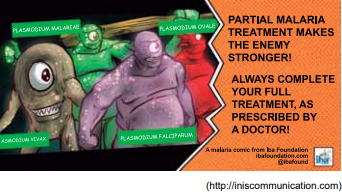
According to the comic strip, malaria treatments should be
Questão 84 3991369
FAMECA 2020Leia o texto para responder à questão.
Widespread testing begins on malaria vaccine

Mothers wait for their children to be vaccinated against malaria at the start of a pilot program at Mitundu Community Hospital, in Lilongwe, Malawi, on April 23, 2019.
With malaria deaths rebounding worldwide, a pilot program testing a new and fiercely debated malaria vaccine began on Tuesday in Malawi. Dr. Katherine O’Brien, the World Health Organization’s director of immunization, called the rollout “a historic moment in the fight against malaria,” and said the testing will soon expand to malarious regions of Ghana and Kenya. But the vaccine, known as RTS,S, or Mosquirix, has been in development for more than 30 years, and it has serious drawbacks that have led some experts to argue that it does not work well enough to spend millions of dollars pursuing.
Malaria kills about 450,000 people a year, most of them young African children. Over the last 15 years, the death rate has been reduced by more than half through extensive, donor-funded efforts to hand out free mosquito nets, spray homes with insecticide and treat people with a new generation of medicines. Nevertheless, deaths have increased again as money has run short, populations have grown, resistance to some new drugs has emerged and mosquitoes have expanded their ranges. Finding new weapons is crucial, experts agree, but making a malaria vaccine has proved challenging in the extreme.
The new vaccine has many weaknesses. It is inconvenient: a child must receive four injections before age 2, sometimes at intervals that do not match the routine vaccine schedules for most other diseases. And it is only partly effective. Testing in more than 10,000 African children from 2009 to 2014 showed that, even after four doses, the vaccine prevented only about 40 percent of detectable malaria infections. The vaccine reduced the occurrence of severe malaria by about 30 percent. It did not protect well against parasite strains that were poor genetic matches, raising a concern that, over time, parasites could evolve resistance to the vaccine as they have to drugs.
(Donald G. McNeil Jr. www.nytimes.com, 24.04.2019. Adaptado.)
No trecho do terceiro parágrafo “parasites could evolve resistance to the vaccine”, o termo sublinhado pode ser substituído, sem alteração de sentido, por
Questão 79 3991305
FAMECA 2020Leia o texto para responder à questão.
Widespread testing begins on malaria vaccine
Mothers wait for their children to be vaccinated against malaria at the start of a pilot program at Mitundu Community Hospital, in Lilongwe, Malawi, on April 23, 2019.
With malaria deaths rebounding worldwide, a pilot program testing a new and fiercely debated malaria vaccine began on Tuesday in Malawi. Dr. Katherine O’Brien, the World Health Organization’s director of immunization, called the rollout “a historic moment in the fight against malaria,” and said the testing will soon expand to malarious regions of Ghana and Kenya. But the vaccine, known as RTS,S, or Mosquirix, has been in development for more than 30 years, and it has serious drawbacks that have led some experts to argue that it does not work well enough to spend millions of dollars pursuing.
Malaria kills about 450,000 people a year, most of them young African children. Over the last 15 years, the death rate has been reduced by more than half through extensive, donor-funded efforts to hand out free mosquito nets, spray homes with insecticide and treat people with a new generation of medicines. Nevertheless, deaths have increased again as money has run short, populations have grown, resistance to some new drugs has emerged and mosquitoes have expanded their ranges. Finding new weapons is crucial, experts agree, but making a malaria vaccine has proved challenging in the extreme.
The new vaccine has many weaknesses. It is inconvenient: a child must receive four injections before age 2, sometimes at intervals that do not match the routine vaccine schedules for most other diseases. And it is only partly effective. Testing in more than 10,000 African children from 2009 to 2014 showed that, even after four doses, the vaccine prevented only about 40 percent of detectable malaria infections. The vaccine reduced the occurrence of severe malaria by about 30 percent. It did not protect well against parasite strains that were poor genetic matches, raising a concern that, over time, parasites could evolve resistance to the vaccine as they have to drugs.
(Donald G. McNeil Jr. www.nytimes.com, 24.04.2019. Adaptado.)
According to the first and second paragraphs, malaria
Questão 78 3991273
FAMECA 2020Leia o texto para responder à questão.
Widespread testing begins on malaria vaccine
Mothers wait for their children to be vaccinated against malaria at the start of a pilot program at Mitundu Community Hospital, in Lilongwe, Malawi, on April 23, 2019.
With malaria deaths rebounding worldwide, a pilot program testing a new and fiercely debated malaria vaccine began on Tuesday in Malawi. Dr. Katherine O’Brien, the World Health Organization’s director of immunization, called the rollout “a historic moment in the fight against malaria,” and said the testing will soon expand to malarious regions of Ghana and Kenya. But the vaccine, known as RTS,S, or Mosquirix, has been in development for more than 30 years, and it has serious drawbacks that have led some experts to argue that it does not work well enough to spend millions of dollars pursuing.
Malaria kills about 450,000 people a year, most of them young African children. Over the last 15 years, the death rate has been reduced by more than half through extensive, donor-funded efforts to hand out free mosquito nets, spray homes with insecticide and treat people with a new generation of medicines. Nevertheless, deaths have increased again as money has run short, populations have grown, resistance to some new drugs has emerged and mosquitoes have expanded their ranges. Finding new weapons is crucial, experts agree, but making a malaria vaccine has proved challenging in the extreme.
The new vaccine has many weaknesses. It is inconvenient: a child must receive four injections before age 2, sometimes at intervals that do not match the routine vaccine schedules for most other diseases. And it is only partly effective. Testing in more than 10,000 African children from 2009 to 2014 showed that, even after four doses, the vaccine prevented only about 40 percent of detectable malaria infections. The vaccine reduced the occurrence of severe malaria by about 30 percent. It did not protect well against parasite strains that were poor genetic matches, raising a concern that, over time, parasites could evolve resistance to the vaccine as they have to drugs.
(Donald G. McNeil Jr. www.nytimes.com, 24.04.2019. Adaptado.)
De acordo com o texto, é importante destacar que
Questão 44 3952659
FGV-SP Administração (Verde - MAT/LPO/LEI/HIS/GEO) 2020/1THE LEOPOLD MUSEUM
By Thomas Trenkler
[1] Numerous important art collectors lived in Vienna until Adolf Hitler seized power in March 1938. The most important among them were Alphonse
Rothschild, Prince Franz Josef II of Liechtenstein, the industrial magnate Ferdinand Bloch-Bauer, the librettist Fritz Grünbaum as well as the dentist Heinrich
Rieger, who treated the destitute Egon Schiele in exchange for pictures. All of them were forced to emigrate or were murdered in the concentration camps.
The tradition of upper-middle-class patronage was generally not continued after World War II, and few new private collectors emerged. Among those who
did, Rudolf Leopold stood out from the rest. By the mid-1980s, his collection – primarily Austrian art from the Biedermeier period (1815-1848) to
Expressionism (the early decades of the 20th century) – highlighted the deficiencies of the Austrian state collections.
[2] Rudolf Leopold was born in Vienna in 1925, studied medicine in the post-war years, received his medical degree in 1953, and finally specialized in
ophthalmology. In 1947 he began to attend lectures on art history and to collect works of the 19th century. At an auction [leilão] in 1950, he happened
upon [encontrou por acaso] a forgotten catalogue of Egon Schiele’s works, which had been published by the art dealer Otto Kallir-Nirenstein. Until 1938,
Kallir-Nirenstein had exhibited at his Neue Gallerie pictures by the most important Austrian artists of the modern period. Rudolf Leopold was excited by the
radical visual language of Schiele (1890-1918), whose art had been labeled “pornographic" in his own day. Leopold cared little about the lack of interest
that the international art world showed for Schiele and the disparaging [de menosprezo] opinion that most art historians held of his work. He acquired
practically every work of Schiele he could lay his hands on.
[3] Leopold’s passion for collecting, which his wife Elizabeth shared, grew ever larger, bordering on fanaticism. In addition, he expanded the focus of his
collection to Jugendstil, an Austrian art period that flowered from the end of World War I until just after World War II. Leopold took out considerable bank
loans, offering masterpieces in his collection as collateral. His spacious home in the Viennese suburb of Grinzing slowly turned into an art warehouse.
Thousands of drawings were stored on cabinets and under beds, and multiple layers of paintings leaned against the walls. Because his house was filled far
beyond capacity and the mountain of debt had assumed dangerous levels, Leopold considered selling his collection to the Republic of Austria. In March
1989, on the occasion of the groundbreaking exhibition “Egon Schiele and his Time,” Chancellor [chief minister of the Austrian state] Franz Vranitzky
announced that negotiations for the acquisition of the collection would begin.
[4] For a long time the negotiations failed to produce a satisfying result: Leopold’s expectations far exceeded the amount that had been considered by the
government. Furthermore, Leopold was unwilling to have his collection added to the holdings of a museum of Austrian modern art, demanding instead
that his life’s work be preserved as a distinct whole. Hans Dichand, the publisher of the newspaper Kronen Zeitung, turned out to be a powerful ally. The
widely read daily repeatedly called for the purchase of the collection.
[5] However, in 1992 the Kronen Zeitung, together with the Freedom Party, launched a huge campaign against the government’s planned construction of
the MuseumsQuartier complex, which, even with downsizing, seemed too expensive. But Erhard Busek, then the minister of science, solved the impasse by
linking the two projects: in October 1993 the government announced that it would establish a separate Leopold Museum within the MuseumsQuartier,
which thus, to a certain extent, owes its existence to Rudolf Leopold. Since he had insisted on a new building for his vast collection, even the Kronen Zeitung
had to accept Busek’s solution.
[6] In the early summer of 1994, after more bargaining, Leopold agreed to transfer his entire collection to a foundation and, in return, to receive 160 million
euros in a series of annual, indexed partial payments until May 2007. And in September 2001, scarcely three months after the official opening of the
MuseumsQuartier, the Leopold Museum opened as well.
Adapted from the book The Vienna Hofburg.
According to the information in the article,
Questão 42 3952655
FGV-SP Administração (Verde - MAT/LPO/LEI/HIS/GEO) 2020/1THE LEOPOLD MUSEUM
By Thomas Trenkler
[1] Numerous important art collectors lived in Vienna until Adolf Hitler seized power in March 1938. The most important among them were Alphonse
Rothschild, Prince Franz Josef II of Liechtenstein, the industrial magnate Ferdinand Bloch-Bauer, the librettist Fritz Grünbaum as well as the dentist Heinrich
Rieger, who treated the destitute Egon Schiele in exchange for pictures. All of them were forced to emigrate or were murdered in the concentration camps.
The tradition of upper-middle-class patronage was generally not continued after World War II, and few new private collectors emerged. Among those who
did, Rudolf Leopold stood out from the rest. By the mid-1980s, his collection – primarily Austrian art from the Biedermeier period (1815-1848) to
Expressionism (the early decades of the 20th century) – highlighted the deficiencies of the Austrian state collections.
[2] Rudolf Leopold was born in Vienna in 1925, studied medicine in the post-war years, received his medical degree in 1953, and finally specialized in
ophthalmology. In 1947 he began to attend lectures on art history and to collect works of the 19th century. At an auction [leilão] in 1950, he happened
upon [encontrou por acaso] a forgotten catalogue of Egon Schiele’s works, which had been published by the art dealer Otto Kallir-Nirenstein. Until 1938,
Kallir-Nirenstein had exhibited at his Neue Gallerie pictures by the most important Austrian artists of the modern period. Rudolf Leopold was excited by the
radical visual language of Schiele (1890-1918), whose art had been labeled “pornographic" in his own day. Leopold cared little about the lack of interest
that the international art world showed for Schiele and the disparaging [de menosprezo] opinion that most art historians held of his work. He acquired
practically every work of Schiele he could lay his hands on.
[3] Leopold’s passion for collecting, which his wife Elizabeth shared, grew ever larger, bordering on fanaticism. In addition, he expanded the focus of his
collection to Jugendstil, an Austrian art period that flowered from the end of World War I until just after World War II. Leopold took out considerable bank
loans, offering masterpieces in his collection as collateral. His spacious home in the Viennese suburb of Grinzing slowly turned into an art warehouse.
Thousands of drawings were stored on cabinets and under beds, and multiple layers of paintings leaned against the walls. Because his house was filled far
beyond capacity and the mountain of debt had assumed dangerous levels, Leopold considered selling his collection to the Republic of Austria. In March
1989, on the occasion of the groundbreaking exhibition “Egon Schiele and his Time,” Chancellor [chief minister of the Austrian state] Franz Vranitzky
announced that negotiations for the acquisition of the collection would begin.
[4] For a long time the negotiations failed to produce a satisfying result: Leopold’s expectations far exceeded the amount that had been considered by the
government. Furthermore, Leopold was unwilling to have his collection added to the holdings of a museum of Austrian modern art, demanding instead
that his life’s work be preserved as a distinct whole. Hans Dichand, the publisher of the newspaper Kronen Zeitung, turned out to be a powerful ally. The
widely read daily repeatedly called for the purchase of the collection.
[5] However, in 1992 the Kronen Zeitung, together with the Freedom Party, launched a huge campaign against the government’s planned construction of
the MuseumsQuartier complex, which, even with downsizing, seemed too expensive. But Erhard Busek, then the minister of science, solved the impasse by
linking the two projects: in October 1993 the government announced that it would establish a separate Leopold Museum within the MuseumsQuartier,
which thus, to a certain extent, owes its existence to Rudolf Leopold. Since he had insisted on a new building for his vast collection, even the Kronen Zeitung
had to accept Busek’s solution.
[6] In the early summer of 1994, after more bargaining, Leopold agreed to transfer his entire collection to a foundation and, in return, to receive 160 million
euros in a series of annual, indexed partial payments until May 2007. And in September 2001, scarcely three months after the official opening of the
MuseumsQuartier, the Leopold Museum opened as well.
Adapted from the book The Vienna Hofburg.
According to the information in the article, because Rudolf Leopold and wife had an almost fanatical desire to collect art,
06