


![[Marketing] Questao Topo - deslogado](https://storage.estuda.com.br/banners/0_6b7ebee90b03af1c560c73bb8bcce34a_banner_deslogado_70_dias.png)
Questões de Inglês
19.971 Questões
Questão 41 4017124
FMJ 2020Leia o texto para responder à questão.
Internet celebrities in Asia: from behind the screens
As darkness falls over Taipei City, an image of a woman illuminates the night sky. She’s one of Taiwan’s most famous live streamers, a niche group of celebrities who earn their fame through front-facing video cameras. Her face beams from a 100-foot-tall billboard overlooking Taipei. Across Asia, countless other live streamers joke, eat, and sleep while being watched by thousands on smart phones and computer screens. The most successful among them can make fortunes enough to buy their own islands.
After a long day’s work, Junji Chen treasures time spent gazing into the eyes of his personal favorite, Yutong. Having moved away from his village to work in Taipei, the 42-year-old has little social life. Most of his relationships are with Facebook friends, many of whom he has never met in person — and with live streamers.
Yutong cannot see Chen or hear his voice but, to him, their connection feels raw, real, maybe even reciprocated. In the comment’s section, he can flatter her with compliments or send her money in the form of virtual stickers. One sticker can cost thousands of dollars, a steep price for a factory worker. But for lonely viewers like Junji, who spends a third of his salary on virtual stickers, the companionship is worth it.
A streamer’s job can cause physical and mental harm. Peak hours are late at night, meaning irregular sleep schedules and fatigue. Some become isolated from friends and family or grow depressed. In Korea, live streamers who eat large quantities of food in front of the camera — known as Mukbang — are prone to obesity. Because a live streamer’s success depends on their digital popularity, they may continue unhealthy behaviors to please their fans. Once intimacy is lost, so is their source of income — even though, financially, few can live off the industry alone.
Live streaming fans can manifest “parasocial relationships,” one-sided friendships that appear reciprocated, with their favorite live streamers. For a person who lacks social skills, parasocial relationships can create the illusion of companionship when, in reality, the other person offers them little or nothing in return.
Fans believe that they are truly cared for, says Jerome Gence, who photographed live streamers and their fans throughout Asia, but “in the end, [the live streamer] just takes the money and the fan ends up even more lonely than before.” Still, he adds, some fans still say the videos help cultivate friendship, or even love. “Some fans say to us, ‘I follow the live streamer because they are the only one who knows my name.’”
(Claire Wolters. www.nationalgeographic.com. 31.07.2019. Adaptado.)
The text points out the fact that the live-streaming industry in Asia
Questão 1 4016440
FMJ 2020Examine o cartum de Shannon Wheeler, publicado no Instagram da revista The New Yorker em 24.11.2018.

“Stop fact-checking my story.”
O cartum ironiza o fato de a história ser
Questão 86 3991379
FAMECA 2020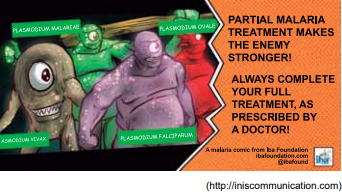
According to the comic strip, malaria treatments should be
Questão 84 3991369
FAMECA 2020Leia o texto para responder à questão.
Widespread testing begins on malaria vaccine

Mothers wait for their children to be vaccinated against malaria at the start of a pilot program at Mitundu Community Hospital, in Lilongwe, Malawi, on April 23, 2019.
With malaria deaths rebounding worldwide, a pilot program testing a new and fiercely debated malaria vaccine began on Tuesday in Malawi. Dr. Katherine O’Brien, the World Health Organization’s director of immunization, called the rollout “a historic moment in the fight against malaria,” and said the testing will soon expand to malarious regions of Ghana and Kenya. But the vaccine, known as RTS,S, or Mosquirix, has been in development for more than 30 years, and it has serious drawbacks that have led some experts to argue that it does not work well enough to spend millions of dollars pursuing.
Malaria kills about 450,000 people a year, most of them young African children. Over the last 15 years, the death rate has been reduced by more than half through extensive, donor-funded efforts to hand out free mosquito nets, spray homes with insecticide and treat people with a new generation of medicines. Nevertheless, deaths have increased again as money has run short, populations have grown, resistance to some new drugs has emerged and mosquitoes have expanded their ranges. Finding new weapons is crucial, experts agree, but making a malaria vaccine has proved challenging in the extreme.
The new vaccine has many weaknesses. It is inconvenient: a child must receive four injections before age 2, sometimes at intervals that do not match the routine vaccine schedules for most other diseases. And it is only partly effective. Testing in more than 10,000 African children from 2009 to 2014 showed that, even after four doses, the vaccine prevented only about 40 percent of detectable malaria infections. The vaccine reduced the occurrence of severe malaria by about 30 percent. It did not protect well against parasite strains that were poor genetic matches, raising a concern that, over time, parasites could evolve resistance to the vaccine as they have to drugs.
(Donald G. McNeil Jr. www.nytimes.com, 24.04.2019. Adaptado.)
No trecho do terceiro parágrafo “parasites could evolve resistance to the vaccine”, o termo sublinhado pode ser substituído, sem alteração de sentido, por
Questão 79 3991305
FAMECA 2020Leia o texto para responder à questão.
Widespread testing begins on malaria vaccine
Mothers wait for their children to be vaccinated against malaria at the start of a pilot program at Mitundu Community Hospital, in Lilongwe, Malawi, on April 23, 2019.
With malaria deaths rebounding worldwide, a pilot program testing a new and fiercely debated malaria vaccine began on Tuesday in Malawi. Dr. Katherine O’Brien, the World Health Organization’s director of immunization, called the rollout “a historic moment in the fight against malaria,” and said the testing will soon expand to malarious regions of Ghana and Kenya. But the vaccine, known as RTS,S, or Mosquirix, has been in development for more than 30 years, and it has serious drawbacks that have led some experts to argue that it does not work well enough to spend millions of dollars pursuing.
Malaria kills about 450,000 people a year, most of them young African children. Over the last 15 years, the death rate has been reduced by more than half through extensive, donor-funded efforts to hand out free mosquito nets, spray homes with insecticide and treat people with a new generation of medicines. Nevertheless, deaths have increased again as money has run short, populations have grown, resistance to some new drugs has emerged and mosquitoes have expanded their ranges. Finding new weapons is crucial, experts agree, but making a malaria vaccine has proved challenging in the extreme.
The new vaccine has many weaknesses. It is inconvenient: a child must receive four injections before age 2, sometimes at intervals that do not match the routine vaccine schedules for most other diseases. And it is only partly effective. Testing in more than 10,000 African children from 2009 to 2014 showed that, even after four doses, the vaccine prevented only about 40 percent of detectable malaria infections. The vaccine reduced the occurrence of severe malaria by about 30 percent. It did not protect well against parasite strains that were poor genetic matches, raising a concern that, over time, parasites could evolve resistance to the vaccine as they have to drugs.
(Donald G. McNeil Jr. www.nytimes.com, 24.04.2019. Adaptado.)
According to the first and second paragraphs, malaria
Questão 78 3991273
FAMECA 2020Leia o texto para responder à questão.
Widespread testing begins on malaria vaccine
Mothers wait for their children to be vaccinated against malaria at the start of a pilot program at Mitundu Community Hospital, in Lilongwe, Malawi, on April 23, 2019.
With malaria deaths rebounding worldwide, a pilot program testing a new and fiercely debated malaria vaccine began on Tuesday in Malawi. Dr. Katherine O’Brien, the World Health Organization’s director of immunization, called the rollout “a historic moment in the fight against malaria,” and said the testing will soon expand to malarious regions of Ghana and Kenya. But the vaccine, known as RTS,S, or Mosquirix, has been in development for more than 30 years, and it has serious drawbacks that have led some experts to argue that it does not work well enough to spend millions of dollars pursuing.
Malaria kills about 450,000 people a year, most of them young African children. Over the last 15 years, the death rate has been reduced by more than half through extensive, donor-funded efforts to hand out free mosquito nets, spray homes with insecticide and treat people with a new generation of medicines. Nevertheless, deaths have increased again as money has run short, populations have grown, resistance to some new drugs has emerged and mosquitoes have expanded their ranges. Finding new weapons is crucial, experts agree, but making a malaria vaccine has proved challenging in the extreme.
The new vaccine has many weaknesses. It is inconvenient: a child must receive four injections before age 2, sometimes at intervals that do not match the routine vaccine schedules for most other diseases. And it is only partly effective. Testing in more than 10,000 African children from 2009 to 2014 showed that, even after four doses, the vaccine prevented only about 40 percent of detectable malaria infections. The vaccine reduced the occurrence of severe malaria by about 30 percent. It did not protect well against parasite strains that were poor genetic matches, raising a concern that, over time, parasites could evolve resistance to the vaccine as they have to drugs.
(Donald G. McNeil Jr. www.nytimes.com, 24.04.2019. Adaptado.)
De acordo com o texto, é importante destacar que
06