


![[Marketing] Questao Topo - deslogado](https://storage.estuda.com.br/banners/0_6b7ebee90b03af1c560c73bb8bcce34a_banner_deslogado_70_dias.png)
Questões de Inglês
19.971 Questões
Questão 2 5294309
EFOMM 1° Dia 2020Read the article below and answer question.
Development of world's first autonomous, zero emission feeder postponed amid COVID-19 crisis
Due to the COVID-19 pandemic and the changed global outlook, the development of the world's first autonomous and electric container vessel Yara Birkeland is put on hold, Norwegian company Yara announced.
Yara has decided to pause further development of the vessel and will assess next steps together with its partners, the company stated. The hull of the Yara Birkeland vessel was launched to sea in Romania in February 2020. The ship is expected to arrive at the Norwegian shipyard in May where it will be fitted with various control and navigation systems and undergo testing before delivery to Yara.
Yara and technology company Kongsberg teamed up in 2017 with the ambition to build the world's first autonomous and zero-emission container vessel.
Replacing 40,000 truck journeys a year, Yara Birkeland seeks to reduce NOx and CO2 emissions and improve road safety in a densely populated urban area in Norway.
(Adapted from: https://safety4sea.com)
In “[...] the world's first autonomous and electric container vessel Yara Birkeland is put on hold [...].”, the idiom in bold means:
Questão 11 5210248
UEA - SIS 3° Etapa 2020Leia o texto para responder a questão
Water scarcity
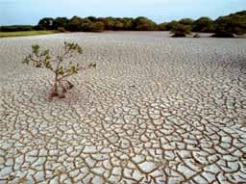
Water covers 70% of our planet, and it is easy to think that it will always be plentiful. However, fresh water — the stuff we drink, bathe in, irrigate our farm fields with — is incredibly rare. Only 3% of the world’s water is fresh water, and two-thirds of that is tucked away in frozen glaciers or otherwise unavailable for our use.
As a result, some 1.1 billion people worldwide lack access to water, and a total of 2.7 billion find water scarce for at least one month of the year. Inadequate sanitation is also a problem for 2.4 billion people — they are exposed to diseases, such as cholera and typhoid fever, and other water-borne illnesses. Two million people, mostly children, die each year from diarrheal diseases alone.
Many of the water systems that keep ecosystems thriving and feed a growing human population have become stressed. Rivers, lakes and aquifers are drying up or becoming too polluted to use. More than half the world’s wetlands have disappeared. Agriculture consumes more water than any other source and wastes much of that through inefficiencies. Climate change is altering patterns of weather and water around the world, causing shortages and droughts in some areas and floods in others.
At the current consumption rate, this situation will only get worse. By 2025, two-thirds of the world’s population may face water shortages. And ecosystems around the world will suffer even more.
(www.worldwildlife.org)
De acordo com o segundo parágrafo, um saneamento básico inadequado pode ocasionar
Questão 10 5210229
UEA - SIS 3° Etapa 2020Leia o texto para responder a questão
Water scarcity
Water covers 70% of our planet, and it is easy to think that it will always be plentiful. However, fresh water — the stuff we drink, bathe in, irrigate our farm fields with — is incredibly rare. Only 3% of the world’s water is fresh water, and two-thirds of that is tucked away in frozen glaciers or otherwise unavailable for our use.
As a result, some 1.1 billion people worldwide lack access to water, and a total of 2.7 billion find water scarce for at least one month of the year. Inadequate sanitation is also a problem for 2.4 billion people — they are exposed to diseases, such as cholera and typhoid fever, and other water-borne illnesses. Two million people, mostly children, die each year from diarrheal diseases alone.
Many of the water systems that keep ecosystems thriving and feed a growing human population have become stressed. Rivers, lakes and aquifers are drying up or becoming too polluted to use. More than half the world’s wetlands have disappeared. Agriculture consumes more water than any other source and wastes much of that through inefficiencies. Climate change is altering patterns of weather and water around the world, causing shortages and droughts in some areas and floods in others.
At the current consumption rate, this situation will only get worse. By 2025, two-thirds of the world’s population may face water shortages. And ecosystems around the world will suffer even more.
(www.worldwildlife.org)
De acordo com o texto,
Questão 9 5210214
UEA - SIS 3° Etapa 2020Leia o texto para responder a questão
Water scarcity
Water covers 70% of our planet, and it is easy to think that it will always be plentiful. However, fresh water — the stuff we drink, bathe in, irrigate our farm fields with — is incredibly rare. Only 3% of the world’s water is fresh water, and two-thirds of that is tucked away in frozen glaciers or otherwise unavailable for our use.
As a result, some 1.1 billion people worldwide lack access to water, and a total of 2.7 billion find water scarce for at least one month of the year. Inadequate sanitation is also a problem for 2.4 billion people — they are exposed to diseases, such as cholera and typhoid fever, and other water-borne illnesses. Two million people, mostly children, die each year from diarrheal diseases alone.
Many of the water systems that keep ecosystems thriving and feed a growing human population have become stressed. Rivers, lakes and aquifers are drying up or becoming too polluted to use. More than half the world’s wetlands have disappeared. Agriculture consumes more water than any other source and wastes much of that through inefficiencies. Climate change is altering patterns of weather and water around the world, causing shortages and droughts in some areas and floods in others.
At the current consumption rate, this situation will only get worse. By 2025, two-thirds of the world’s population may face water shortages. And ecosystems around the world will suffer even more.
(www.worldwildlife.org)
No trecho do primeiro parágrafo “fresh water — the stuff we drink, bathe in, irrigate our farm fields with”, a expressão sublinhada equivale, em português, a
Questão 12 5149125
UEA - SIS 1° Etapa 2020Leia o texto para responder a questão.
Plastic straws, cotton buds and drink stirrers to be banned in England
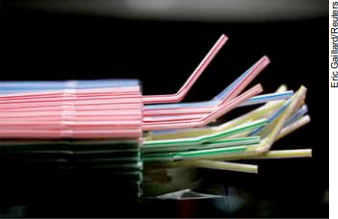
Plastic straws and drink stirrers, and cotton buds with plastic stems will be banned from sale and use in England from next April, the government has confirmed. The move, which has been in the offing for more than a year, is hoped to vastly reduce the litter and other environmental impacts of the nearly 5 billion plastic straws currently used each year in England, along with more than 300 million plastic stirrers and close to 2 billion cotton buds with plastic stems.
Huge numbers of these items, particularly cotton buds, are flushed down toilets or otherwise end up in litter – surveys have recently found waterways across the UK full of plastic, putting wildlife at risk.
Alternatives are available, including serving drinks without straws or stirrers, which is preferable, or using paper straws and biodegradable products in place of plastic stirrers and cotton buds. The only exceptions to the new rule will be for people with a medical need or disability, for whom plastic straws and other materials will be available upon request.
(Fiona Harvey. www.theguardian.com, 22.05.2019. Adaptado.
De acordo com o terceiro parágrafo, a melhor alternativa ao uso de canudos plásticos é
Questão 11 5149102
UEA - SIS 1° Etapa 2020Leia o texto para responder a questão.
Plastic straws, cotton buds and drink stirrers to be banned in England
Plastic straws and drink stirrers, and cotton buds with plastic stems will be banned from sale and use in England from next April, the government has confirmed. The move, which has been in the offing for more than a year, is hoped to vastly reduce the litter and other environmental impacts of the nearly 5 billion plastic straws currently used each year in England, along with more than 300 million plastic stirrers and close to 2 billion cotton buds with plastic stems.
Huge numbers of these items, particularly cotton buds, are flushed down toilets or otherwise end up in litter – surveys have recently found waterways across the UK full of plastic, putting wildlife at risk.
Alternatives are available, including serving drinks without straws or stirrers, which is preferable, or using paper straws and biodegradable products in place of plastic stirrers and cotton buds. The only exceptions to the new rule will be for people with a medical need or disability, for whom plastic straws and other materials will be available upon request.
(Fiona Harvey. www.theguardian.com, 22.05.2019. Adaptado.
No trecho do segundo parágrafo “Huge numbers of these items”, a expressão sublinhada refere-se a:
06