


![[Marketing] Questao Topo - deslogado](https://storage.estuda.com.br/banners/0_6b7ebee90b03af1c560c73bb8bcce34a_banner_deslogado_70_dias.png)
Questões de Inglês
19.971 Questões
Questão 33 6460453
CUSC Medicina 1° Semestre 2020Leia o texto para responder a questão.
The fantastic appeal of fantasy
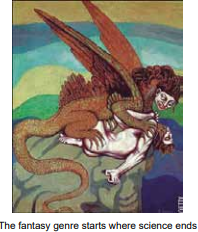
Few things can brighten up a dark morning in a Scottish seaside resort during an Atlantic storm. Yet while sheltering in a bookshop from the rain, I had a moment of sunny revelation. Stacked almost as high as my 11-year-old self were copies of The Lord of the Rings, with a cover illustration that promised mystery and magic. That chance discovery started a lifelong love of the fantasy genre1 , both as reader and writer.
The fantasy genre has had more and more success, but today we’re in the middle of an unprecedented fantasy boom. Sales continue to rise and it is now the biggest genre in publishing. The more rational the world gets, with super-science all around us, the more we demand the irrational in our fiction.
Fantasy is not simply a case of swords2 and sorcery3 . Yes, there is that by the shelf. But the genre is as broad as the imagination. The genre starts where science ends.
“In these modern times, where most of us sit at computers, fantasy books offer a chance to break out of mundane moments,” says Mark Newton, an editor with the genre. “People like to explore themes that go beyond the limited palette that literary fiction claims to offer.”
A search for the origins of fantasy will usually have academics muttering about Beowulf or Homer’s The Iliad, but they come from a time when all stories were fantasy: gods and monsters and supernatural artefacts with humanity caught in the middle. The first modern fantasy writer is usually considered to be William Morris, in the late 19th Century. But it was the early 20th Century where fantasy really started to gain status.
Fantasy fiction has always been about visionary ideas. You can get artful words in plenty of literary fiction, but being able to see beyond the boundaries4 of the world around us — now that’s a special skill.
I don’t write fantasy fiction simply to provide a trapdoor 5 from the real world. For me, the genre is about the reality. But instead of coming up against it, fantasy maps the unconscious aspirations of our modern society through allegory in story- -forms as old as humanity. It’s about turning off the mobile phone and the computer and remembering who we are in the deepest parts of ourselves.
(Mark Chadbourn. www.telegraph.co.uk, 12.04.2008. Adaptado.)
1 genre: gênero. Categoria distintiva de composição literária, como romance, poesia etc.
2 sword: espada.
3 sorcery: feitiçaria.
4 boundary: fronteira.
5 trapdoor: alçapão.
According to the author, the “unprecedented fantasy boom” (2nd paragraph) is related to the fact that
Questão 32 6460439
CUSC Medicina 1° Semestre 2020Leia o texto para responder a questão.
The fantastic appeal of fantasy
Few things can brighten up a dark morning in a Scottish seaside resort during an Atlantic storm. Yet while sheltering in a bookshop from the rain, I had a moment of sunny revelation. Stacked almost as high as my 11-year-old self were copies of The Lord of the Rings, with a cover illustration that promised mystery and magic. That chance discovery started a lifelong love of the fantasy genre1 , both as reader and writer.
The fantasy genre has had more and more success, but today we’re in the middle of an unprecedented fantasy boom. Sales continue to rise and it is now the biggest genre in publishing. The more rational the world gets, with super-science all around us, the more we demand the irrational in our fiction.
Fantasy is not simply a case of swords2 and sorcery3 . Yes, there is that by the shelf. But the genre is as broad as the imagination. The genre starts where science ends.
“In these modern times, where most of us sit at computers, fantasy books offer a chance to break out of mundane moments,” says Mark Newton, an editor with the genre. “People like to explore themes that go beyond the limited palette that literary fiction claims to offer.”
A search for the origins of fantasy will usually have academics muttering about Beowulf or Homer’s The Iliad, but they come from a time when all stories were fantasy: gods and monsters and supernatural artefacts with humanity caught in the middle. The first modern fantasy writer is usually considered to be William Morris, in the late 19th Century. But it was the early 20th Century where fantasy really started to gain status.
Fantasy fiction has always been about visionary ideas. You can get artful words in plenty of literary fiction, but being able to see beyond the boundaries4 of the world around us — now that’s a special skill.
I don’t write fantasy fiction simply to provide a trapdoor 5 from the real world. For me, the genre is about the reality. But instead of coming up against it, fantasy maps the unconscious aspirations of our modern society through allegory in story- -forms as old as humanity. It’s about turning off the mobile phone and the computer and remembering who we are in the deepest parts of ourselves.
(Mark Chadbourn. www.telegraph.co.uk, 12.04.2008. Adaptado.)
1 genre: gênero. Categoria distintiva de composição literária, como romance, poesia etc.
2 sword: espada.
3 sorcery: feitiçaria.
4 boundary: fronteira.
5 trapdoor: alçapão.
No trecho “Yet while sheltering in a bookshop from the rain” (1º parágrafo), o termo sublinhado indica ideia de
Questão 35 6444485
UNIMES 2020Leia o texto para responder a questão.
Does screen time affect children?
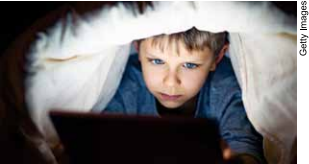
Worries about screen time are increasingly common. Parents (and some health professionals) worry that young people who take pleasure, zombie-like, in the cold glow of television, computer and mobile-phone screens could be storing up a range of social, physical, mental and cognitive problems for their future selves. Children are certainly spending a growing chunk of time looking at screens. Figures from Britain’s Office of National Statistics show, for example, that in 2010-11 8.6% of children aged under 16 said they spent more than three hours on social networks on a normal school day; by 2015-16 that figure had risen to 12.8%. At the same time, according to the National Health Service, the proportion of children aged 5-15 with mental disorders rose from 9.7% in 1999 to 11.2% in 2017. Are these sets of numbers linked?
In short: nobody knows. The limited evidence available suggests that the negative effects of screen time on mental health are tiny and not worth worrying about. But solid research is lacking. Ask any scientist if screen time has alarming effects on children and he will invariably ask in return: what do you mean by “screen time”? It could refer to anything from doing homework on an iPad and reading books on a Kindle to watching television and playing video games. Investigating the effects of screen time is like trying to measure the effects of food on people’s weight — it depends on the kind of food they eat, how often, and external factors such as exercise. It is the same with sleep problems.
Other concerns could be attributed to generational differences. Watching children absorbed by Minecraft or Fortnite could be an exasperating experience for parents unfamiliar with video games. It might lead them to wonder what is happening to their offspring’s brains. They may forget that video games can also be rich social experiences. Minecraft, for example, is often used by children as a social-media platform, a place where they can hang out and talk to their friends.
(www.economist.com, 07.02.2019. Adaptado.)
In the excerpt from the third paragraph “They may forget that video games can also be rich social experiences”, the underlined word refers to
Questão 34 6444479
UNIMES 2020Leia o texto para responder a questão.
Does screen time affect children?
Worries about screen time are increasingly common. Parents (and some health professionals) worry that young people who take pleasure, zombie-like, in the cold glow of television, computer and mobile-phone screens could be storing up a range of social, physical, mental and cognitive problems for their future selves. Children are certainly spending a growing chunk of time looking at screens. Figures from Britain’s Office of National Statistics show, for example, that in 2010-11 8.6% of children aged under 16 said they spent more than three hours on social networks on a normal school day; by 2015-16 that figure had risen to 12.8%. At the same time, according to the National Health Service, the proportion of children aged 5-15 with mental disorders rose from 9.7% in 1999 to 11.2% in 2017. Are these sets of numbers linked?
In short: nobody knows. The limited evidence available suggests that the negative effects of screen time on mental health are tiny and not worth worrying about. But solid research is lacking. Ask any scientist if screen time has alarming effects on children and he will invariably ask in return: what do you mean by “screen time”? It could refer to anything from doing homework on an iPad and reading books on a Kindle to watching television and playing video games. Investigating the effects of screen time is like trying to measure the effects of food on people’s weight — it depends on the kind of food they eat, how often, and external factors such as exercise. It is the same with sleep problems.
Other concerns could be attributed to generational differences. Watching children absorbed by Minecraft or Fortnite could be an exasperating experience for parents unfamiliar with video games. It might lead them to wonder what is happening to their offspring’s brains. They may forget that video games can also be rich social experiences. Minecraft, for example, is often used by children as a social-media platform, a place where they can hang out and talk to their friends.
(www.economist.com, 07.02.2019. Adaptado.)
No trecho do terceiro parágrafo “Other concerns could be attributed to generational differences”, o termo sublinhado pode ser substituído, sem alteração de sentido, por
Questão 33 6444472
UNIMES 2020Leia o texto para responder a questão.
Does screen time affect children?
Worries about screen time are increasingly common. Parents (and some health professionals) worry that young people who take pleasure, zombie-like, in the cold glow of television, computer and mobile-phone screens could be storing up a range of social, physical, mental and cognitive problems for their future selves. Children are certainly spending a growing chunk of time looking at screens. Figures from Britain’s Office of National Statistics show, for example, that in 2010-11 8.6% of children aged under 16 said they spent more than three hours on social networks on a normal school day; by 2015-16 that figure had risen to 12.8%. At the same time, according to the National Health Service, the proportion of children aged 5-15 with mental disorders rose from 9.7% in 1999 to 11.2% in 2017. Are these sets of numbers linked?
In short: nobody knows. The limited evidence available suggests that the negative effects of screen time on mental health are tiny and not worth worrying about. But solid research is lacking. Ask any scientist if screen time has alarming effects on children and he will invariably ask in return: what do you mean by “screen time”? It could refer to anything from doing homework on an iPad and reading books on a Kindle to watching television and playing video games. Investigating the effects of screen time is like trying to measure the effects of food on people’s weight — it depends on the kind of food they eat, how often, and external factors such as exercise. It is the same with sleep problems.
Other concerns could be attributed to generational differences. Watching children absorbed by Minecraft or Fortnite could be an exasperating experience for parents unfamiliar with video games. It might lead them to wonder what is happening to their offspring’s brains. They may forget that video games can also be rich social experiences. Minecraft, for example, is often used by children as a social-media platform, a place where they can hang out and talk to their friends.
(www.economist.com, 07.02.2019. Adaptado.)
No trecho do segundo parágrafo “Investigating the effects of screen time is like trying to measure the effects of food on people’s weight — it depends on the kind of food they eat, how often, and external factors such as exercise”, o texto apresenta
Questão 31 6444456
UNIMES 2020Leia o texto para responder a questão.
Does screen time affect children?
Worries about screen time are increasingly common. Parents (and some health professionals) worry that young people who take pleasure, zombie-like, in the cold glow of television, computer and mobile-phone screens could be storing up a range of social, physical, mental and cognitive problems for their future selves. Children are certainly spending a growing chunk of time looking at screens. Figures from Britain’s Office of National Statistics show, for example, that in 2010-11 8.6% of children aged under 16 said they spent more than three hours on social networks on a normal school day; by 2015-16 that figure had risen to 12.8%. At the same time, according to the National Health Service, the proportion of children aged 5-15 with mental disorders rose from 9.7% in 1999 to 11.2% in 2017. Are these sets of numbers linked?
In short: nobody knows. The limited evidence available suggests that the negative effects of screen time on mental health are tiny and not worth worrying about. But solid research is lacking. Ask any scientist if screen time has alarming effects on children and he will invariably ask in return: what do you mean by “screen time”? It could refer to anything from doing homework on an iPad and reading books on a Kindle to watching television and playing video games. Investigating the effects of screen time is like trying to measure the effects of food on people’s weight — it depends on the kind of food they eat, how often, and external factors such as exercise. It is the same with sleep problems.
Other concerns could be attributed to generational differences. Watching children absorbed by Minecraft or Fortnite could be an exasperating experience for parents unfamiliar with video games. It might lead them to wonder what is happening to their offspring’s brains. They may forget that video games can also be rich social experiences. Minecraft, for example, is often used by children as a social-media platform, a place where they can hang out and talk to their friends.
(www.economist.com, 07.02.2019. Adaptado.)
De acordo com o texto, a resposta à pergunta do título “Does screen time affect children?” é:
06