


![[Marketing] Questao Topo - deslogado](https://storage.estuda.com.br/banners/0_6b7ebee90b03af1c560c73bb8bcce34a_banner_deslogado_70_dias.png)
Questões de Inglês
19.971 Questões
Questão 16 6466770
FCMSCSP - Santa Casa 2020Leia o texto para responder à questão.
Breaking down barriers
Shuffling feet and the general buzz of conversation made lectures a trial for Gemma Long during her first degree. She suffers from sensory overload connected to her autism, which was only diagnosed after she graduated. But when she started a teacher-training course years later, she received access to software to help her cope with dyslexia and found it transformative.
“I struggled to understand the point of lectures until I got that software,” recalls Long. “I didn’t realise how much useful information was in them. As someone who is hypersensitive to noise I spend most of my time in lectures trying to filter out the background noise, which means I miss much of what the lecturer is saying. Being able to audio record the lectures and listen back to them in a silent room meant I was finally able to digest the content.”
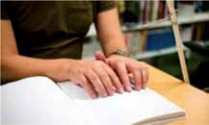
Technology is breaking down barriers faced by students with disabilities. Online journal articles now mean that those with visual impairments can zoom in to read printed text or convert it to easier-to-read formats such as braille. Universities are also increasingly recording lectures which students can replay at their own pace, which benefits students with dyslexia or attention deficit disorder too.
According to Alistair McNaught, a digital learning consultant, universities are increasingly tracking how students learn, and then directing them to the accessible resources most suited to their personal needs. McNaught appreciates the way assistive technologies can help all students — whether they have a disability or not — but stresses that it’s important for universities to get the basics right first. “Many higher and further institutions have inaccessible websites or inaccessible digital content. If the content is inaccessible, investments in assistive technology can be undermined at a stroke.”
Universities just need to get better at promoting the support that’s already there,” says Gemma Long. “Making specialist software and training generally available, rather than confining it to disabled students, makes it more widely known, as well as removes stigma.” For someone like her, who received her diagnoses late, it would have been particularly helpful. To this end, the assistive technology network she founded to represent staff who support their disabled students with tech, will hold its first awards ceremony next month.
Universities are slowly tackling the barriers for disabled students. There’s more yet to come: the prospect of virtual reality – particularly when it comes to fieldwork. “It can be incredibly difficult for a disabled student to get a wheelchair on to a salt marsh,” says Piers Wilkinson, a researcher in the area. “But if the learning aims are being immersed in an environment, and making discoveries, virtual reality can achieve that.”
(www.theguardian.com, 03.06.2019. Adaptado.)
De acordo com o quarto parágrafo, um limite no que se refere ao uso de tecnologia em universidades reside
Questão 15 6466769
FCMSCSP - Santa Casa 2020Leia o texto para responder à questão.
Breaking down barriers
Shuffling feet and the general buzz of conversation made lectures a trial for Gemma Long during her first degree. She suffers from sensory overload connected to her autism, which was only diagnosed after she graduated. But when she started a teacher-training course years later, she received access to software to help her cope with dyslexia and found it transformative.
“I struggled to understand the point of lectures until I got that software,” recalls Long. “I didn’t realise how much useful information was in them. As someone who is hypersensitive to noise I spend most of my time in lectures trying to filter out the background noise, which means I miss much of what the lecturer is saying. Being able to audio record the lectures and listen back to them in a silent room meant I was finally able to digest the content.”
Technology is breaking down barriers faced by students with disabilities. Online journal articles now mean that those with visual impairments can zoom in to read printed text or convert it to easier-to-read formats such as braille. Universities are also increasingly recording lectures which students can replay at their own pace, which benefits students with dyslexia or attention deficit disorder too.
According to Alistair McNaught, a digital learning consultant, universities are increasingly tracking how students learn, and then directing them to the accessible resources most suited to their personal needs. McNaught appreciates the way assistive technologies can help all students — whether they have a disability or not — but stresses that it’s important for universities to get the basics right first. “Many higher and further institutions have inaccessible websites or inaccessible digital content. If the content is inaccessible, investments in assistive technology can be undermined at a stroke.”
Universities just need to get better at promoting the support that’s already there,” says Gemma Long. “Making specialist software and training generally available, rather than confining it to disabled students, makes it more widely known, as well as removes stigma.” For someone like her, who received her diagnoses late, it would have been particularly helpful. To this end, the assistive technology network she founded to represent staff who support their disabled students with tech, will hold its first awards ceremony next month.
Universities are slowly tackling the barriers for disabled students. There’s more yet to come: the prospect of virtual reality – particularly when it comes to fieldwork. “It can be incredibly difficult for a disabled student to get a wheelchair on to a salt marsh,” says Piers Wilkinson, a researcher in the area. “But if the learning aims are being immersed in an environment, and making discoveries, virtual reality can achieve that.”
(www.theguardian.com, 03.06.2019. Adaptado.)
According to the third and fourth paragraphs, in order to assist students facing learning difficulties universities are
Questão 14 6466765
FCMSCSP - Santa Casa 2020Leia o texto para responder à questão.
Breaking down barriers
Shuffling feet and the general buzz of conversation made lectures a trial for Gemma Long during her first degree. She suffers from sensory overload connected to her autism, which was only diagnosed after she graduated. But when she started a teacher-training course years later, she received access to software to help her cope with dyslexia and found it transformative.
“I struggled to understand the point of lectures until I got that software,” recalls Long. “I didn’t realise how much useful information was in them. As someone who is hypersensitive to noise I spend most of my time in lectures trying to filter out the background noise, which means I miss much of what the lecturer is saying. Being able to audio record the lectures and listen back to them in a silent room meant I was finally able to digest the content.”
Technology is breaking down barriers faced by students with disabilities. Online journal articles now mean that those with visual impairments can zoom in to read printed text or convert it to easier-to-read formats such as braille. Universities are also increasingly recording lectures which students can replay at their own pace, which benefits students with dyslexia or attention deficit disorder too.
According to Alistair McNaught, a digital learning consultant, universities are increasingly tracking how students learn, and then directing them to the accessible resources most suited to their personal needs. McNaught appreciates the way assistive technologies can help all students — whether they have a disability or not — but stresses that it’s important for universities to get the basics right first. “Many higher and further institutions have inaccessible websites or inaccessible digital content. If the content is inaccessible, investments in assistive technology can be undermined at a stroke.”
Universities just need to get better at promoting the support that’s already there,” says Gemma Long. “Making specialist software and training generally available, rather than confining it to disabled students, makes it more widely known, as well as removes stigma.” For someone like her, who received her diagnoses late, it would have been particularly helpful. To this end, the assistive technology network she founded to represent staff who support their disabled students with tech, will hold its first awards ceremony next month.
Universities are slowly tackling the barriers for disabled students. There’s more yet to come: the prospect of virtual reality – particularly when it comes to fieldwork. “It can be incredibly difficult for a disabled student to get a wheelchair on to a salt marsh,” says Piers Wilkinson, a researcher in the area. “But if the learning aims are being immersed in an environment, and making discoveries, virtual reality can achieve that.”
(www.theguardian.com, 03.06.2019. Adaptado.)
In the fragment from the second paragraph “which means I miss much of what the lecturer is saying”, the underlined word refers to
Questão 13 6466759
FCMSCSP - Santa Casa 2020Leia o texto para responder à questão.
Breaking down barriers
Shuffling feet and the general buzz of conversation made lectures a trial for Gemma Long during her first degree. She suffers from sensory overload connected to her autism, which was only diagnosed after she graduated. But when she started a teacher-training course years later, she received access to software to help her cope with dyslexia and found it transformative.
“I struggled to understand the point of lectures until I got that software,” recalls Long. “I didn’t realise how much useful information was in them. As someone who is hypersensitive to noise I spend most of my time in lectures trying to filter out the background noise, which means I miss much of what the lecturer is saying. Being able to audio record the lectures and listen back to them in a silent room meant I was finally able to digest the content.”
Technology is breaking down barriers faced by students with disabilities. Online journal articles now mean that those with visual impairments can zoom in to read printed text or convert it to easier-to-read formats such as braille. Universities are also increasingly recording lectures which students can replay at their own pace, which benefits students with dyslexia or attention deficit disorder too.
According to Alistair McNaught, a digital learning consultant, universities are increasingly tracking how students learn, and then directing them to the accessible resources most suited to their personal needs. McNaught appreciates the way assistive technologies can help all students — whether they have a disability or not — but stresses that it’s important for universities to get the basics right first. “Many higher and further institutions have inaccessible websites or inaccessible digital content. If the content is inaccessible, investments in assistive technology can be undermined at a stroke.”
Universities just need to get better at promoting the support that’s already there,” says Gemma Long. “Making specialist software and training generally available, rather than confining it to disabled students, makes it more widely known, as well as removes stigma.” For someone like her, who received her diagnoses late, it would have been particularly helpful. To this end, the assistive technology network she founded to represent staff who support their disabled students with tech, will hold its first awards ceremony next month.
Universities are slowly tackling the barriers for disabled students. There’s more yet to come: the prospect of virtual reality – particularly when it comes to fieldwork. “It can be incredibly difficult for a disabled student to get a wheelchair on to a salt marsh,” says Piers Wilkinson, a researcher in the area. “But if the learning aims are being immersed in an environment, and making discoveries, virtual reality can achieve that.”
(www.theguardian.com, 03.06.2019. Adaptado.)
In the context of the first paragraph, the expression “made lectures a trial” means that
Questão 40 6460625
CUSC Medicina 1° Semestre 2020Leia a tirinha para responder a questão.
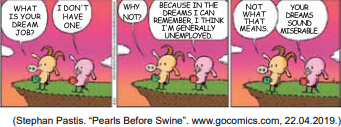
In the last panel, “miserable” means the same as
Questão 36 6460576
CUSC Medicina 1° Semestre 2020Leia o texto para responder a questão.
The fantastic appeal of fantasy
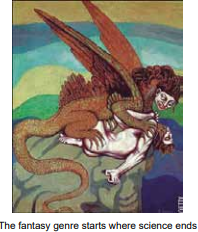
Few things can brighten up a dark morning in a Scottish seaside resort during an Atlantic storm. Yet while sheltering in a bookshop from the rain, I had a moment of sunny revelation. Stacked almost as high as my 11-year-old self were copies of The Lord of the Rings, with a cover illustration that promised mystery and magic. That chance discovery started a lifelong love of the fantasy genre1 , both as reader and writer.
The fantasy genre has had more and more success, but today we’re in the middle of an unprecedented fantasy boom. Sales continue to rise and it is now the biggest genre in publishing. The more rational the world gets, with super-science all around us, the more we demand the irrational in our fiction.
Fantasy is not simply a case of swords2 and sorcery3 . Yes, there is that by the shelf. But the genre is as broad as the imagination. The genre starts where science ends.
“In these modern times, where most of us sit at computers, fantasy books offer a chance to break out of mundane moments,” says Mark Newton, an editor with the genre. “People like to explore themes that go beyond the limited palette that literary fiction claims to offer.”
A search for the origins of fantasy will usually have academics muttering about Beowulf or Homer’s The Iliad, but they come from a time when all stories were fantasy: gods and monsters and supernatural artefacts with humanity caught in the middle. The first modern fantasy writer is usually considered to be William Morris, in the late 19th Century. But it was the early 20th Century where fantasy really started to gain status.
Fantasy fiction has always been about visionary ideas. You can get artful words in plenty of literary fiction, but being able to see beyond the boundaries4 of the world around us — now that’s a special skill.
I don’t write fantasy fiction simply to provide a trapdoor 5 from the real world. For me, the genre is about the reality. But instead of coming up against it, fantasy maps the unconscious aspirations of our modern society through allegory in story- -forms as old as humanity. It’s about turning off the mobile phone and the computer and remembering who we are in the deepest parts of ourselves.
(Mark Chadbourn. www.telegraph.co.uk, 12.04.2008. Adaptado.)
1 genre: gênero. Categoria distintiva de composição literária, como romance, poesia etc.
2 sword: espada.
3 sorcery: feitiçaria.
4 boundary: fronteira.
5 trapdoor: alçapão.
No trecho “they come from a time when all stories were fantasy” (5º parágrafo), o termo sublinhado refere-se a
06