


![[Marketing] Questao Topo - deslogado](https://storage.estuda.com.br/banners/0_6b7ebee90b03af1c560c73bb8bcce34a_banner_deslogado_70_dias.png)
Questões de Inglês
19.971 Questões
Questão 38 6303220
UPE SSA 1ª Fase - 1° Dia 2021Text for question.
Music Festivals: a Massive Business
in the 50 Years Since Woodstock
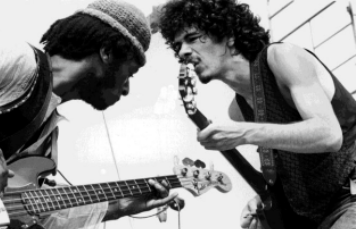
Carios Santana (right) and bessist David Brown perform with the
group Santana at the Woodstock Music Festival. Tucker Ransor
Hutton Archive/Getty Images. Acesso em: 25/07/2021
AUGUST 14, 2019.
Within the last decade, music festivals have grown into a major moneymaker in a competitive industry that sees hundreds of such events each year in the U.S. There are the big ones – Coachella, Lollapalooza, Outside Lands, Governors Ball – with big-ticket prices, multiple stages, camping options and nearly endless lists of performers. And alongside their rise in popularity, hundreds of smaller, niche or genre-specific festivals have flourished. Look up “music festival near me,” and you‟re likely to find one within at least a few hours‟ drive.
The origins of music festivals date back to ancient Greece, where such events often involved competitions in music, arts and sports. Modern music festivals in the U.S. grew out of the establishment and ethos of Woodstock. Though it was not the first event of its kind (the Newport Folk and Jazz Festivals, Milwaukee‟s Summerfest and the Monterey Pop Festival predate Woodstock), the 1969 event holds a mythical place within American pop-cultural history. Festivals have since evolved from the DIY, communal spirit of Woodstock, growing into mainstream businesses that reap profits and embrace corporate sponsorships, as more than 32 million people attend them each year, according to Billboard. Coachella, one of the most popular festivals in the country, grossed $114.6 million in 2017, setting a major record for the first recurring festival franchise to earn more than $100 million.
“They used to be more of a communion of culture,” says Carlos Chirinos, a professor of clinical music and global health at New York University. “A group of people who were into the same type of music, they would come together. That was the driving force throughout the 1970s and 1980s until it became a profitable format.” [...]
For artists, appearing at music festivals is an easier way to make money than depending on record sales or long tours, says Rishi Bahl, a musician and marketing professor at La Roche College in Pittsburgh, Pa. As record sales saw a steep decline in the early-to mid-2000s thanks to the growth of digital music, artists began depending on touring to earn money. Bahl says festival organizers quickly caught on to the spike in artists taking to the road and decided to pay them more to appear at their events. He notes that the majority of the touring schedule for a band like the Offspring, which played Woodstock ‟99, now consists of festival performances. Of the 20 shows the Offspring is playing the remainder of this year, about 15 are at music festivals. [...]
Disponível em: https://time.com/5651255/business-of-music-festivals/. Por Mahita Gajanan. Acesso em: jul. 2021. Texto adaptado.
Considerando o contexto e a gramática da língua inglesa, marque a proposição CORRETA.
Questão 37 6303219
UPE SSA 1ª Fase - 1° Dia 2021Text for question.
Music Festivals: a Massive Business
in the 50 Years Since Woodstock
Carios Santana (right) and bessist David Brown perform with the
group Santana at the Woodstock Music Festival. Tucker Ransor
Hutton Archive/Getty Images. Acesso em: 25/07/2021
AUGUST 14, 2019.
Within the last decade, music festivals have grown into a major moneymaker in a competitive industry that sees hundreds of such events each year in the U.S. There are the big ones – Coachella, Lollapalooza, Outside Lands, Governors Ball – with big-ticket prices, multiple stages, camping options and nearly endless lists of performers. And alongside their rise in popularity, hundreds of smaller, niche or genre-specific festivals have flourished. Look up “music festival near me,” and you‟re likely to find one within at least a few hours‟ drive.
The origins of music festivals date back to ancient Greece, where such events often involved competitions in music, arts and sports. Modern music festivals in the U.S. grew out of the establishment and ethos of Woodstock. Though it was not the first event of its kind (the Newport Folk and Jazz Festivals, Milwaukee‟s Summerfest and the Monterey Pop Festival predate Woodstock), the 1969 event holds a mythical place within American pop-cultural history. Festivals have since evolved from the DIY, communal spirit of Woodstock, growing into mainstream businesses that reap profits and embrace corporate sponsorships, as more than 32 million people attend them each year, according to Billboard. Coachella, one of the most popular festivals in the country, grossed $114.6 million in 2017, setting a major record for the first recurring festival franchise to earn more than $100 million.
“They used to be more of a communion of culture,” says Carlos Chirinos, a professor of clinical music and global health at New York University. “A group of people who were into the same type of music, they would come together. That was the driving force throughout the 1970s and 1980s until it became a profitable format.” [...]
For artists, appearing at music festivals is an easier way to make money than depending on record sales or long tours, says Rishi Bahl, a musician and marketing professor at La Roche College in Pittsburgh, Pa. As record sales saw a steep decline in the early-to mid-2000s thanks to the growth of digital music, artists began depending on touring to earn money. Bahl says festival organizers quickly caught on to the spike in artists taking to the road and decided to pay them more to appear at their events. He notes that the majority of the touring schedule for a band like the Offspring, which played Woodstock ‟99, now consists of festival performances. Of the 20 shows the Offspring is playing the remainder of this year, about 15 are at music festivals. [...]
Disponível em: https://time.com/5651255/business-of-music-festivals/. Por Mahita Gajanan. Acesso em: jul. 2021. Texto adaptado.
No trecho: Look up “music festival near me,” and you’re likely to find one within at least a few hours’ drive. (1st paragraph), a autora
Questão 36 6303206
UPE SSA 1ª Fase - 1° Dia 2021Text for question.
Music Festivals: a Massive Business
in the 50 Years Since Woodstock
Carios Santana (right) and bessist David Brown perform with the
group Santana at the Woodstock Music Festival. Tucker Ransor
Hutton Archive/Getty Images. Acesso em: 25/07/2021
AUGUST 14, 2019.
Within the last decade, music festivals have grown into a major moneymaker in a competitive industry that sees hundreds of such events each year in the U.S. There are the big ones – Coachella, Lollapalooza, Outside Lands, Governors Ball – with big-ticket prices, multiple stages, camping options and nearly endless lists of performers. And alongside their rise in popularity, hundreds of smaller, niche or genre-specific festivals have flourished. Look up “music festival near me,” and you‟re likely to find one within at least a few hours‟ drive.
The origins of music festivals date back to ancient Greece, where such events often involved competitions in music, arts and sports. Modern music festivals in the U.S. grew out of the establishment and ethos of Woodstock. Though it was not the first event of its kind (the Newport Folk and Jazz Festivals, Milwaukee‟s Summerfest and the Monterey Pop Festival predate Woodstock), the 1969 event holds a mythical place within American pop-cultural history. Festivals have since evolved from the DIY, communal spirit of Woodstock, growing into mainstream businesses that reap profits and embrace corporate sponsorships, as more than 32 million people attend them each year, according to Billboard. Coachella, one of the most popular festivals in the country, grossed $114.6 million in 2017, setting a major record for the first recurring festival franchise to earn more than $100 million.
“They used to be more of a communion of culture,” says Carlos Chirinos, a professor of clinical music and global health at New York University. “A group of people who were into the same type of music, they would come together. That was the driving force throughout the 1970s and 1980s until it became a profitable format.” [...]
For artists, appearing at music festivals is an easier way to make money than depending on record sales or long tours, says Rishi Bahl, a musician and marketing professor at La Roche College in Pittsburgh, Pa. As record sales saw a steep decline in the early-to mid-2000s thanks to the growth of digital music, artists began depending on touring to earn money. Bahl says festival organizers quickly caught on to the spike in artists taking to the road and decided to pay them more to appear at their events. He notes that the majority of the touring schedule for a band like the Offspring, which played Woodstock ‟99, now consists of festival performances. Of the 20 shows the Offspring is playing the remainder of this year, about 15 are at music festivals. [...]
Disponível em: https://time.com/5651255/business-of-music-festivals/. Por Mahita Gajanan. Acesso em: jul. 2021. Texto adaptado.
De acordo com o texto, é CORRETO afirmar que
Questão 35 6303192
UPE SSA 1ª Fase - 1° Dia 2021Text for question.
The Fiocruz response to the COVID-19
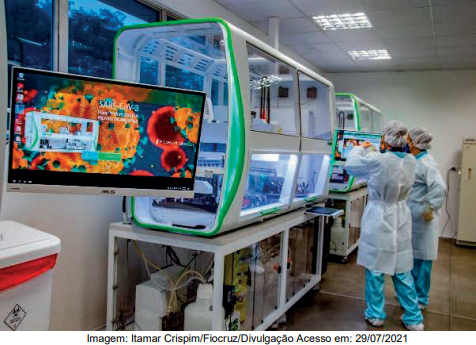
Fiocruz is the reference institution in Brazil for testing the novel coronavirus (SARS-2-COV) and is working closely with the country‟ s Ministry of Health (MoH) to ensure timely and reliable diagnostic and response.
Fiocruz began working with respiratory syndromes 60 years ago and has many specialized bodies to subsidize the institutional response to the virus. The Oswaldo Cruz Institute's Laboratory for Respiratory Viruses and Measles (IOC/Fiocruz) is directly involved in the Brazilian response to the COVID-19. Fiocruz has also two national reference institutes to assist patients: the National Institute of Women, Children and Adolescents' Health Fernandes Figueira (IFF/Fiocruz) and the National Institute of Infectious Diseases Evandro Chagas (INI/Fiocruz).
Disponível em: https://fiocruz.tghn.org/coronavirus/ Acesso em: em 20 jul. 2021. Texto adaptado.
According to the text, Fiocruz
Questão 34 6303189
UPE SSA 1ª Fase - 1° Dia 2021Text for question.
Butatan Institute – Working for Brazilian lives

Instituto Butantan supplies the Brazilian public health system with 90% of the antivenin and 65% of all vaccines distributed in the country. Out of the 170 million doses of vaccines dispensed annually by the Brazilian immunization program, 100 million are produced Butantan.
In particular, Institute Butantan manufactures 100% of the influenza vaccine doses used by the Ministry of Health. Presently, we are the largest flu vaccine manufacturer in the Southern Hemisphere.
The current manufacturing capacity is the result of an internal development of processes to obtain vaccine antigens, as well as technology transfer processes and Productive Development Partnerships between Butantan and external Laboratories.
Disponível em: https://butantan.gov.br/instituto-butantan/ready-to-go-global. Acesso em: 20 jul. 2021. Texto adaptado.
In the 2nd paragraph, two words can be used as synonyms.
They are
Questão 12 6122510
UEA - SIS 2° Etapa 2021Leia o texto para responder à questão.

Humans may need to “wait for decades” to see the results of large emission cuts on global surface temperatures, scientists have said. Researchers in Norway used computer simulations to analyse various scenarios that looked at the effects of rapid reductions in several types of greenhouse gas emissions, such as carbon dioxide (CO2) and methane.
They found that although large-scale emission cuts are needed to achieve the global climate goals, it may take decades before the effects of the reductions on temperatures can be measured.
The researchers estimated that even for the most optimistic scenarios, it will take at least 15 years to establish the impact of emission cuts on climate change.
Bjorn H Samset, of the Centre for International Climate and Environmental Research (Cicero) in Oslo, said: “Humaninduced climate change can be compared with a tank ship at high speed and in big waves. If you want the ship to slow down, you will put the engine in reverse, but it will take some time before you start noticing that the ship is moving more slowly. It will also rock back and forth because of the waves.
(www.sciencefocus.com. Adaptado.)
No último parágrafo do texto, a breve comparação feita por Bjorn H. Samset tem como objetivo ilustrar
06