


![[Marketing] Questao Topo - deslogado](https://storage.estuda.com.br/banners/0_6b7ebee90b03af1c560c73bb8bcce34a_banner_deslogado_70_dias.png)
Questões de Inglês
19.971 Questões
Questão 72 16165214
USP FUVEST - Simulado Oficial - 1ª Fase (2ª edição) 2027Texto para a questão
The Tyler Prize for Environmental Achievement was awarded to Dr Toby Kiers, an evolutionary biologist at Vrije University Amsterdam who has spent the past three decades studying the workings and significance of the soil’s circulatory system.
Dr. Kiers studies mycorrhizal fungi, microbes that form vast, underground networks with carbon drawn from the roots of plants and trees.
The fungal kingdom, which stands apart from plants and animals, contains anywhere from two million to five million species, including yeasts, mildew, lichens and mushrooms.
In 2021, Dr. Kiers founded the Society for the Protection of Underground Networks, or SPUN, a global network of researchers and “underground explorers” that works to identify and protect hot spots of fungal diversity.
Why fungi? These underground ecosystems play a crucial role in regulating the climate. Soils store about 75 percent of Earth’s terrestrial carbon and contain close to 60 percent of Earth’s biodiversity.
Mycorrhizal fungi form the basis of food chains for those aboveground organisms, which together generate more soil and nutrients. They draw carbon from plants and get it to stick to minerals underground, where it’s hard to release back into the atmosphere. The vast majority of crops form partnerships with mycorrhizal fungi and rely on them for their nutrients.
These fungi also hold soil together; their bodies are woven into the aggregate and produce sticky chemicals that are hard to break down. Take away that scaffolding and soils would erode and disappear.
People think they know what soil and dirt is. With highresolution imaging, we’re starting to make it visible and show that it’s alive. These are ecosystems with as much complexity as what’s happening aboveground.
The New York Times. 14 January 2026. Adaptado.
No texto, o emprego metafórico do termo “scaffolding” (7º parágrafo)
Questão 71 16165209
USP FUVEST - Simulado Oficial - 1ª Fase (2ª edição) 2027Texto para a questão
The Tyler Prize for Environmental Achievement was awarded to Dr Toby Kiers, an evolutionary biologist at Vrije University Amsterdam who has spent the past three decades studying the workings and significance of the soil’s circulatory system.
Dr. Kiers studies mycorrhizal fungi, microbes that form vast, underground networks with carbon drawn from the roots of plants and trees.
The fungal kingdom, which stands apart from plants and animals, contains anywhere from two million to five million species, including yeasts, mildew, lichens and mushrooms.
In 2021, Dr. Kiers founded the Society for the Protection of Underground Networks, or SPUN, a global network of researchers and “underground explorers” that works to identify and protect hot spots of fungal diversity.
Why fungi? These underground ecosystems play a crucial role in regulating the climate. Soils store about 75 percent of Earth’s terrestrial carbon and contain close to 60 percent of Earth’s biodiversity.
Mycorrhizal fungi form the basis of food chains for those aboveground organisms, which together generate more soil and nutrients. They draw carbon from plants and get it to stick to minerals underground, where it’s hard to release back into the atmosphere. The vast majority of crops form partnerships with mycorrhizal fungi and rely on them for their nutrients.
These fungi also hold soil together; their bodies are woven into the aggregate and produce sticky chemicals that are hard to break down. Take away that scaffolding and soils would erode and disappear.
People think they know what soil and dirt is. With highresolution imaging, we’re starting to make it visible and show that it’s alive. These are ecosystems with as much complexity as what’s happening aboveground.
The New York Times. 14 January 2026. Adaptado.
Segundo o texto, a descrição dos fungos micorrízicos como parte do “sistema circulatório do solo” serve para
Questão 70 16165190
USP FUVEST - Simulado Oficial - 1ª Fase (2ª edição) 2027Texto para a questão
The Tyler Prize for Environmental Achievement was awarded to Dr Toby Kiers, an evolutionary biologist at Vrije University Amsterdam who has spent the past three decades studying the workings and significance of the soil’s circulatory system.
Dr. Kiers studies mycorrhizal fungi, microbes that form vast, underground networks with carbon drawn from the roots of plants and trees.
The fungal kingdom, which stands apart from plants and animals, contains anywhere from two million to five million species, including yeasts, mildew, lichens and mushrooms.
In 2021, Dr. Kiers founded the Society for the Protection of Underground Networks, or SPUN, a global network of researchers and “underground explorers” that works to identify and protect hot spots of fungal diversity.
Why fungi? These underground ecosystems play a crucial role in regulating the climate. Soils store about 75 percent of Earth’s terrestrial carbon and contain close to 60 percent of Earth’s biodiversity.
Mycorrhizal fungi form the basis of food chains for those aboveground organisms, which together generate more soil and nutrients. They draw carbon from plants and get it to stick to minerals underground, where it’s hard to release back into the atmosphere. The vast majority of crops form partnerships with mycorrhizal fungi and rely on them for their nutrients.
These fungi also hold soil together; their bodies are woven into the aggregate and produce sticky chemicals that are hard to break down. Take away that scaffolding and soils would erode and disappear.
People think they know what soil and dirt is. With highresolution imaging, we’re starting to make it visible and show that it’s alive. These are ecosystems with as much complexity as what’s happening aboveground.
The New York Times. 14 January 2026. Adaptado.
De acordo com o texto, a explicação sobre a interação entre fungos micorrízicos e minerais subterrâneos desenvolve a ideia de que
Questão 65 16165116
USP FUVEST - Simulado Oficial - 1ª Fase (2ª edição) 2027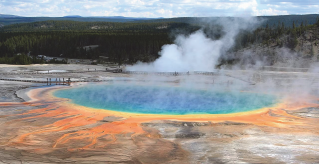
Molecules in hot springs such as Yellowstone's Grand Prismatic
Spring could have been a source of early life.¬(Frank Kovalchek).
When a bone grows, our bodies’ proteins help provide the structure. When a muscle tears, proteins help rebuild it. When we fight an infection, transport oxygen in our blood or send messages to a cell, proteins often step up to the plate. But how did these skilled molecules first form on Earth and help give rise to life?
The mystery, which has evaded scientists for more than five decades, can be explained with rather simple chemistry, according to a study published in Nature.
In lab experiments, scientists have successfully shown how two basic ingredients of life — ribonucleic acid (RNA) and amino acids — can combine to start protein synthesis.
The basic ingredients and conditions — in water — are thought to have been around on Earth about 4 billion years ago, providing clues to how early life may have been kickstarted or could arise on other planets.
“It seems pretty probable” that this reaction would have been occurring on early Earth, said Matthew Powner, a chemist at University College London and an author of the new study.
Powner’s lab investigates the chemical processes that lead to life, exploring key mechanisms seen in all living organisms. One of the most fundamental processes is how cells make proteins, the complex molecules responsible for our growth and survival from bone formation to immune support.
Proteins are made of amino acids, which are thought to have been around long before life emerged. Proteins can’t replicate themselves and are built from blueprints, provided by nucleic acids like DNA and RNA, that instruct the amino acids to assemble.
The Washington Post.27 August 2025. Adaptado.
Considerado o contexto, a expressão idiomática “step up to the plate” (1º parágrafo) tem como efeito
Questão 60 16410418
CEFSA Conhecimentos Gerais 2026/2Leia a tirinha de Jenny Campbell e responda à questão.
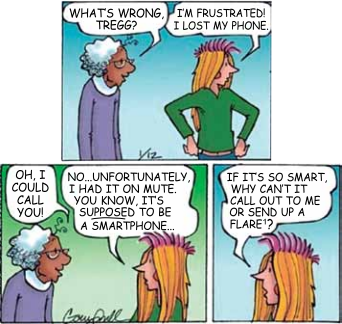
(www.gocomics.com)
1flare: sinal.
Na fala da garota de blusa verde no último quadrinho, “If it’s so smart, why can’t it call out to me”, o termo sublinhado indica uma
Questão 54 16410408
CEFSA Conhecimentos Gerais 2026/2Leia o texto para responder à questão.
Creative tourism is a growing form of travel where visitors learn by taking part in hands-on, culturally rooted activities. These can include classes in local cooking, craft workshops or music sessions. Millennials1 who have a good income that enables them to travel value a work/life balance. They enjoy travelling and are inclined towards creative experiences. This form of tourism connects them to the places and people they encounter.
Research conducted in South Africa surveyed 1,530 people whose average age was 29 years old. It was found that the millennials were more interested in domestic creative tourism than international creative tourism. They were motivated by the possibility of authentic and creative experiences that build skills. Domestic travel was more closely tied to learning. International trips were driven by the desire to escape everyday life. This suggests that domestic tourism is especially well suited to creative tourism.
South Africa is one of the world’s most culturally diverse countries. Thus, there are opportunities to learn about cultures through, for example, indigenous arts and crafts. And creative tourism can create jobs in low income or remote communities. Remote and rural areas are rich in cultural heritage, but have low incomes and ageing populations. There is a great deal of outmigration as people leave for towns and cities. Developing creative tourism could slow this by creating economic opportunities. At the same time, it would boost a sense of social cohesion, where groups in a society feel connected and share a sense of solidarity and belonging. Creative tourism also enables local communities to value and use their own cultural and creative resources. It would be enhanced by the emotional connection that a host has with their home, neighbourhood, or a natural area.
While there is a demand for creative tourism experiences, there also needs to be adequate supply. This requires different organisations and levels of government to work together to develop the creative tourism experience. This will need support and policies that promote greater collaboration between all organisations and government departments involved in tourism.
(Anneli Douglas et al. www.theconversation.com, 22.12.2025. Adaptado.)
1millennials: people who were born between 1981 and 1996.
De acordo com o segundo parágrafo, o turismo doméstico é
06