


![[Marketing] Questao Topo - deslogado](https://storage.estuda.com.br/banners/0_6b7ebee90b03af1c560c73bb8bcce34a_banner_deslogado_70_dias.png)
Questões de EFAF Inglês
6.497 Questões
Questão 9022657
EPCAR EPCAR 2017 1 FaseU PMI 2017Most common prejudices
What are some of the most common ways people discriminate against each other? Some of the areas where people show their intolerance are well- known, such as race. But others (01) are less acknowledged, even if more common:
Age: Ageism (02) is more common than you think. Older people are thought to be inflexible and stuck in the past, while younger people are seen as inexperienced and naive. (03) One-fifth of working adults say they experience ageism in the workplace (04) (05).
Class: Classism usually takes the form of discrimination by wealthier people against those who are less well off. However, classism goes both ways - people of lower economic status can see the wealthy as elite snobs who, while monetarily secure, are morally bankrupt.
Color: Different from racism, colorism is discrimination based only on the color of a person’s skin; how relatively dark or light they are. Colorism takes place within and between races. It is common in multi-ethnic and non-white societies and societies with historical racial prejudice.
Ability: (06)Usually called ableism, a less well-known form of prejudice (07) is discrimination against people with visible disabilities such as (08) those in wheelchairs or with a learning disability (09). The disabled face discrimination not only from their peers, but from institutions, schools, employers, and landowners who are hesitant to accommodate the disabled.
Sex/Gender: Possibly the most universal and long running prejudice is that based on a person’s gender or sex. Historically, sexism has placed men in a more advantageous position than women.
Weight/Size: In short, sizeism is discrimination based on (10) a person’s body size or weight(11). Sizeism works with social standards of beauty and usually takes the form of discrimination against the overweight — anti-fat prejudice.
Religion: Religious discrimination and persecution(12) has been common throughout history. But (13) prejudice based on religious affiliation (14) doesn’t end with organized religion; (15) atheists are prone to discrimination and being discriminated (16) against.
Sexual orientation: Most commonly, prejudice based on sexual orientation includes discrimination against those of a non-heterosexual orientation. Discrimination against the non-heterosexual takes many forms depending on the society. In some societies prejudice is open and tolerated, but in most Western societies, bias against the non-heterosexual is more discreet.
Country of origin: Nativism is a common form of discrimination against immigrants to a country. Unlike many other forms of discrimination, nativism is many times encouraged and enforced by some public entities.
(17)Which prejudice do you have" (18) Which prejudice have you experienced"
(Adapted from https://aloftyexistence.wordpress.com)
Glossary
acknowledged - reconhecidos (as)
stuck - presos (as)
bankrupt - falidos (as)
peers - pares; colegas
landowners - proprietários (as)
prone - propensos (as)
bias - julgamento ou opinião parcial
Questão 9022656
EPCAR EPCAR 2017 1 FaseU PMI 2017Most common prejudices
What are some of the most common ways people discriminate against each other? Some of the areas where people show their intolerance are well- known, such as race. But others (01) are less acknowledged, even if more common:
Age: Ageism (02) is more common than you think. Older people are thought to be inflexible and stuck in the past, while younger people are seen as inexperienced and naive. (03) One-fifth of working adults say they experience ageism in the workplace (04) (05).
Class: Classism usually takes the form of discrimination by wealthier people against those who are less well off. However, classism goes both ways - people of lower economic status can see the wealthy as elite snobs who, while monetarily secure, are morally bankrupt.
Color: Different from racism, colorism is discrimination based only on the color of a person’s skin; how relatively dark or light they are. Colorism takes place within and between races. It is common in multi-ethnic and non-white societies and societies with historical racial prejudice.
Ability: (06)Usually called ableism, a less well-known form of prejudice (07) is discrimination against people with visible disabilities such as (08) those in wheelchairs or with a learning disability (09). The disabled face discrimination not only from their peers, but from institutions, schools, employers, and landowners who are hesitant to accommodate the disabled.
Sex/Gender: Possibly the most universal and long running prejudice is that based on a person’s gender or sex. Historically, sexism has placed men in a more advantageous position than women.
Weight/Size: In short, sizeism is discrimination based on (10) a person’s body size or weight(11). Sizeism works with social standards of beauty and usually takes the form of discrimination against the overweight — anti-fat prejudice.
Religion: Religious discrimination and persecution(12) has been common throughout history. But (13) prejudice based on religious affiliation (14) doesn’t end with organized religion; (15) atheists are prone to discrimination and being discriminated (16) against.
Sexual orientation: Most commonly, prejudice based on sexual orientation includes discrimination against those of a non-heterosexual orientation. Discrimination against the non-heterosexual takes many forms depending on the society. In some societies prejudice is open and tolerated, but in most Western societies, bias against the non-heterosexual is more discreet.
Country of origin: Nativism is a common form of discrimination against immigrants to a country. Unlike many other forms of discrimination, nativism is many times encouraged and enforced by some public entities.
(17)Which prejudice do you have" (18) Which prejudice have you experienced"
(Adapted from https://aloftyexistence.wordpress.com)
Glossary
acknowledged - reconhecidos (as)
stuck - presos (as)
bankrupt - falidos (as)
peers - pares; colegas
landowners - proprietários (as)
prone - propensos (as)
bias - julgamento ou opinião parcial
Questão 8361618
USP USP 2017 Fase1 2017
Plants not only remember when you touch them, but they can also make risky decisions that are as sophisticated as those made by humans, all without brains or complex nervous systems.
Researchers showed that when faced with the choice between a pot containing constant levels of nutrients or one with unpredictable levels, a plant will pick the mystery pot when conditions are sufficiently poor.
In a set of experiments, Dr. Shemesh, from Tel-Hai College in Israel, and Alex Kacelnik, from Oxford University, grew pea plants and split their roots between two pots. Both pots had the same amount of nutrients on average, but in one, the levels were constant; in the other, they varied over time. Then the researchers switched the conditions so that the average nutrients in both pots would be equally high or low, and asked: Which pot would a plant prefer?
When nutrient levels were low, the plants laid more roots in the unpredictable pot. But when nutrients were abundant, they chose the one that always had the same amount.
(The New York Times, June 30, 2016. Adaptado.)
De acordo com os experimentos relatados no texto, em condições adversas, as plantas de ervilha priorizaram o crescimento de raízes nos vasos que apresentaram níveis de nutrientes
Plants not only remember when you touch them, but they can also make risky decisions that are as sophisticated as those made by humans, all without brains or complex nervous systems.
Researchers showed that when faced with the choice between a pot containing constant levels of nutrients or one with unpredictable levels, a plant will pick the mystery pot when conditions are sufficiently poor.
In a set of experiments, Dr. Shemesh, from Tel-Hai College in Israel, and Alex Kacelnik, from Oxford University, grew pea plants and split their roots between two pots. Both pots had the same amount of nutrients on average, but in one, the levels were constant; in the other, they varied over time. Then the researchers switched the conditions so that the average nutrients in both pots would be equally high or low, and asked: Which pot would a plant prefer?
When nutrient levels were low, the plants laid more roots in the unpredictable pot. But when nutrients were abundant, they chose the one that always had the same amount.
(The New York Times, June 30, 2016. Adaptado.)
Questão 8360938
UNESP UNESP 2017 2 Fase1 Gerais 2017
“One never builds something finished”:
the brilliance of architect Paulo Mendes da Rocha
Oliver Wainwright February 4, 2017
“All space is public,” says Paulo Mendes da Rocha. “The only private space that you can imagine is in the human mind.” It is an optimistic statement from the 88-year-old Brazilian architect, given he is a resident of São Paulo, a city where the triumph of the private realm over the public could not be more stark. The sprawling megalopolis is a place of such marked inequality that its superrich hop between their rooftop helipads because they are too scared of street crime to come down from the clouds.
But for Mendes da Rocha, who received the 2017 gold medal from the Royal Institute of British Architects this week - an accolade previously bestowed on such luminaries as Le Corbusier and Frank Lloyd Wright - the ground is everything. He has spent his 60-year career lifting his massive concrete buildings up, in gravity-defying balancing acts, or else burying them below ground in an attempt to liberate the Earth’s surface as a continuous democratic public realm. “The city has to be for everybody,” he says, “not just for the very few.”
(www.theguardian.com. Adaptado.)
No trecho do primeiro parágrafo “the triumph of the private realm over the public could not be more stark”, o termo em destaque tem sentido equivalente, em português, a
“One never builds something finished”:
the brilliance of architect Paulo Mendes da Rocha
Oliver Wainwright February 4, 2017
“All space is public,” says Paulo Mendes da Rocha. “The only private space that you can imagine is in the human mind.” It is an optimistic statement from the 88-year-old Brazilian architect, given he is a resident of São Paulo, a city where the triumph of the private realm over the public could not be more stark. The sprawling megalopolis is a place of such marked inequality that its superrich hop between their rooftop helipads because they are too scared of street crime to come down from the clouds.
But for Mendes da Rocha, who received the 2017 gold medal from the Royal Institute of British Architects this week - an accolade previously bestowed on such luminaries as Le Corbusier and Frank Lloyd Wright - the ground is everything. He has spent his 60-year career lifting his massive concrete buildings up, in gravity-defying balancing acts, or else burying them below ground in an attempt to liberate the Earth’s surface as a continuous democratic public realm. “The city has to be for everybody,” he says, “not just for the very few.”
(www.theguardian.com. Adaptado.)
Questão 8360659
AlbertEinstein AlbertEinstein 2017 2 Fase1 Gerais 2017Every map you look at is wrong
By Wil Jones in offbeat

Everyone knows what a map of the world looks like, right? It’s probably been burnt into your retinas since your school days.
The thing is, the image you think of what the world looks like is actually pretty wrong. How come? Well, as we’re sure you know, the Earth is spherical. That means it is impossible to produce an accurate flat image, showing the layout of countries as they really are. It’s a hard concept to get your head around with an actual globe in front of you.
[https://wwwindy100.com/article/every-map-wrong-this-video-explains-why-7459106]. Acessado em 17/01/2017. Modificado para fins educacionais.
De acordo com o texto:
Questão 8360658
AlbertEinstein AlbertEinstein 2017 2 Fase1 Gerais 2017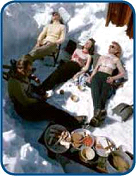
Exposure to blue and ultraviolet light, as in sunlight, could boost immunity
By Stav Ziv On
Researchers at Georgetown University Medical Center chose the start of yet another sun-starved winter to publish a study showing that exposure to blue light and ultraviolet light increases the movement of T cells, a key part of the immune system. Sunlight, therefore, could be an immune booster.
The researchers isolated T cells from human blood and mice and grew them in dishes in the laboratory. When they shined either UV or blue light on the cells, the cells became activated and moved more quickly. Although both UV and blue light increased the cells’ movement, focus was given to the potential benefits of blue light for two reasons: UV light is known to cause cancer, and it reaches only the outermost layer of skin, the epidermis. Blue light can reach deeper to the second layer, the dermis, where most of the skin’s T cells are located. If light could spur these immune cells to get to an infection more quickly, it could be leveraged via lamps to boost immunity and help treat skin diseases or even cancer.
http://www.newsweek.com/2017/01/20/sunlight-exposure-blue-ultraviolet-Light-boost-im- munity-541188.html]. Acessado em 12/01/2017. Modificado para fins educacionais.
Assinale a alternativa que corresponde à informação contida no texto.
06