


![[Marketing] Questao Topo - deslogado](https://storage.estuda.com.br/banners/0_6b7ebee90b03af1c560c73bb8bcce34a_banner_deslogado_70_dias.png)
Questões de EFAF Ciências
15.501 Questões
Questão 5 10291892
OBR 1° Ano - Nível 4 2018Read the article below and answer the question
"New surgical robots are about to enter the operating theatre"
(Extraído de: The Economist, 16/11/2017)
ROBOTS have been giving surgeons a helping hand for years. In 2016 there were about 4,000 of them scattered around the world’s hospitals, and they took part in 750,000 operations. Most of those procedures were on prostate glands and uteruses. But robots also helped surgeons operate on kidneys, colons, hearts and other organs. Almost all of these machines were, however, the products of a single company. Intuitive Surgical, of Sunnyvale, California, has dominated the surgical-robot market since its device, da Vinci, was cleared for use by the American Food and Drug Administration in 2000.
That, though, is likely to change soon, for two reasons. One is that the continual miniaturisation of electronics means that smarter circuits can be fitted into smaller and more versatile robotic arms than those possessed by Initiative’s invention. This expands the range of procedures surgical robots can be involved in, and thus the size of the market. The other is that surgical robotics is, as it were, about to go generic. Many of Initiative’s patents have recently expired. Others are about to do so. As a result, both hopeful startups and established health-care companies are planning to enter their own machines into the field.
Though the word “robot” suggests a machine that can do its work automatically, both da Vinci and its putative competitors are controlled by human surgeons. They are ways of helping a surgeon wield his instruments more precisely than if he were holding them directly. Da Vinci itself has four arms, three of which carry tiny surgical instruments and one of which sports a camera. The surgeon controls these with a console fitted with joysticks and pedals, with the system filtering out any tremors and accidental movements made by its operator. That, combined with the fact that the system uses keyhole surgery (whereby instruments enter the patient’s body through small holes instead of large cuts, making procedures less invasive), reduces risks and speeds up recovery. But at more than $2m for the equipment, plus up to $170,000 a year for maintenance, da Vinci is expensive. If a new generation of surgical robots can make things cheaper, then the benefits of robot assisted surgery will spread.
Why it is possible to say that Da Vinci is not a robot?
Questão 4 10291880
OBR 1° Ano - Nível 4 2018Read the article below and answer the question
"New surgical robots are about to enter the operating theatre"
(Extraído de: The Economist, 16/11/2017)
ROBOTS have been giving surgeons a helping hand for years. In 2016 there were about 4,000 of them scattered around the world’s hospitals, and they took part in 750,000 operations. Most of those procedures were on prostate glands and uteruses. But robots also helped surgeons operate on kidneys, colons, hearts and other organs. Almost all of these machines were, however, the products of a single company. Intuitive Surgical, of Sunnyvale, California, has dominated the surgical-robot market since its device, da Vinci, was cleared for use by the American Food and Drug Administration in 2000.
That, though, is likely to change soon, for two reasons. One is that the continual miniaturisation of electronics means that smarter circuits can be fitted into smaller and more versatile robotic arms than those possessed by Initiative’s invention. This expands the range of procedures surgical robots can be involved in, and thus the size of the market. The other is that surgical robotics is, as it were, about to go generic. Many of Initiative’s patents have recently expired. Others are about to do so. As a result, both hopeful startups and established health-care companies are planning to enter their own machines into the field.
Though the word “robot” suggests a machine that can do its work automatically, both da Vinci and its putative competitors are controlled by human surgeons. They are ways of helping a surgeon wield his instruments more precisely than if he were holding them directly. Da Vinci itself has four arms, three of which carry tiny surgical instruments and one of which sports a camera. The surgeon controls these with a console fitted with joysticks and pedals, with the system filtering out any tremors and accidental movements made by its operator. That, combined with the fact that the system uses keyhole surgery (whereby instruments enter the patient’s body through small holes instead of large cuts, making procedures less invasive), reduces risks and speeds up recovery. But at more than $2m for the equipment, plus up to $170,000 a year for maintenance, da Vinci is expensive. If a new generation of surgical robots can make things cheaper, then the benefits of robot assisted surgery will spread.
How many surgeries were done in cooperation with robots in 2016?
Questão 14 10290556
OBR 1° Ano - Nível 3 2018João comprou um robô aspirador para limpar a sua casa. O robô aspirava o chão e mudava de rumo toda vez que tocava um objeto. Porém, recentemente, João percebeu que o robô não funciona mais direito. Agora o robô segue reto até bater num móvel e fica lá, tentando atravessar o obstáculo.
Qual o problema do robô do João?
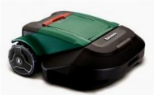
Fonte: https://www.solvelight.com/catalog/robots-housekeepers
Questão 6 10290507
OBR 1° Ano - Nível 3 2018Um engenheiro criou um robô que tem por objetivo entender, por conta própria, o corpo humano por meio de visualização do dia-a-dia dos seres humanos. Um dia, esse robô estava andando pelo parque, observou uma criança, à beira de um lago, que estava querendo encostar o dedo na água. Quando a criança colocou o dedo na água, ela imediatamente retirou o dedo e falou que a água estava fria. Ao observar tal acontecimento, o robô perguntou ao seu criador quais tinham sido os sistemas do corpo humano que foram responsáveis pela reação da criança ao colocar o dedo na água.
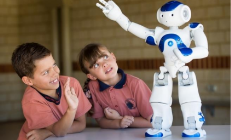
Fonte: http://www.brainaryinteractive.com/news/2015/1/30/nao-robot-an-australian-first
O engenheiro respondeu que os principais sistemas atuantes foram:
Questão 38 10284021
IFSertãoPE 2018O aumento na quantidade de gases envolvidos no efeito estufa provoca a intensificação deste fenômeno e, consequentemente, a elevação da temperatura média do planeta.
A essa elevação da temperatura do planeta chamamos de:
Questão 37 10284017
IFSertãoPE 2018A imagem abaixo representa o ciclo da água. Marque a alternativa que corresponde aos fenômenos indicados na imagem:
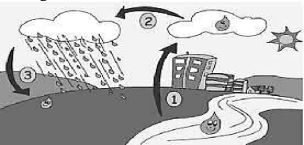
06